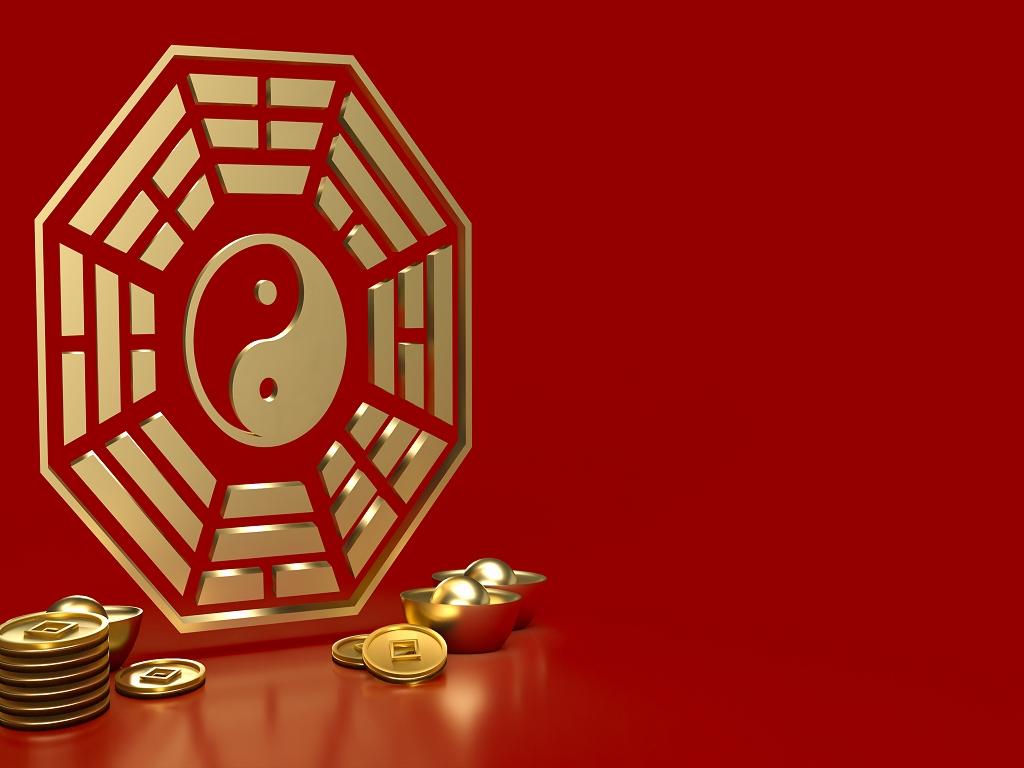
Bagua-Spiegel
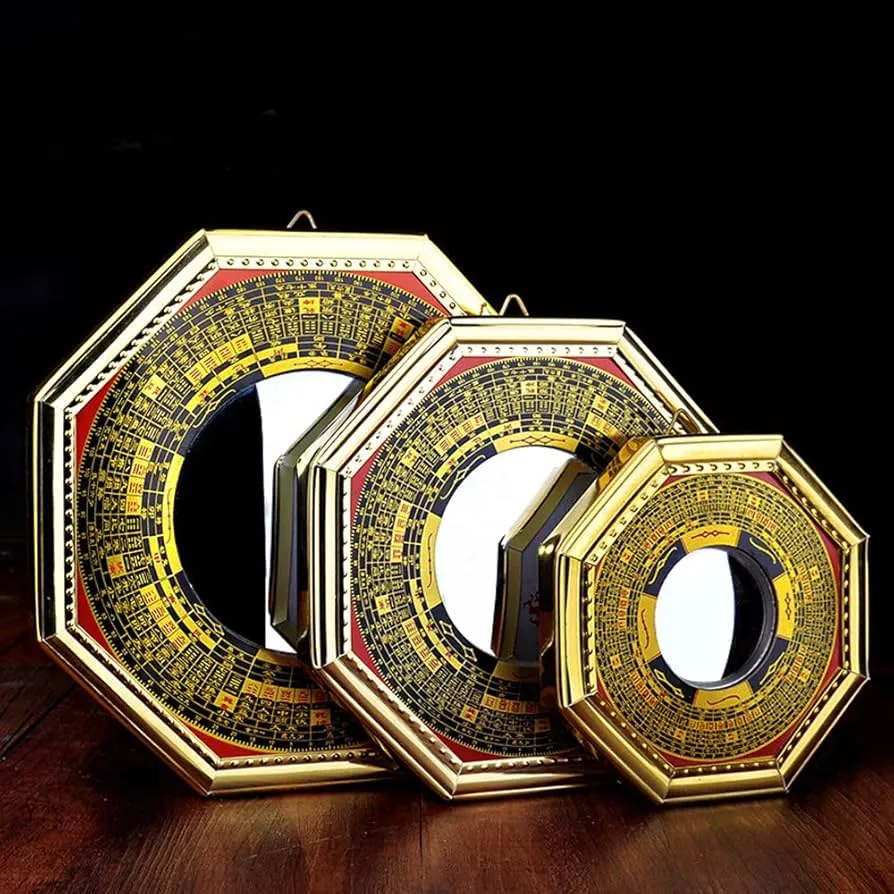
The Bagua mirror is an object of Chinese symbolic and protective practice, understood less as decoration and more as an active boundary device. It consists of a mirror framed by the octagonal bagua diagram, which represents fundamental forces, directions, and principles of transformation. The mirror itself is not merely reflective, but ordering.
Symbolically, the Bagua mirror represents the ability to deflect influence without confrontation. What reaches it is not absorbed, but reflected, redirected, or dispersed. The mirror thus functions as an active threshold: it separates inside and outside without erecting a solid barrier. Protection arises through return, not destruction.
From a parapsychological perspective, the Bagua mirror can be read as a regulator of projection. Its effect lies less in acting upon objective energies than in shaping perception, expectation, and interpretation. The mirror marks a psychological boundary: here, diffuse influence ends. As a result, the mental atmosphere of a space shifts—fear, threat perception, or vague attribution lose coherence because they find no place to settle.
On a deeper symbolic level, the Bagua mirror stands for the principle of self-referential order. It does not intervene, but reminds: whatever approaches must first return to itself or its source. The mirror forces forces—real or imagined—to confront their own origin. In this sense, the Bagua mirror is not a magical tool in the narrow sense, but an iconic expression of boundary awareness.