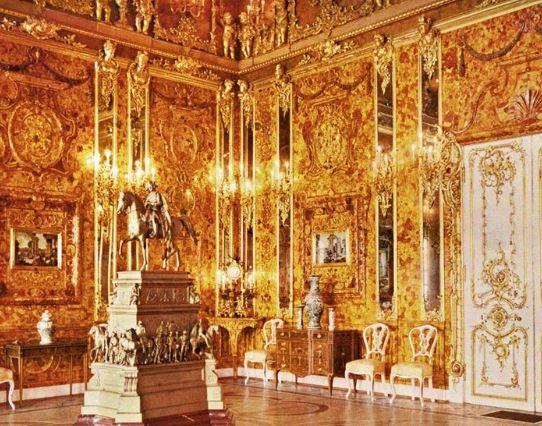
Explore the Captivating Amber Room
The Amber Room is one of the most fascinating treasures of the 18th century, renowned for its intricate panels and rich historical significance.

This mysterious chamber has captivated historians and enthusiasts alike, with its intricate amber craftsmanship and complex past.
The story of the Amber Room is a tale of beauty, loss, and mystery, setting the stage for a deeper exploration of its history and significance.
Key Takeaways
- The Amber Room is a historical treasure with intricate amber panels.
- Its history dates back to the 18th century.
- The Amber Room is renowned for its beauty and craftsmanship.
- It has a complex and mysterious past.
- The Amber Room's story is one of loss and intrigue.
The Origins of the Amber Room
The Amber Room, one of the most enigmatic treasures in history, has its roots in 18th-century Prussia. This extraordinary chamber, renowned for its intricate amber panels and gilded decor, was the result of a visionary project conceived by some of the most skilled artisans of the time.
The Vision of Andreas Schlüter
Andreas Schlüter, a prominent figure in the Prussian art scene, is credited with the initial design of the Amber Room. As a master craftsman and artist, Schlüter's vision was instrumental in shaping the aesthetic and functional aspects of the chamber. His work laid the foundation for what would become a symbol of opulence and craftsmanship.
Frederick I of Prussia's Commission
The creation of the Amber Room was made possible by the patronage of Frederick I of Prussia. The king's commission to Schlüter and other artisans marked the beginning of a complex and ambitious project. The Amber Room was intended to be a testament to the wealth and cultural sophistication of the Prussian monarchy.
Early Design and Construction Challenges
The construction of the Amber Room presented numerous challenges, from the sourcing of high-quality amber to the intricate craftsmanship required for its assembly. The artisans faced the daunting task of creating a cohesive and breathtakingly beautiful space that would meet the expectations of their royal patron. As noted by historians, "The Amber Room was a masterpiece that pushed the boundaries of art and craftsmanship."
The early history of the Amber Room is a testament to the ingenuity and skill of the artisans involved in its creation. It is a story that continues to captivate historians and enthusiasts alike, contributing to the Amber Room mystery that surrounds this incredible work of art.
A Gift Fit for a Tsar
Peter the Great's diplomatic efforts led to one of the most remarkable gifts in history. The Amber Room, a masterpiece of craftsmanship, was gifted to Russia, marking a significant moment in the country's cultural heritage.
Peter the Great's Diplomatic Relations
Peter the Great was known for his strategic diplomatic maneuvers, and his relations with Prussia were no exception. He fostered a strong alliance with Frederick I of Prussia, laying the groundwork for the exchange of gifts, including the Amber Room. This diplomatic effort not only strengthened ties between the two nations but also reflected Peter's appreciation for art and culture.
The diplomatic relations between Russia and Prussia were strengthened through mutual respect and a shared interest in art. Peter the Great's visit to Prussia and his interaction with Frederick I played a crucial role in the gifting of the Amber Room.
The Transfer to Russia
The transfer of the Amber Room to Russia was a complex process that involved meticulous planning and execution. In 1716, the Amber Room was disassembled and shipped to Russia, where it was reassembled at the Winter Palace. The room was later moved to the Catherine Palace at Tsarskoye Selo, where it became a centerpiece of the royal estate.
| Year | Event | Location |
|---|---|---|
| 1716 | Amber Room shipped to Russia | Winter Palace |
| 1755 | Amber Room reassembled | Catherine Palace, Tsarskoye Selo |
The Magnificent Amber Room in Its Glory
The Amber Room, a masterpiece of Baroque art, dazzled with its opulence in the 18th century. It was a true marvel, captivating all who had the privilege to behold it. As a gift from Prussia to Russia, it symbolized the cultural and artistic exchange between two great nations.
Architectural Marvel of the 18th Century
The Amber Room was an architectural wonder of its time, boasting intricate designs and a grandeur that was unmatched. Its construction required the expertise of skilled artisans and craftsmen who worked tirelessly to bring the vision to life. The room's design was a testament to the ingenuity and creativity of 18th-century craftsmen.
Artistic Elements and Craftsmanship
The Amber Room was not only an architectural marvel but also a showcase of exquisite artistic craftsmanship. The room featured intricate amber panels, mosaics, and ornate decorations that reflected the artistic sensibilities of the era. As one historian noted, "The Amber Room was a symphony of amber, gold, and precious stones, creating a visual experience unlike any other."
"The Amber Room was a masterpiece that combined art and architecture in a way that was both beautiful and awe-inspiring."
The Unique Amber Panels and Mosaics
The Amber Room's amber panels and mosaics were its most striking features. These were crafted from high-quality Baltic amber, which was carefully selected and shaped to create intricate designs. The amber panels were complemented by gold leaf and precious stone accents, adding to the room's opulence.
The Amber Room's beauty was not just in its materials but in the story it told of the era's craftsmanship and artistic vision. It remains one of the most fascinating lost treasures in history, continuing to captivate imaginations to this day.
Materials and Construction Techniques
The creation of the Amber Room involved a complex process that showcased the artisans' expertise. This masterpiece was not just a display of beauty but also a testament to the advanced craftsmanship and material selection of its time.
The Baltic Amber Selection Process
The Amber Room's foundation is built around Baltic amber, a material chosen for its beauty and durability. The selection process involved choosing high-quality amber pieces, often with minimal imperfections, to create the intricate panels and mosaics that adorn the room.
Specialized Craftsmanship Methods
Crafting the Amber Room required specialized techniques passed down through generations of artisans. The process involved carefully shaping and fitting the amber pieces together, often using a combination of heat and pressure to create seamless joints.
Gold Leaf and Precious Stone Accents
To enhance the Amber Room's opulence, artisans applied gold leaf and adorned it with precious stones. This not only added to the room's visual appeal but also underscored its status as a symbol of wealth and power. The intricate designs and patterns created using these materials are a testament to the craftsmanship of the era.
The Amber Room's construction is a remarkable example of the synergy between artistic vision and technical skill, resulting in a space that continues to captivate audiences with its beauty and historical significance.
Tsarskoye Selo: Home of the Amber Room
The Amber Room, a masterpiece of 18th-century craftsmanship, found its home in the opulent Catherine Palace at Tsarskoye Selo. This grand palace, with its stunning architecture and beautifully landscaped gardens, was a fitting location for the Amber Room, a true marvel of its time.
Catherine Palace's Most Prized Chamber
Catherine Palace, the centerpiece of Tsarskoye Selo, was renowned for its exquisite interiors, with the Amber Room being its most prized chamber. The room was a testament to the rich cultural heritage of Russia, showcasing the intricate craftsmanship of the era.
Empress Elizabeth's Expansion Project
Empress Elizabeth played a significant role in the expansion of Catherine Palace, ensuring the Amber Room was integrated into the palace's grand design. Her vision for Tsarskoye Selo as a symbol of Russian imperial power was realized through projects like the Amber Room.
| Aspect | Description | Significance |
|---|---|---|
| Location | Tsarskoye Selo, Catherine Palace | Historic royal residence |
| Design | Intricate amber panels and mosaics | Masterpiece of 18th-century craftsmanship |
| Historical Figure | Empress Elizabeth | Oversaw expansion and integration of the Amber Room |
The Amber Room's Cultural Significance
The Amber Room is a testament to the rich cultural heritage of Russia, embodying the country's history and imperial past. Its construction and display reflect the artistic and diplomatic endeavors of the time, making it a significant cultural artifact.
Symbol of Russian Imperial Power
The Amber Room served as a symbol of Russian imperial power, showcasing the country's wealth and influence during the 18th century. Its opulent design and precious materials underscored the status of the Russian monarchy, particularly under the rule of Catherine the Great. The room's intricate amber panels and gilded details were meant to awe and impress, reinforcing Russia's position among European powers.

Diplomatic Importance Through Centuries
Throughout its history, the Amber Room has played a role in diplomatic relations between Russia and other European countries. Initially gifted to Peter the Great, it symbolized the strengthening of ties between Prussia and Russia. Over the centuries, the Amber Room has been a point of cultural exchange and admiration, with its mystery and beauty captivating diplomats and visitors alike.
The Amber Room's enduring legacy is a testament to its cultural significance, continuing to inspire wonder and historical inquiry into the amber room mystery and its place in amber room history.
World War II and the Disappearance
As World War II raged across Europe, the Amber Room's fate hung precariously in the balance. The war brought unprecedented destruction and chaos, putting the treasured chamber at risk of being lost forever.
Failed Evacuation Attempts
The Soviet authorities attempted to dismantle the Amber Room and evacuate it to safety, but the operation was rushed and ultimately unsuccessful. The panels were too fragile, and the process was too slow, leaving the Amber Room vulnerable to the advancing Nazi forces.
The failure to evacuate the Amber Room was a significant blow, as it left the treasured chamber exposed to the dangers of war. The consequences of this failure would be dire.
Nazi Looting Operations
Nazi forces, aware of the Amber Room's cultural and historical significance, targeted it for looting. The Amber Room was dismantled with care and transported to Königsberg, where it was reassembled in the town's castle.
The Nazis saw the Amber Room as a prized trophy, and its capture was a significant achievement for their looting operations. As one historian noted,
"The Amber Room was one of the most valuable and culturally significant treasures to fall into Nazi hands during the war."
The Mysterious Vanishing Act
As the war drew to a close and Allied forces approached Königsberg, the Amber Room vanished, leaving behind only questions and speculation. The circumstances surrounding its disappearance remain shrouded in mystery, fueling ongoing debate and investigation.
Theories abound regarding the Amber Room's fate, but the truth remains elusive. The mystery surrounding the Amber Room's disappearance continues to captivate historians and enthusiasts alike.
Theories About the Missing Amber Room
The mystery of the Amber Room's disappearance has sparked numerous theories over the years. Despite extensive searches and investigations, the exact fate of this priceless treasure remains unknown, fueling ongoing speculation and debate.
Destruction During Allied Bombing of Königsberg
One of the most widely discussed theories is that the Amber Room was destroyed during the Allied bombing of Königsberg in 1944. Königsberg, now known as Kaliningrad, was a significant target for the Allies, and the city suffered extensive damage. Some historians believe that the Amber Room, being a prized possession of the Nazis, was likely caught in the crossfire and destroyed. However, this theory remains unconfirmed due to a lack of concrete evidence.

Secret Nazi Hiding Places and Bunkers
Another theory suggests that the Amber Room was hidden in secret Nazi bunkers or locations before it could be captured by the advancing Allied forces. The Nazis were known to have hidden numerous treasures and artifacts in various secret locations throughout Germany and occupied territories. Some researchers believe that the Amber Room could have been concealed in such a hiding place, potentially to be retrieved later.
Soviet Concealment and Cover-up Theories
Some theories also point to the possibility of Soviet concealment or cover-up regarding the Amber Room's fate. Given the geopolitical tensions of the time, it's plausible that if the Soviets had found the Amber Room, they might have chosen not to disclose its location. This theory, however, is difficult to verify due to the lack of accessible Soviet records from the period.
| Theory | Description | Status |
|---|---|---|
| Destruction in Königsberg | Destroyed during Allied bombing | Unconfirmed |
| Nazi Hiding Places | Hidden in secret bunkers | Speculative |
| Soviet Concealment | Possibly concealed by Soviets | Unverified |
The search for the Amber Room continues, driven by these theories and the hope of uncovering the truth behind its disappearance. As new evidence emerges and old leads are revisited, the mystery of the Amber Room remains a captivating topic of historical intrigue.
The Search Continues: Modern Investigations
The quest for the Amber Room continues to captivate historians and treasure hunters alike. Despite the passage of time, the mystery surrounding its disappearance remains unsolved.
Notable Expeditions and Searches
Several notable expeditions have been conducted to locate the Amber Room. These include searches in Königsberg, now Kaliningrad, where the room was last seen during World War II. Researchers have scoured the region, interviewing locals and analyzing historical records.
Recent Discoveries and False Leads
Recent years have seen both promising discoveries and false leads. Some claims of finding the Amber Room have been debunked, while others remain under investigation. For instance, a 2019 claim of discovering the room in a German mine was later found to be unsubstantiated.
Technology's Role in the Hunt
Modern technology, including ground-penetrating radar and archival databases, has significantly aided the search. These tools have helped researchers analyze historical documents and explore potential hiding sites. The use of advanced technology has opened new avenues for investigation.
| Year | Expedition/Discovery | Location |
|---|---|---|
| 2010 | Ground-penetrating radar search | Kaliningrad |
| 2015 | Archival research | German Archives |
| 2020 | Subterranean scanning | Königsberg Castle |
Reconstruction of the Amber Room
The Amber Room, a symbol of Russian imperial power, is being painstakingly rebuilt using traditional craftsmanship and modern techniques. This ambitious project aims to restore the Amber Room to its original glory, allowing future generations to appreciate its beauty.
The Ambitious Restoration Project
The reconstruction of the Amber Room began in 1990s, with the Russian government and various international organizations collaborating to revive this historical masterpiece. The project involved extensive research, including the study of old photographs and original plans, to ensure accuracy in the reconstruction.
Historical records and archival documents played a crucial role in guiding the restoration process. Experts worked tirelessly to recreate the intricate amber panels, gilding, and other decorative elements that characterized the original Amber Room.
Modern Techniques Meet Historical Craftsmanship
The reconstruction process combines modern technology with traditional craftsmanship. Advanced techniques such as 3D scanning and printing have been employed to recreate complex components, while skilled artisans have been tasked with the intricate work of amber paneling and gilding.
| Technique | Description | Application in Amber Room Reconstruction |
|---|---|---|
| 3D Scanning | Creating detailed digital models of components | Recreating complex amber and gilded elements |
| Traditional Craftsmanship | Skilled artisans applying historical techniques | Assembly and finishing of amber panels and decorative elements |
| Gilding | Applying gold leaf to surfaces | Restoring the original gilded details |
The result is a testament to human ingenuity and the dedication to preserving cultural heritage. The reconstructed Amber Room is not only a tribute to the past but also a bridge to the future, ensuring that this incredible piece of history continues to inspire and awe.
Conclusion: The Enduring Legacy of a Lost Treasure
The Amber Room remains one of history's most captivating enigmas, a testament to the artistic and cultural achievements of the past. Commissioned by Frederick I of Prussia and gifted to Peter the Great, the Amber Room symbolized the diplomatic and cultural exchange between European powers.
The Amber Room's history is a complex narrative of beauty, war, and loss. Its disappearance during World War II has sparked numerous theories and searches, yet its fate remains a mystery. The amber room mystery continues to fascinate historians and enthusiasts alike.
Despite its physical absence, the Amber Room's legacy endures. The reconstruction efforts have ensured that future generations can appreciate its beauty. The amber room history serves as a reminder of the importance of preserving cultural heritage.
The story of the Amber Room, from its creation to its disappearance, is a poignant reminder of the transience of human achievement. As we reflect on the Peter the Great Amber Room, we are reminded of the power of art to transcend time and circumstance.
FAQ
What is the Amber Room?
The Amber Room is an 18th-century chamber decorated with intricate amber panels, gold, and precious gems, originally located in Prussia and later gifted to Russia.
Where was the Amber Room originally located?
The Amber Room was originally located in the Königsberg Castle in Prussia, now known as Kaliningrad, Russia.
Who commissioned the Amber Room?
The Amber Room was commissioned by Frederick I of Prussia.
What was the significance of the Amber Room in Russian history?
The Amber Room became a significant part of Russian history as a symbol of Russian imperial power and a testament to the country's rich cultural heritage.
When did the Amber Room disappear?
The Amber Room disappeared during World War II, specifically in the final stages of the war, as Nazi forces retreated from Russia.
What are the main theories about the Amber Room's disappearance?
Theories include destruction during Allied bombing of Königsberg, hiding in secret Nazi bunkers, and Soviet concealment.
Has the Amber Room been found?
Despite numerous searches and investigations, the Amber Room remains missing, and its exact fate is still a mystery.
What efforts have been made to reconstruct the Amber Room?
A reconstruction project was undertaken, and the new Amber Room was unveiled in 2003, using a combination of traditional craftsmanship and modern techniques.
What is the current status of the search for the original Amber Room?
The search continues, with various expeditions and investigations ongoing, utilizing modern technology to aid in the hunt.
Why is the Amber Room significant to Russian culture?
The Amber Room is a symbol of Russian cultural heritage and imperial power, representing the country's rich history and artistic achievements.
What was Peter the Great's role in the Amber Room's history?
Peter the Great received the Amber Room as a gift from Prussia, and it became part of the Catherine Palace in Tsarskoye Selo, Russia.