Hermes Trismegistus: Unlocking Ancient Secrets
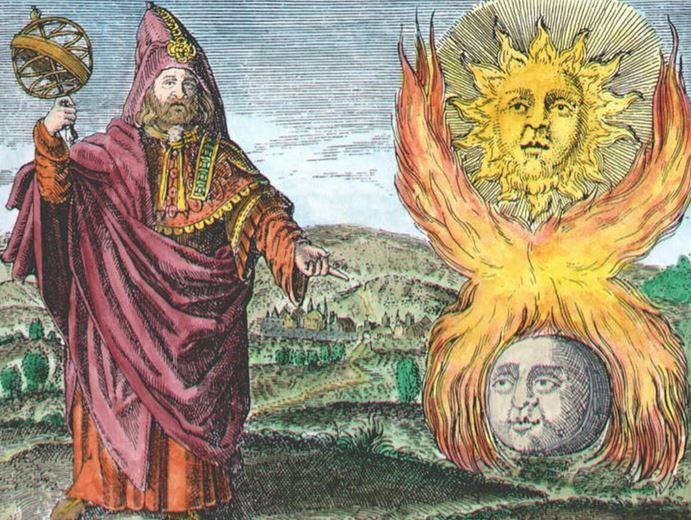
The enigmatic figure of Hermes Trismegistus has been a cornerstone of ancient wisdom, mysticism, and the fusion of Greek and Egyptian traditions. This legendary figure is associated with the development of hermeticism, a philosophical and spiritual tradition that has influenced Western esotericism for centuries.

Understanding Hermes Trismegistus and his teachings is crucial for unlocking the secrets of ancient philosophy and the mystical practices that have shaped the course of human history. His significance extends beyond historical curiosity, offering insights into the nature of reality, the balance between the material and spiritual worlds, and the pursuit of gnosis.
Key Takeaways
- Hermes Trismegistus is a legendary figure associated with ancient wisdom and mysticism.
- His teachings form the basis of hermeticism, a significant philosophical and spiritual tradition.
- Understanding Hermes Trismegistus is key to unlocking ancient secrets and philosophical insights.
- Hermeticism has had a profound influence on Western esotericism.
- The study of Hermes Trismegistus offers a deeper understanding of the balance between material and spiritual aspects of human existence.
The Mystery of Hermes Trismegistos
The enigmatic figure of Hermes Trismegistus has captivated scholars and spiritual seekers for centuries. This legendary sage is often associated with ancient wisdom, mysticism, and the fusion of Greek and Egyptian traditions.
The Three-Times-Great Sage
Hermes Trismegistus, meaning "thrice-greatest Hermes," is a title that signifies his profound influence on both spiritual and philosophical realms. The epithet "thrice-greatest" reflects his mastery over various domains of knowledge, including alchemy, astrology, and theology.
Historical Debates on His Existence
The historicity of Hermes Trismegistus has been a subject of debate among scholars. Some view him as a historical figure, while others consider him a mythical or symbolic representation.
Greek Perspectives
From a Greek perspective, Hermes Trismegistus is often linked with the god Hermes, known for his role as a messenger and mediator between the divine and mortal realms. Greek records and traditions have contributed significantly to the understanding of Hermes Trismegistus.
Egyptian Records
Egyptian records, on the other hand, associate Hermes Trismegistus with Thoth, the god of wisdom, magic, and writing. The blending of these traditions has enriched the mystique surrounding Hermes Trismegistus.
The synthesis of Greek and Egyptian elements in the figure of Hermes Trismegistus underscores the cultural exchange and syncretism that characterized the ancient world.
Historical Origins and Cultural Context
Hermeticism has its roots in the Greco-Egyptian syncretism that flourished in Alexandria during the Hellenistic era. This period was marked by a significant cultural exchange between Greece and Egypt, resulting in a unique blend of philosophical and spiritual traditions.
Greco-Egyptian Syncretism
The fusion of Greek and Egyptian cultures in Alexandria led to the development of new spiritual and philosophical ideas. Hermeticism emerged as a distinct tradition that combined elements from both cultures, creating a rich and complex system of thought.
As Francis Yates noted in her seminal work on the subject, "The Hermetic tradition is a complex of philosophical and spiritual ideas that were attributed to the mythical figure of Hermes Trismegistus." This blending of traditions is exemplified in the Hermetic texts, which show a mix of Greek philosophical concepts and Egyptian mystical practices.
Alexandria as a Center of Knowledge
Alexandria played a crucial role in the development of Hermeticism, serving as a major center of learning and cultural exchange. The city's famous library and research center, the Mouseion, attracted scholars from all over the Mediterranean, facilitating the exchange of ideas and the development of new knowledge.
Timeline of Hermetic Development
The development of Hermeticism spanned several centuries, with its roots in the Hellenistic period. The tradition evolved over time, influenced by various cultural and philosophical currents. A detailed timeline of Hermetic development would highlight key milestones, such as the composition of the Corpus Hermeticum and the influence of Hermetic ideas on later spiritual and philosophical movements.
"The Hermetic texts represent a unique blend of philosophical and spiritual ideas that continue to influence contemporary spirituality and culture."
The Divine Connection: Thoth and Hermes
The unification of Thoth and Hermes into Hermes Trismegistus symbolizes the blending of Egyptian and Greek philosophical and religious traditions. This syncretism is a hallmark of the Hellenistic period, where cultural exchange and fusion of beliefs were common.
Thoth: The Egyptian God of Wisdom
Thoth, the Egyptian god of wisdom, magic, and the moon, was revered for his role in creation, writing, and the afterlife. He was often depicted as a man with the head of an ibis or as a baboon. Thoth's association with wisdom and knowledge made him a crucial figure in Egyptian mythology.
Hermes: The Greek Messenger God
Hermes, the Greek messenger god, was known for his swiftness and his role as a mediator between the mortal world and the divine realm. His attributes include cunning, eloquence, and the ability to guide souls to the afterlife. The Greeks revered Hermes for his multifaceted nature and his capacity to navigate different realms.
Symbolic Unification of Traditions
The merging of Thoth and Hermes into Hermes Trismegistus represents a symbolic unification of the wisdom and knowledge traditions of both cultures. This figure embodies the principles of Hermeticism, emphasizing spiritual growth, alchemy, and the pursuit of gnosis.
| Attributes | Thoth | Hermes |
|---|---|---|
| Wisdom | Associated with creation and knowledge | Known for cunning and eloquence |
| Role | God of magic, writing, and the moon | Messenger god and guide of souls |
https://www.youtube.com/watch?v=PmcEtMsw5nk
The divine connection between Thoth and Hermes, as represented by Hermes Trismegistus, highlights the shared values and principles of ancient Egyptian and Greek cultures, demonstrating a profound respect for wisdom and divine communication.
The Sacred Texts of Hermetic Tradition
At the heart of Hermeticism lie several key texts that have shaped its philosophy and practices. These sacred texts are the foundation upon which Hermetic teachings are built, offering insights into esoteric knowledge and spiritual growth.
The Emerald Tablet and Its Mysteries
The Emerald Tablet is one of the most revered texts in Hermeticism, attributed to Hermes Trismegistus. It contains cryptic teachings on alchemy and the unity of all things. The tablet's concise yet profound statements have been the subject of numerous interpretations and commentaries.
The Corpus Hermeticum: Structure and Content
The Corpus Hermeticum is a collection of writings attributed to Hermes Trismegistus, covering a wide range of topics related to Hermeticism. It includes dialogues, treatises, and hymns that explore the nature of the divine, the cosmos, and humanity's place within it.
The Asclepius Dialogues
The Asclepius Dialogues are another crucial text in the Hermetic corpus, providing insights into the spiritual practices and philosophical underpinnings of Hermeticism.
Key Teachings
The Asclepius Dialogues contain teachings on the interconnectedness of all things and the potential for spiritual transformation. Key principles include:
- The unity of the macrocosm and microcosm
- The role of humanity in the cosmic order
- The path to spiritual enlightenment
Historical Significance
The Asclepius Dialogues have played a significant role in the development of Hermetic thought, influencing various spiritual and philosophical traditions throughout history. Their preservation and transmission have contributed to the enduring legacy of Hermeticism.
In conclusion, the sacred texts of Hermetic tradition, including the Emerald Tablet, the Corpus Hermeticum, and the Asclepius Dialogues, form the bedrock of Hermetic philosophy and practice. They continue to inspire seekers of esoteric knowledge and those drawn to the mystical and symbolic dimensions of alchemy and Hermeticism.
The Seven Hermetic Principles Explained
Delving into the mysteries of Hermeticism requires an understanding of its Seven Principles, which are Mentalism, Correspondence, Vibration, Polarity, Rhythm, Cause and Effect, and Gender. These principles form the foundation of Hermetic teachings and offer a profound understanding of the universe and our place within it.
The Principle of Mentalism
The Principle of Mentalism posits that "The All is Mind; the Universe is Mental." This principle suggests that everything is a manifestation of the universal mind, and understanding this can grant insight into the nature of reality.
The Principle of Correspondence
The Principle of Correspondence states that "As above, so below; as below, so above." This principle highlights the interconnectedness of all things, suggesting that patterns and truths are reflected across different scales and dimensions of existence.
The Principle of Vibration
The Principle of Vibration asserts that "Nothing rests; everything moves; everything vibrates." This principle explains that everything in the universe is in a state of constant motion, and differences in vibration rates account for the various forms and manifestations of matter and energy.
The Principle of Polarity
The Principle of Polarity indicates that "Everything has its opposite; truth is relative." This principle shows that opposites are necessary for understanding and that truth is not absolute but depends on the context.
The Principle of Rhythm
The Principle of Rhythm states that "Everything flows out and in; everything has its tides." This principle illustrates that there is a natural flow and cycle to all phenomena, and understanding this rhythm can help in navigating life's challenges.
The Principle of Cause and Effect
The Principle of Cause and Effect asserts that "Every cause has its effect; every effect has its cause." This principle emphasizes the law of causality, suggesting that every action has a consequence, and understanding this can help in making informed decisions.
The Principle of Gender
The Principle of Gender posits that "Gender is in everything; everything has its masculine and feminine principles." This principle highlights the duality of existence, where masculine and feminine energies are present in all aspects of the universe, influencing creation and manifestation.
Understanding the Seven Hermetic Principles can provide a deeper insight into the mysteries of the universe and the interconnectedness of all things. By applying these principles, one can gain a more profound understanding of the cosmos and our role within it.
- Mentalism: The universe is mental, and everything is a manifestation of the universal mind.
- Correspondence: Patterns and truths are reflected across different scales and dimensions.
- Vibration: Everything is in constant motion, with differences in vibration rates explaining various forms of matter and energy.
- Polarity: Opposites are necessary for understanding, and truth is relative.
- Rhythm: There is a natural flow and cycle to all phenomena.
- Cause and Effect: Every action has a consequence.
- Gender: Masculine and feminine energies are present in all aspects of the universe.
Egyptian Mysticism and Hermetic Knowledge
Hermetic knowledge, deeply rooted in Egyptian mysticism, offers insights into the ancient world's spiritual practices. The mystique of Egyptian mysticism is intricately linked with the development of Hermetic teachings, which were influenced by the symbolic language and secret knowledge of the ancients.
Temple Initiations and Secret Knowledge
Temple initiations in ancient Egypt were pivotal in transmitting esoteric knowledge. These initiations involved complex rituals and symbolic teachings, aimed at spiritual enlightenment and understanding of the universe. The priests and initiates were guardians of this sacred knowledge, which was believed to hold the secrets of creation and the divine.
Symbolic Language of the Ancients
The symbolic language used by the ancients was a sophisticated means of conveying complex spiritual and philosophical concepts. This language, rich in imagery and metaphor, was used to encode the teachings of Hermeticism, making them accessible only to those initiated into its mysteries. The use of symbols allowed for a deeper understanding of the cosmos and humanity's place within it.

Preservation of Esoteric Traditions
The preservation of esoteric traditions was a critical aspect of Hermetic knowledge. Through various means, including oral traditions and written texts like the Corpus Hermeticum, these teachings were passed down through generations. The preservation of such knowledge ensured the continuation of Hermetic principles, influencing spiritual and philosophical thought for centuries.
| Aspect | Description | Significance |
|---|---|---|
| Temple Initiations | Rituals and teachings within Egyptian temples | Transmission of esoteric knowledge |
| Symbolic Language | Use of symbols and metaphors to convey complex concepts | Encoding of Hermetic teachings |
| Preservation of Traditions | Oral and written transmission of Hermetic knowledge | Continuation of Hermetic principles |
The interplay between Egyptian mysticism and Hermetic knowledge highlights the richness and depth of ancient spiritual practices. Understanding these traditions provides valuable insights into the evolution of spiritual thought and the timeless principles that continue to influence contemporary spirituality.
Gnostic Teachings and Hermetic Wisdom
Gnostic teachings and Hermeticism share a common goal: the pursuit of divine knowledge. Both traditions offer profound insights into the nature of the universe and humanity's place within it.
The Quest for Divine Knowledge
The quest for divine knowledge is central to both Gnostic and Hermetic philosophies. This pursuit involves understanding the mysteries of the universe, the nature of the divine, and the human condition. Gnosticism emphasizes the attainment of spiritual knowledge (gnosis) as the path to salvation.
Salvation Through Understanding
In Gnostic teachings, salvation is achieved through understanding the true nature of reality. This understanding is not merely intellectual but involves a deep, spiritual comprehension. Hermeticism similarly advocates for the attainment of spiritual knowledge as a means to achieve unity with the divine.
Cosmological Perspectives
Both traditions offer unique cosmological perspectives, shedding light on the creation of the universe and the divine hierarchy.
Creation Myths
Gnostic and Hermetic texts contain creation myths that describe the origin of the universe. These myths often involve complex divine emanations and the role of humanity in the cosmic drama.
The Divine Hierarchy
The concept of a divine hierarchy is present in both traditions, describing a structured universe with various levels of divine manifestation. Understanding this hierarchy is key to grasping the Gnostic and Hermetic views of the cosmos.
The convergence of Gnostic teachings and Hermetic wisdom provides a rich and complex understanding of the universe and our place within it. By exploring these traditions, individuals can gain deeper insights into the nature of reality and the path to spiritual enlightenment.
Alchemy: The Hermetic Art of Transformation
The art of alchemy, deeply rooted in Hermeticism, has long fascinated seekers of esoteric knowledge. At its core, alchemy is about transformation—transforming not just metals, but the very essence of reality itself.
Physical vs. Spiritual Alchemy
Alchemy is often divided into two categories: physical and spiritual. Physical alchemy focuses on the transmutation of base metals into gold, a process that was historically pursued by many alchemists. However, spiritual alchemy is more concerned with the transformation of the soul, seeking enlightenment and spiritual rebirth.
As the famous alchemist Herbert Silberer once noted, "The alchemical process is a symbol of the spiritual transformation of man." This perspective underscores the deeper, symbolic nature of alchemy.
The Great Work: Transforming Lead to Gold
The concept of the Great Work is central to alchemical practice. It refers to the ultimate goal of alchemy: the transformation of lead (or base metals) into gold. This process is not just about changing the physical state of metals but represents a spiritual journey towards perfection.
Alchemical Symbolism and Hermetic Origins
Alchemical symbolism is rich with Hermetic origins. Symbols like the Ouroboros (the snake eating its tail) and the Philosopher's Stone represent eternal cycles of transformation and the quest for ultimate knowledge.
"The Ouroboros is a symbol of the cyclical nature of time and the universe, reflecting the alchemical principle of transformation and renewal."
Famous Alchemists and Their Hermetic Connections
Many famous alchemists have been influenced by Hermetic teachings. For instance, Nicolas Flamel and Paracelsus were known for their alchemical pursuits, which were deeply rooted in Hermetic principles.
| Alchemist | Hermetic Connection |
|---|---|
| Nicolas Flamel | Pursued alchemy based on Hermetic texts |
| Paracelsus | Integrated Hermetic principles into his alchemical and medical practices |
In conclusion, alchemy, as a Hermetic art, encompasses a broad spectrum of practices and principles aimed at transformation. Whether through physical or spiritual means, the essence of alchemy lies in its pursuit of knowledge and transformation.
Renaissance Revival of Hermetic Philosophy
Marsilio Ficino's translations played a crucial role in the Renaissance revival of Hermeticism, making ancient wisdom accessible to a wider audience. The Renaissance was a period of renewed interest in classical learning, and Hermetic texts were among those rediscovered and translated.

Ficino's Translations and Impact
Ficino's work was instrumental in popularizing Hermetic philosophy. His translations of the Corpus Hermeticum introduced these ancient texts to a broader audience, influencing contemporary thought and culture. The impact of Ficino's translations was not limited to the philosophical realm; they also had significant implications for art, science, and spirituality.
Hermetic Influence on Art and Science
The Hermetic revival during the Renaissance had a profound influence on both art and science. Artists and scientists began to incorporate Hermetic principles into their work, exploring the interconnectedness of all things and the potential for human transformation. This influence can be seen in the works of various Renaissance figures, who often embedded Hermetic symbolism and themes into their creations.
Secret Societies and Hermetic Preservation
Secret societies played a significant role in preserving and transmitting Hermetic knowledge during the Renaissance. These organizations often served as guardians of esoteric traditions, ensuring the continuation of Hermetic teachings through periods of intellectual and cultural change.
The Renaissance revival of Hermetic philosophy was a complex and multifaceted phenomenon, driven by the convergence of various cultural and intellectual currents. It not only revitalized interest in ancient wisdom but also contributed to the evolution of new ideas and practices in art, science, and spirituality.
Modern Applications of Hermetic Principles
Modern applications of Hermetic principles reveal the enduring legacy of this ancient philosophy. The teachings of Hermes Trismegistus continue to influence various aspects of contemporary life, from spirituality and science to psychology.
Hermetic Principles in Contemporary Spirituality
Hermetic principles are increasingly being incorporated into modern spiritual practices. The idea of "as above, so below" resonates with many seeking a deeper understanding of the universe and their place within it. This principle of correspondence is fundamental to Hermeticism and is reflected in various spiritual traditions.
Scientific Parallels to Ancient Wisdom
Interestingly, some Hermetic principles find parallels in modern scientific theories. For instance, the principle of vibration, which suggests that everything is in a state of vibration, aligns with the discoveries of quantum physics. This convergence of ancient wisdom and modern science underscores the timeless relevance of Hermetic teachings.
Psychological Interpretations of Hermetic Teachings
The psychological aspects of Hermeticism have also garnered significant attention. Carl Jung, a renowned psychologist, was deeply influenced by Hermetic teachings.
Jung and the Collective Unconscious
Jung's concept of the collective unconscious has roots in Hermetic ideas about a universal, interconnected consciousness. This collective aspect of human psychology resonates with Hermetic principles, suggesting a shared reservoir of archetypes common to all humans.
Modern Therapeutic Applications
Modern therapeutic practices have also benefited from Hermetic insights. The emphasis on balance and harmony in Hermetic teachings can inform therapeutic approaches, promoting holistic well-being.
| Hermetic Principle | Modern Application | Benefit |
|---|---|---|
| Principle of Correspondence | Holistic Medicine | Treating the whole person, not just symptoms |
| Principle of Vibration | Sound Healing | Using sound to heal and balance the body |
| Principle of Polarity | Cognitive Behavioral Therapy | Understanding and managing opposing forces within oneself |
The table above illustrates how Hermetic principles are applied in modern contexts, highlighting their relevance and utility.
Unlocking the Esoteric Knowledge Today
In today's fast-paced world, Hermetic principles provide a timeless guide to spiritual growth and self-discovery. As we navigate the complexities of modern life, the esoteric knowledge of Hermeticism offers a profound framework for understanding ourselves and the universe.
Practical Meditation Techniques
Meditation is a powerful tool for unlocking esoteric knowledge. By practicing meditation, individuals can quiet the mind and tap into their inner wisdom. Practical techniques include focusing on the breath, using visualization, and practicing mindfulness. Regular meditation can help cultivate a deeper understanding of Hermetic principles and their application in daily life.
Study Approaches to Hermetic Texts
Studying Hermetic texts is essential for gaining a deeper understanding of esoteric knowledge. Approaches to study include reading commentaries, joining study groups, and reflecting on the teachings. It's also important to approach these texts with an open mind and a willingness to apply the principles in one's life.
Modern Organizations and Communities
There are numerous modern organizations and communities dedicated to preserving and promoting Hermeticism. These groups often host workshops, conferences, and online forums where individuals can learn from experienced practitioners and connect with like-minded individuals.
Integrating Ancient Wisdom in Daily Life
Integrating Hermetic principles into daily life can lead to greater balance, harmony, and spiritual growth. Practical applications include using the Seven Hermetic Principles as a guide for decision-making and personal development. By embracing these timeless teachings, individuals can cultivate a more profound understanding of themselves and the world around them.
Conclusion: The Timeless Legacy of Hermes Trismegistus
The figure of Hermes Trismegistus has captivated spiritual seekers and scholars for centuries, embodying the synthesis of ancient Greek and Egyptian wisdom. Through the exploration of Hermeticism, we have uncovered a rich tapestry of teachings that continue to resonate with contemporary audiences. The seven Hermetic principles, in particular, offer a profound framework for understanding the universe and our place within it.
Hermes Trismegistos represents a timeless legacy, bridging the past and the present. The Hermetic texts, including the Emerald Tablet and the Corpus Hermeticum, remain essential reading for those seeking to deepen their understanding of the mysteries. As we continue to navigate the complexities of modern life, the wisdom of Hermeticism provides a guiding light, illuminating the path to inner transformation and spiritual growth.
In embracing the principles of Hermeticism, we can cultivate a more holistic perspective, integrating the insights of the past with the challenges of the present. As we move forward, the legacy of Hermes Trismegistus will undoubtedly continue to inspire and guide those on the path to self-discovery and enlightenment, embodying a timeless legacy that transcends the boundaries of time and culture.
FAQ
Who is Hermes Trismegistus?
Hermes Trismegistus is a legendary figure associated with ancient wisdom, mysticism, and the fusion of Greek and Egyptian traditions.
What is Hermeticism?
Hermeticism is a philosophical and spiritual tradition based on the teachings attributed to Hermes Trismegistus, encompassing esoteric knowledge, alchemy, and Gnostic teachings.
What are the Seven Hermetic Principles?
The Seven Hermetic Principles are fundamental to Hermetic teachings, including Mentalism, Correspondence, Vibration, Polarity, Rhythm, Cause and Effect, and Gender, which provide a framework for understanding the universe and human nature.
What is the significance of the Emerald Tablet?
The Emerald Tablet is a sacred text attributed to Hermes Trismegistus, containing cryptic teachings on alchemy, spiritual transformation, and the unity of the macrocosm and microcosm.
How did Hermeticism influence the Renaissance?
Hermeticism had a significant impact on the Renaissance, influencing art, science, and philosophy, particularly through the translations and work of Marsilio Ficino, which helped to revive interest in classical knowledge and esoteric traditions.
What is the connection between Hermeticism and alchemy?
Alchemy is a key aspect of Hermeticism, representing the art of spiritual transformation and the quest for divine knowledge, with the goal of transforming base metals into gold and achieving spiritual enlightenment.
How can I apply Hermetic principles in my daily life?
Hermetic principles can be applied in daily life through meditation, study of Hermetic texts, and integration of ancient wisdom into modern practices, allowing individuals to cultivate a deeper understanding of themselves and the world.
What is the relationship between Hermeticism and Gnosticism?
Hermeticism and Gnosticism share common themes and motifs, including the quest for divine knowledge, salvation through understanding, and cosmological perspectives, reflecting a shared concern with spiritual transformation and esoteric knowledge.
Are there modern organizations and communities related to Hermeticism?
Yes, there are modern organizations and communities dedicated to the study and practice of Hermeticism, offering a range of resources, including texts, workshops, and online forums, for those interested in exploring Hermetic teachings.