Abraham von Worms
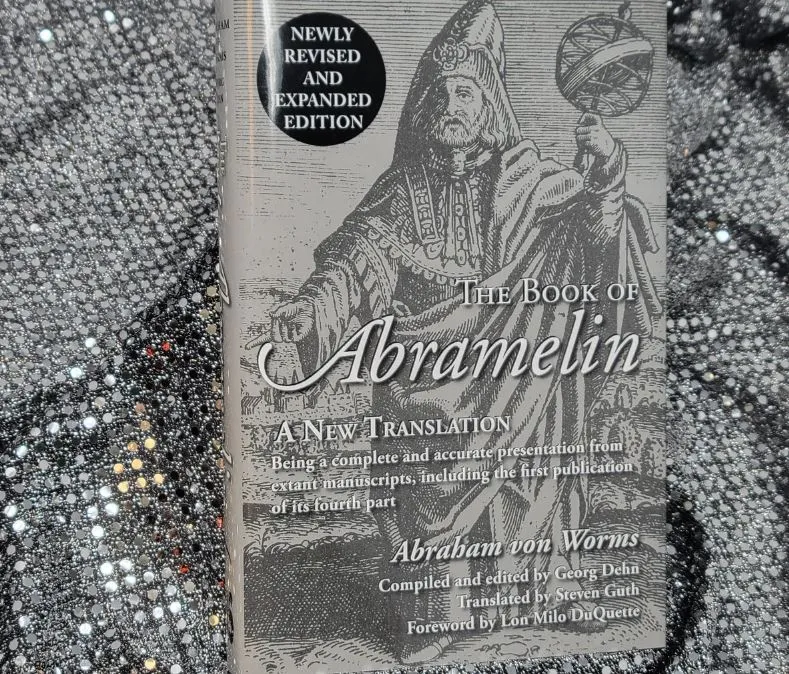
Abraham von Worms is both a historical and symbolic figure of late medieval esotericism. He appears as an authorial voice and guarantor of knowledge that is not publicly taught, but transmitted through lineage. Symbolically, Abraham of Worms represents less an individual personality than the archetype of the transmitter—one who preserves order by guarding it rather than dispersing it.
In esoteric interpretation, Abraham of Worms embodies the stance of responsible transmission. Knowledge is neither possession nor instrument of self-aggrandizement, but a burden that may only be carried under specific conditions. Authority arises not from inspiration, but from fidelity to form. He thus represents an ethic of restraint, in which silence often outweighs revelation.
Symbolically, Abraham of Worms functions as a mediator between worlds: between text and practice, order and danger, possibility and limit. He marks the point where knowledge becomes personal in order not to remain abstract, yet without becoming subjective. His role is that of a guardian, not an innovator.
In this sense, Abraham of Worms stands for an esoteric ideal opposed to modern impulses toward disclosure. He reminds us that not all knowledge is ripe for its time—and that ripeness has less to do with insight than with character.