Beowulf
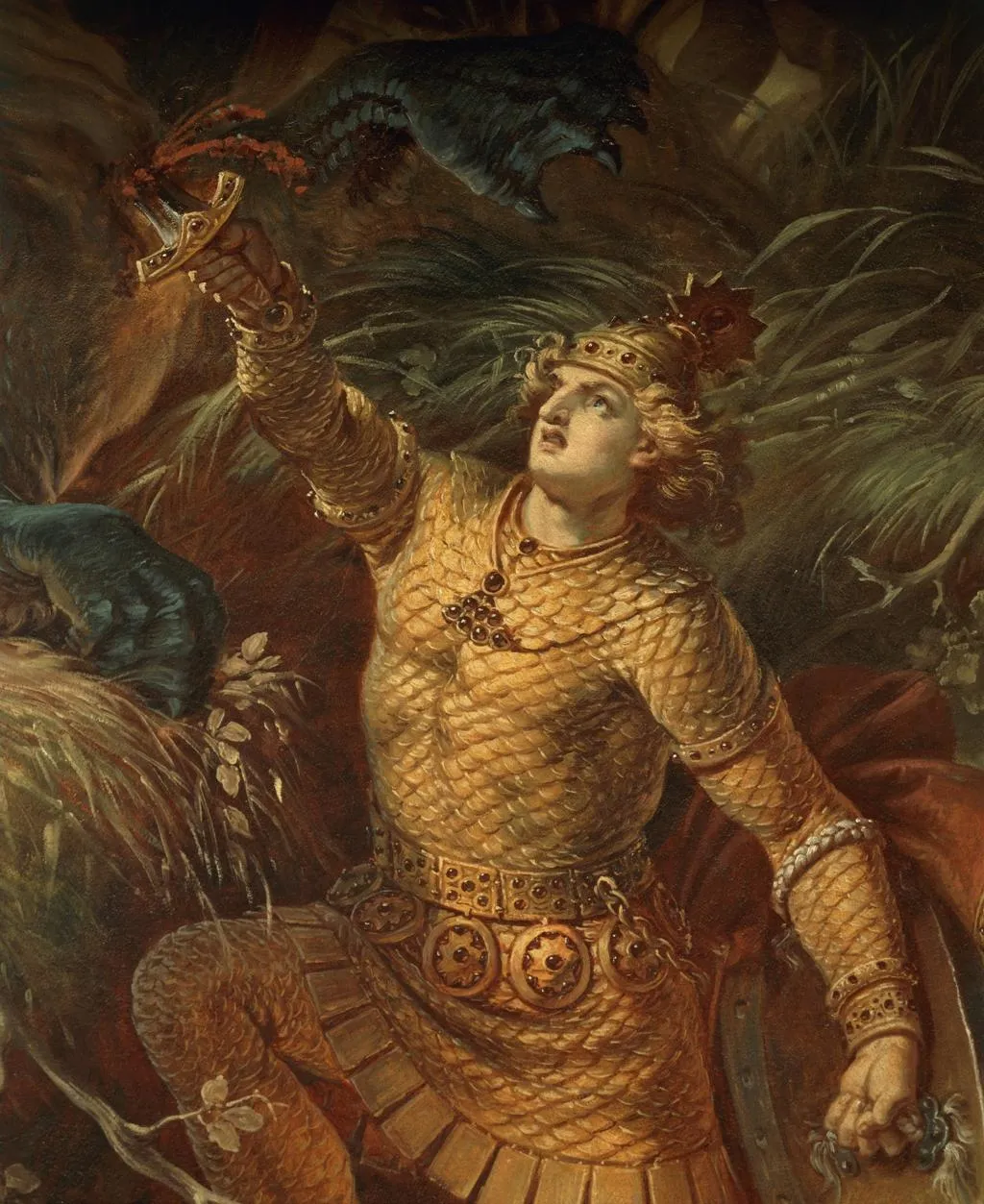
Beowulf is a warrior from the Geaten people. He is famous for his fight against the monster Grendel, which haunts the Heorot hall of the Danish king Hrothgar. After defeating Grendel, he also fights against his mother and, many years later, against a dragon that threatens his land. In the final battle he kills the dragon, but dies from his wounds.
Symbolically, Beowulf stands for the principle of heroic consciousness. He embodies the person who does not evade the forces of chaos, but consciously confronts them. His opponents are more than mere monsters; they represent the destructive forces that threaten order, community and meaning.
Parapsychologically-symbolically, Grendel, Grendel's mother and the dragon can be understood as archetypes of different layers of the unconscious. Grendel symbolizes the raw and blind aggression that erupts from the dark edges of the psyche. His mother embodies the deeper, more primal source of these powers. Finally, the dragon represents the hero's final test: the encounter with death, transience and the shadow of one's own finiteness.
Beowulf's path follows the pattern of many initiation and hero myths. The hero must leave the familiar, enter dangerous areas and pass trials there. Through this confrontation he gains not only fame, but also knowledge and maturity.
In a deeper symbolic meaning, Beowulf embodies the archetype of the dragon slayer and shadow conqueror. His story is not just about external struggles, but about man's ability to confront the dark forces of life. Each victory over a monster symbolizes the integration of a previously threatening aspect of reality. The fact that Beowulf himself dies in the end gives the myth a special depth: the true hero does not defeat mortality, but rather faces it with dignity. Beowulf thus stands for the realization that greatness does not lie in escaping fate, but in dealing with it consciously and courageously.



Spiritual Narcissism: Recognizing It Without Shame - Learn How to Cultivate Empathy and Personal Growth
Read More