

Cromagnon
Cro-Magnon
Meaning & Origin:
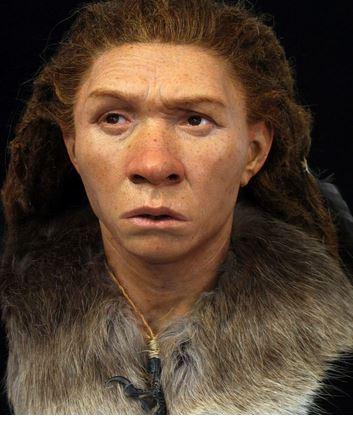
Cro-Magnon refers to the early modern humans (Homo sapiens sapiens) whose remains were first discovered in 1868 in the Cro-Magnon cave near Les Eyzies, France.
They lived roughly 40,000 to 10,000 years ago, during the Upper Paleolithic — an age when art, language, and spirituality first emerged in their recognizable human form.
Esoteric and Symbolic Significance:
-
In esoteric anthropology, Cro-Magnon represents the birth of self-awareness, the ignition of the “inner fire” — the moment when spirit awoke within matter.
-
With them begins the age of soul-consciousness, when humanity first perceived itself as a living part of the cosmic order.
-
Their cave paintings, rituals, and burials testify to a dawning sense of the sacred in nature, a vision of the world as a living, ensouled unity.
-
Spiritually, Cro-Magnon embodies the archetype of the shaman — the bridge between seen and unseen worlds, between animal, star, and spirit.
-
In esoteric symbolism, he is the first bearer of light, the one who kindled awareness in the darkness of the Earth.
Cultural Context:
Modern mystics and esoteric historians view Cro-Magnon as the ancestor of awakened consciousness — a symbol of the era when art, magic, and spirituality were still one.
The painted caves of Lascaux, Altamira, and Chauvet are seen as temples of primal remembrance, where the invisible was first given form through gesture and color.
Spiritual Symbolism:
Cro-Magnon reminds us that consciousness was not created — it was remembered.
His awakening represents the rediscovery of the divine flame within humanity, the eternal spark that makes perception sacred.
In his fire, his symbols, and his eyes begins the great human journey — the dawn of the soul, the meeting of heaven and earth in the heart of humankind.
Keywords: Early Human, Awakening of Spirit, Shamanism, Primal Consciousness, Sacred Art
Links:






The Night of the Snake Vines
Read More