


Delog
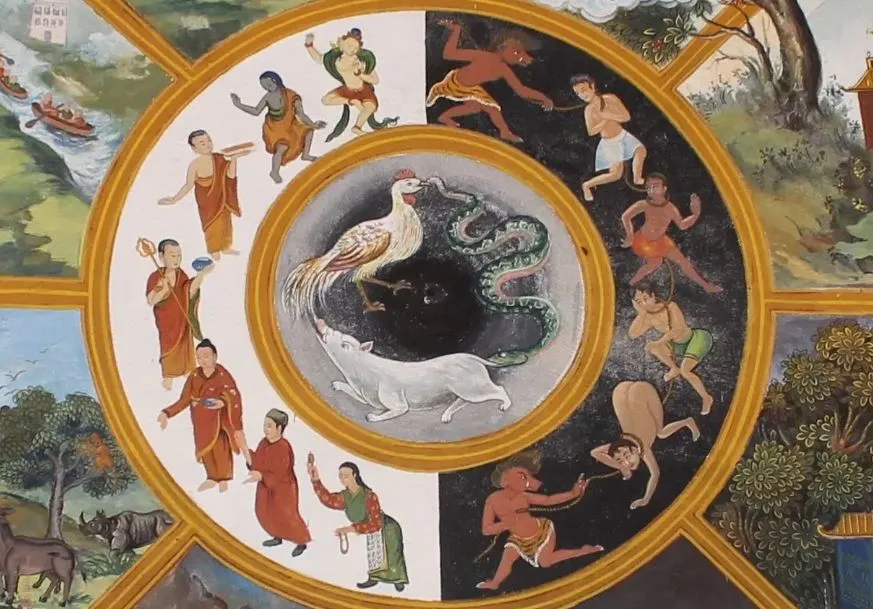
Delog refers, in Tibetan tradition, to a person who temporarily experiences the state of death and returns to life to report what was seen. A delog is neither dead nor a medium, but a threshold traveler, whose consciousness crosses the boundary while the body remains intact.
Symbolically, the delog represents return from finality. What is brought back is not abstract doctrine, but concrete impressions: order, consequence, measure. The otherworld appears not as reward or punishment, but as a continuation of effectiveness. Actions retain weight beyond death.
Esoterically interpreted, the delog is a figure of witnessing. They prove nothing, explain nothing, persuade no one. Their role is simply to have seen. The authority of the delog arises not from interpretation, but from the fact of return. What is experienced remains fragmentary, difficult to translate, often unsettling.
On a deeper symbolic level, the delog embodies the human need to give meaning and structure to death without neutralizing it. The delog does not make the unspeakable harmless, but speakable. It reminds us that a boundary does not imply erasure—but transition that leaves traces.