Dryaden
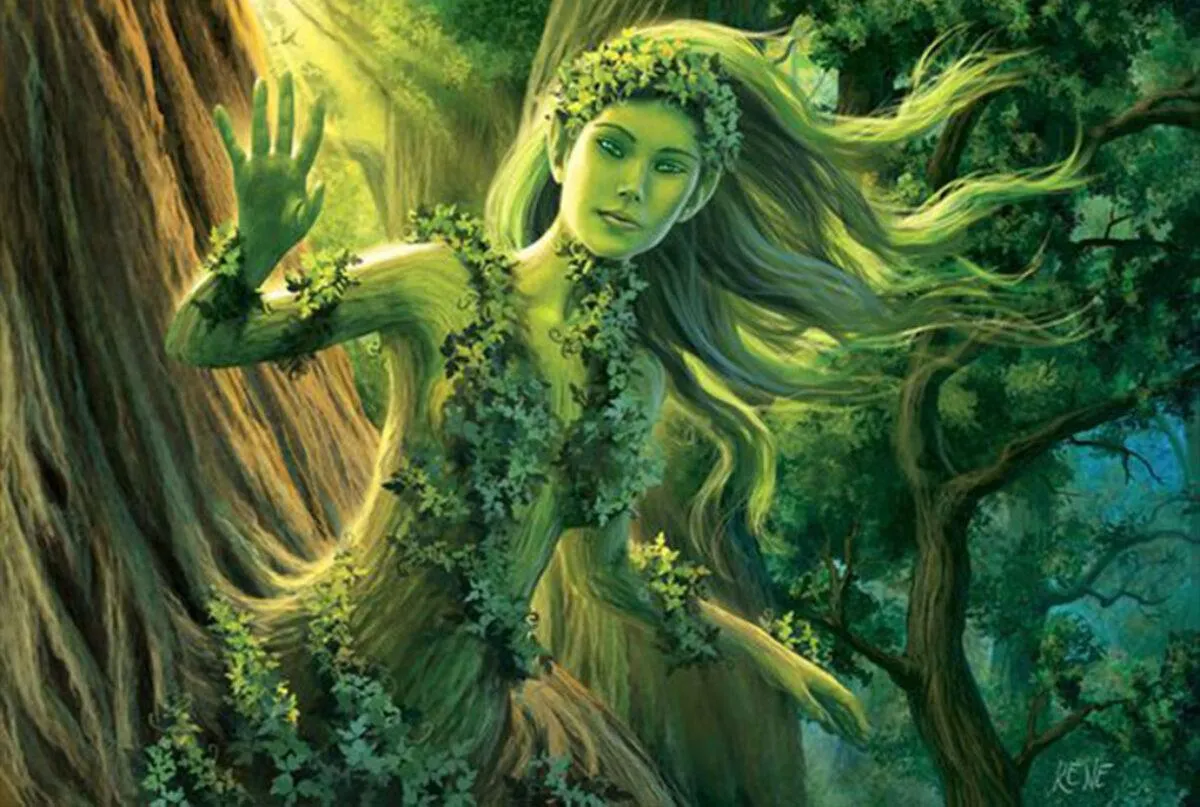
Dryads in Greek mythology are female natural beings or tree spirits who are connected to individual trees or entire forests. Its name comes from the Greek word drys ("oak"). Originally, dryads were primarily associated with oak trees, but the term was later expanded to include tree spirits in general. A special form are the Hamadryads, whose life is directly tied to a specific tree: If the tree dies, the dryad also dies.
Symbolically, dryads stand for the principle of animated nature. They embody the idea that trees and landscapes are not just material objects, but bearers of an inner vitality. In them, nature does not appear as a backdrop to human life, but as an independent reality with consciousness, dignity and presence.
In myths, dryads are often described as shy, beautiful, and elusive creatures. They live hidden in forests, sacred groves and remote landscapes. People who injured or destroyed their trees could incur their wrath. Those who respected nature, on the other hand, could hope for her protection or favor.
Parapsychologically and symbolically, dryads can be understood as personifications of the soul of the place. They belong to the group of nature spirits that appear in many cultures and symbolize the connection between humans and the environment. Encounters with dryads can be interpreted as visions, imaginative experiences, or archetypal images that express awareness of the vitality of nature.
In depth psychology, dryads appear as archetypal figures of the unconscious. They embody the feminine, growing and rooted side of the psyche. The tree itself is one of the oldest symbols of life, development and connection between heaven and earth. The dryad is, so to speak, the soul of this symbol.
In a deeper symbolic meaning, dryads represent the realization that life does not exist in isolation. Humans and nature form a common network. The Dryad reminds us that growth takes time, that rooting is as important as development, and that every external landscape also has an internal counterpart. She embodies the experience that nature is not silent, but has a language that speaks less through words than through presence, beauty and connection.