

Dud
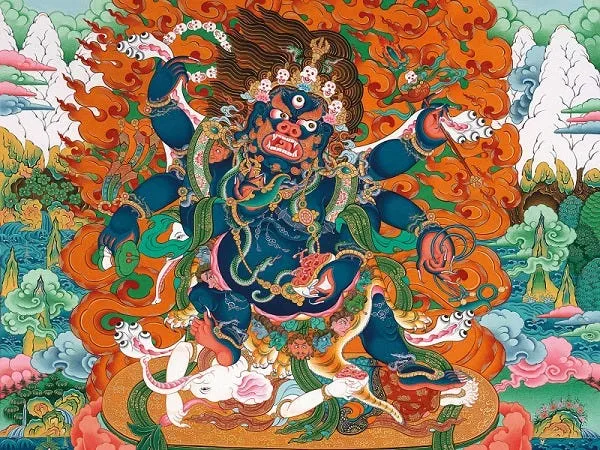
Dud refers, in ancient Tibetan cosmology, to a class of obstructive, entangling spirit beings. Dud do not primarily destroy; they impede. They act where movement stalls, clarity clouds, and resolve weakens. Rather than outright maleficence, they embody forces of delay and confusion.
Symbolically, dud represent the principle of binding to the lower. They hold fast, pull downward, and entangle awareness in fear, doubt, or inertia. Their power lies not in attack, but in prevention. Where dud prevail, paths blur, goals recede, and will grows heavy.
Esoterically interpreted, dud embody forces that undermine order not through confrontation, but through erosion. They draw strength from indecision, excess, and inner fragmentation. Ritual responses in ancient Tibet therefore aimed not at destruction, but at loosening, clearing, and restoring direction. Dud lose potency when measure and orientation return.
On a deeper symbolic level, dud stand for inner resistance to transformation. They personify attachment to the familiar, even when it is harmful. Dud remind us that danger is not always dramatic—often it is the sticky, stagnant force that quietly prevents change.