Eleonore Zugun
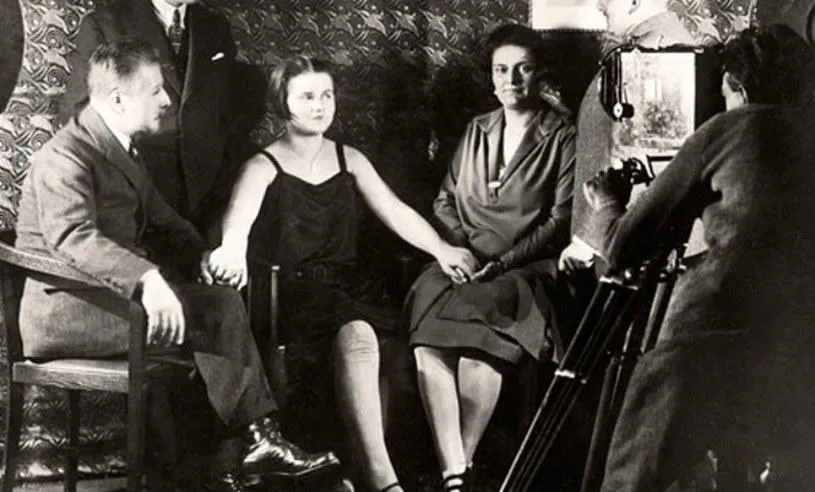
Eleonore Zugun was a Romanian girl who became famous in the 1920s through reports of alleged Poltergeist and psychokinetic phenomenabecame known. Objects were said to have moved near them, scratch marks appeared on their skin, and unusual events occurred, especially in emotionally charged situations. Her case was investigated by various parapsychologists and researchers and became one of the most famous European poltergeist cases of the 20th century.
Symbolically, Eleonore Zugun stands for the motif of the unconscious discharge of psychological tension. The phenomena appear not as consciously controlled magic, but as eruptive outbursts of inner conflict. The “haunting” here is less an attack from outside than an externalization of repressed energy that has found no linguistic or social form.
Parapsychologically and symbolically, the case can be read as an example of a psychodynamic projection into space. Particularly in young people in transition, poltergeist phenomena are often associated with emotional instability, suppressed stress or unconscious aggression. The environment appears to react to internal conditions. This creates the impression that the psyche does not remain closed within the individual, but continues outwards like a field.
In a deeper symbolic meaning, Eleonore Zugun embodies the fear of the permeable human being. The boundary between the inner world and the outer world seems to be becoming unstable: thoughts, conflicts and tensions no longer only appear subjective, but rather intervene in the material environment. Her case is a reminder that the unconscious does not remain silent unless it finds expression. What is repressed finds a way - sometimes as a symptom, sometimes as an image, sometimes as disruption of the order itself.


Unlocking the Power of Spiritual Healing: A Journey to Wholeness and Well-Being
Read More