


Epona
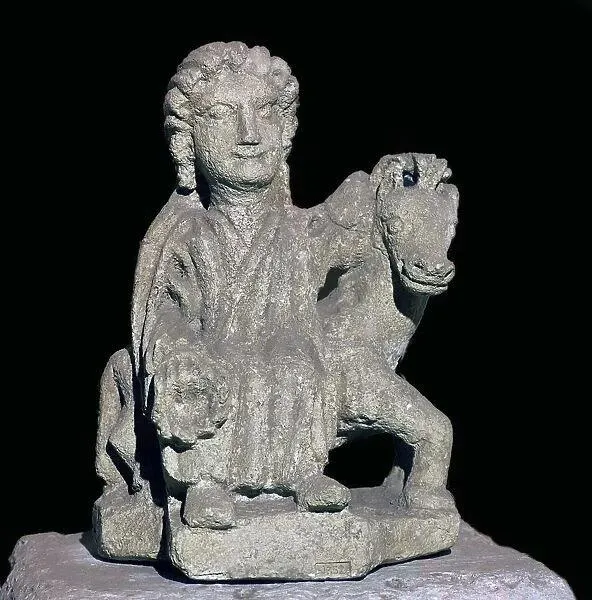
Depictions often show Epona sitting on a horse or surrounded by horses. She often holds a cornucopia, fruit or ears of grain in her hands. This makes it clear that their importance goes beyond the pure protective function for animals. She embodies fertility, prosperity, care and the life-giving forces of nature.
Epona symbolically stands for the principle of the harmonious connection between humans and natural forces. The horse has always symbolized energy, movement, instinct and freedom. Epona appears as the power that directs, protects and brings these forces into a meaningful context.
Parapsychologically and symbolically, Epona can be understood as an archetype of the leader between the worlds. In various Celtic traditions, horses have a close connection to the afterlife and spiritual journeys. As a horse goddess, Epona is sometimes associated with transitions, guidance and the accompaniment of souls. She embodies the power that guides the traveler safely through unknown areas - be it in the outer or inner world.
Their veneration by Roman cavalry troops also shows their function as a protective force on paths and in times of change. Anyone who travels leaves the familiar and enters a space of uncertainty. Epona symbolizes that trusting companionship that enables orientation in movement.
In a deeper symbolic meaning, Epona embodies the archetype of the guardian of the path of life. The horse represents the vital energy of life itself, which carries people forward. Epona reminds us that strength alone is not enough; it requires direction, measurement and connection. As the goddess of the horse, she symbolizes the unity of instinct and consciousness, freedom and responsibility. It represents the ability not to suppress the natural forces of life, but to bring them into harmony with a higher goal. This makes Epona a symbol of trusting progress on the path of development.




Spiritual Narcissism: Recognizing It Without Shame - Learn How to Cultivate Empathy and Personal Growth
Read More