

Esotera
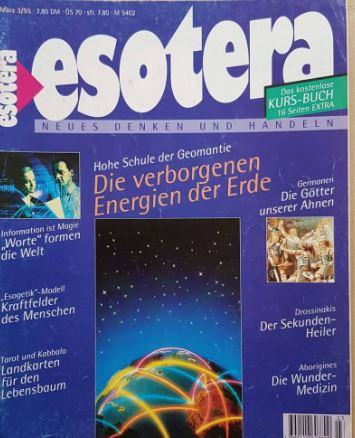
esotera (Magazine)
Meaning & Origin:
esotera was for decades the central publication of the German-speaking esoteric community. Founded in 1951, it became a long-running magazine that bridged traditional occult philosophy and the emerging spiritual movements of the 20th century.
Published by the Bauer Verlag in its later years, esotera positioned itself as a forum for the dialogue between science, spirituality, and inner experience.
Its themes ranged from astrology, parapsychology, hermeticism, reincarnation, and mysticism to alternative healing, meditation, and the study of consciousness. Through its open and curious tone, esotera helped bring the hidden world of esoteric thought into public discussion.
Esoteric and Cultural Significance:
-
esotera was more than a magazine — it was a spiritual chronicle of the modern Western esoteric revival.
-
It connected the classical occult schools of the 19th century (Theosophy, Anthroposophy, Hermeticism) with the new spiritual movements that emerged in the postwar era.
-
Through essays, interviews, and reviews, it became a mirror of a generation’s awakening, exploring the boundaries between religion, science, and mystical experience.
-
Symbolically, esotera can be viewed as a periodical oracle — a recurring voice of the unseen, translating ancient wisdom into the language of modernity.
Legacy & Influence:
Though the magazine ceased publication in the 1990s, esotera remains a mythic landmark in the history of modern esotericism.
Many contemporary authors, healers, and spiritual teachers trace their first encounters with esoteric philosophy to its pages.
Today, esotera stands as a document of the spiritual search that characterized the 20th century — the meeting of rational inquiry and mystical vision.
Keywords: Modern Esotericism, Consciousness Studies, Hermetic Tradition, Spirituality in the 20th Century, Cultural Bridge
Links:
Free Reading: Tarot, Astrology and Numerology!



The gentle power of sound healing and frequency therapy: basics, benefits, and methods for your well-being
Read More