


Fatum
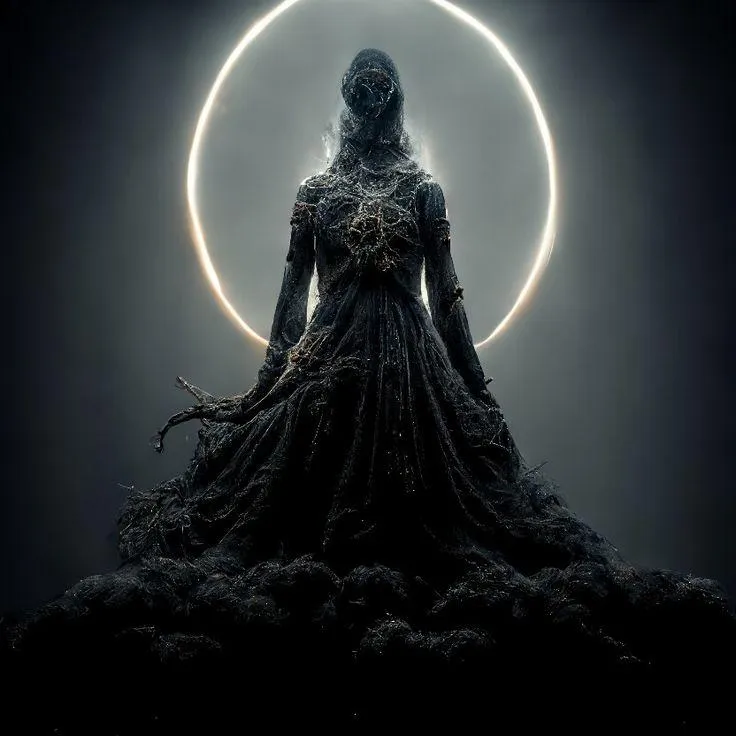
Fatum appears in some late antique, medieval and occult-esoteric traditions as the personification of fateful fate. Unlike the classical Roman Fatum, which denotes the divine decree of fate or the cosmic order, this figure appears as a female power that embodies misfortune, loss, strokes of fate and the inevitable turns of life.
Historically, Fatum in this form is not part of the established structure of ancient Roman religion. Rather, it appears in allegorical, demonological and symbolic traditions in which abstract powers are presented as beings or figures. As a result, the concept of fate became a female figure of fate who meets people as the embodiment of fate.
Symbolically, Fatum stands for the principle of inevitable testing. It represents those events that lie outside of human planning and shake existing certainties. Illness, loss, separation, failure or sudden upheavals appear as an expression of their power. It's less about punishment than about experiencing the limitations of human control.
Parapsychologically and symbolically, Fatum embodies the archetype of the dark woman of fate. Similar to the Norns, the Moiras or other fateful figures, she stands at the transitions of life. It appears where an old state ends and a new one begins. Their connection to unhappiness points to the experience that change often does not happen voluntarily, but is triggered by crises.
In visions, dreams and symbolic representations, Fatum often appears as a veiled woman, spinner, weaver or silent messenger of fate. These images emphasize her connection to the thread of life and the hidden patterns of existence. She doesn't decide arbitrarily, but represents the power of those processes that are greater than individual desire.
In a deeper symbolic meaning, Fatum embodies the archetype of relentless change. It does not destroy for the sake of destruction, but rather dissolves forms that have exhausted their potential for development. What appears to be a misfortune can become the beginning of a new path. Fatum reminds us that fate consists not only of happy coincidences, but also of the trials that force people to exceed their previous limits. It symbolizes the dark but necessary side of change through which maturation, knowledge and inner transformation become possible.
Related terms
- Parcae – the Roman goddesses of fate
- Moirai – the Greek women of fate
- Fatum (fate) - the divine saying of fate in antiquity
- Norns - the weavers of fate in Nordic mythology
- Fortuna - the goddess of luck and twists of fate



What Actually Changes in Your Energy Field During Deep Healing? - Discover the Surprising Truth
Read More