


Gerda Walther
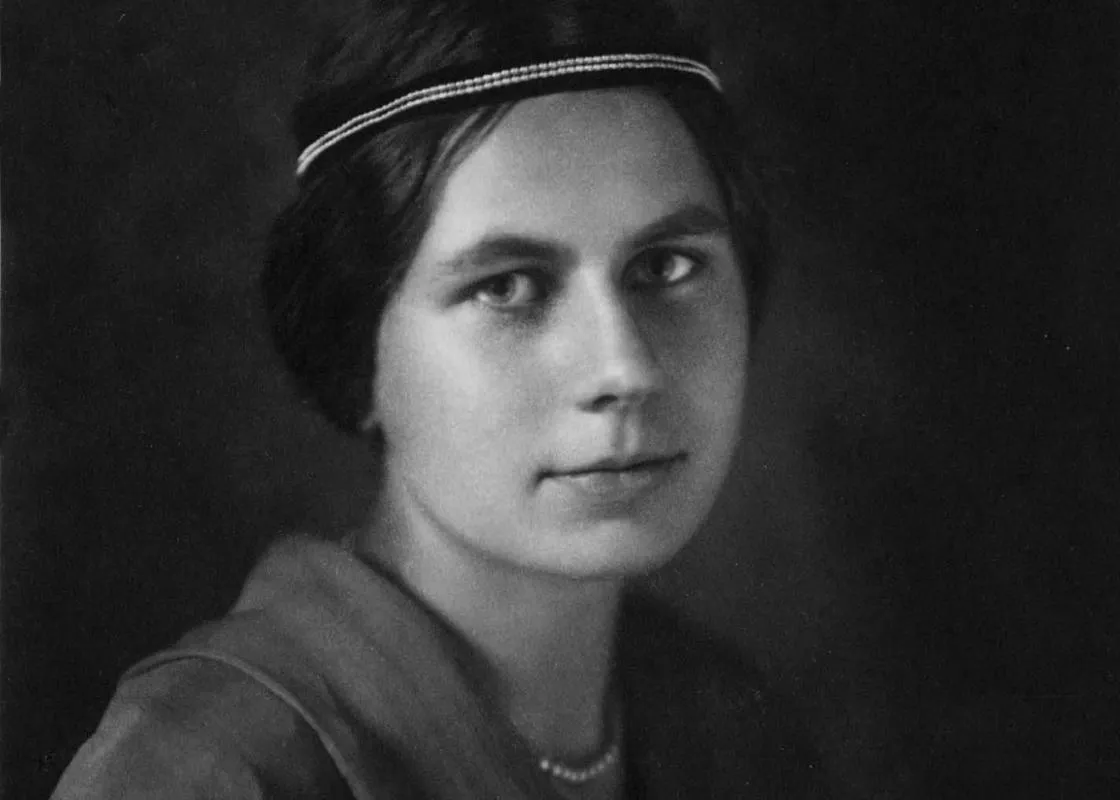
Gerda Walther was a German philosopher, phenomenologist and parapsychologist who studied mysticism, consciousness and the extraordinary experiences concerned. Originally coming from the philosophical tradition of phenomenology, she increasingly turned to questions of parapsychology, telepathy and religious experience. She worked for a time with the psychiatrist and parapsychologist Albert von Schrenck-Notzing and published numerous works on mysticism and psychological phenomena.
Symbolically, Gerda Walther stands for the principle of the bridge between inner experience and scientific description. Unlike many occultists, she did not look for spectacular miraculous phenomena, but rather asked how extraordinary experiences can be understood phenomenologically. The focus was not on the sensation, but rather on the structure of the experience.
Parapsychologically and symbolically, Gerda Walther can be understood as a cartographer of borderline states of consciousness. Mystical experiences, telepathy or transpersonal perception did not appear to her as mere disturbances of the rational, but as indications that consciousness possibly has more layers than everyday ego perception. What was particularly interesting to her was the possibility that forms of direct connection could exist between people that go beyond ordinary communication.
In a deeper symbolic meaning, Gerda Walther embodies the type of quiet border researcher. It does not represent magic in the classic sense, but rather the patient investigation of the transitional area between soul, spirit and experience. Her work is a reminder that the unusual does not always lie outside reality - sometimes it lieshidden within ordinary experience itself. For them, mysticism was not a counterpoint to knowledge, but possibly another form of knowledge.