Gorakhnath
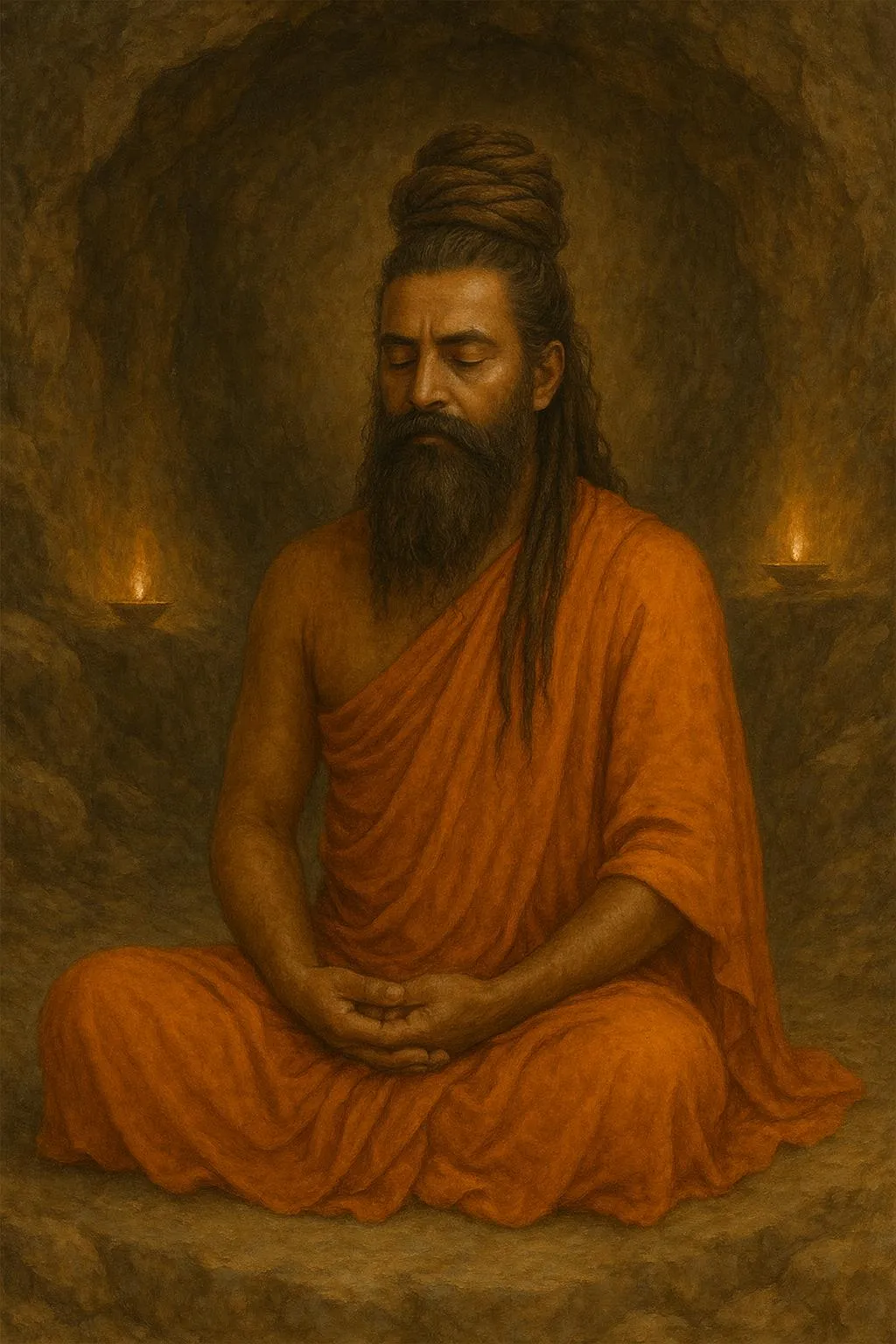
Gorakhnath is considered one of the most important yogis and spiritual masters of India. He is revered as the main figure of the Nath Tradition and is considered a student or successor of Matsyendranath. Although the historical dates are uncertain, his work is usually placed between the 11th and 13th centuries. His influence on yoga, tantra and the spiritual culture of northern India extends to the present day.
Gorakhnath is seen as the systematizer of Nath yoga. Many teachings of the later Hatha Yoga are directly or indirectly associated with his name. In numerous legends he appears as a perfect yogi, miracle worker and teacher who instructs kings, ascetics and seekers.
Symbolically, Gorakhnath stands for the principle of mastery over inner nature. While many spiritual paths want to leave the world, his tradition aims at the transformation of man himself. Body, breath, energy and consciousness are not viewed as obstacles, but as tools of knowledge.
Parapsychologically-symbolically, Gorakhnath is closely linked to the ideas of Siddhis - extraordinary abilities described in the Indian yoga tradition. He was credited with miraculous powers, healing abilities, bilocation, long lifespan and control over natural elements. However, the Nath tradition emphasizes that such powers are merely side effects of deep spiritual development. The real goal remains the liberation of consciousness.
A central theme of his teaching is the mastery of breath (Prana) and the awakening of the Kundalini. The human body is understood as a microcosm in which the same forces that permeate the universe are reflected. Spiritual practice serves to consciously harmonize these forces.
In deeper symbolic meaning, Gorakhnath embodies the archetype of the inner alchemist. He does not transform metals, but consciousness. His figure represents the conviction that the divine does not have to be sought outside of man, but can be discovered within one's own being. The yogi becomes the laboratory of transformation. Gorakhnath symbolizes the possibility that discipline, knowledge and devotion can together produce a state in which the boundaries between the human and the transcendent become permeable.