


Haruspicy
Definition & Origin:
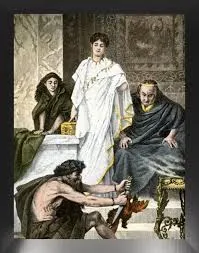
Haruspicy (from Latin haruspex, meaning “entrail observer”) is a form of divination that interprets the entrails—especially the liver—of sacrificed animals. It was particularly prominent in Etruscan and Roman cultures and is a specialized branch of extispicy and sacred divination.
Core Concept & Worldview:
Haruspicy assumes that the gods reveal their will within the inner organs of the sacrificial animal. The liver was regarded as the seat of life force and a mirror of divine order. Variations in shape, color, or texture were interpreted as omens.
Ritual Procedure:
-
Sacrifice of an animal according to ritual prescriptions.
-
Careful removal and examination of the entrails.
-
Comparison with established symbolic models.
-
Interpretation regarding political, military, or personal matters.
Historical & Cultural Context:
Haruspicy was highly developed in Etruscan culture and later institutionalized in Rome. Trained priests, known as haruspices, advised state authorities. Archaeological finds reveal detailed models for liver interpretation.
Symbolic Meaning:
The liver symbolized vitality and central order. In divination, it represented the inner realm as a site of revelation. Haruspicy embodies the belief that the sacred manifests within organic matter.
Psychological Interpretation:
Psychologically, haruspicy can be understood as a ritualized meaning system that reinforced collective authority and decision-making confidence.
Modern Esoteric Perspective:
Today, haruspicy is not practiced but studied historically as an example of ancient sacrificial divination.
Distinction:
Haruspicy differs from general extispicy through its strong Etruscan-Roman codification and from necromancy by focusing on animal sacrifice rather than communication with the dead.


Activate the Power of Manifestation and Use It to Turn Your Life Around
Read More