Inuit
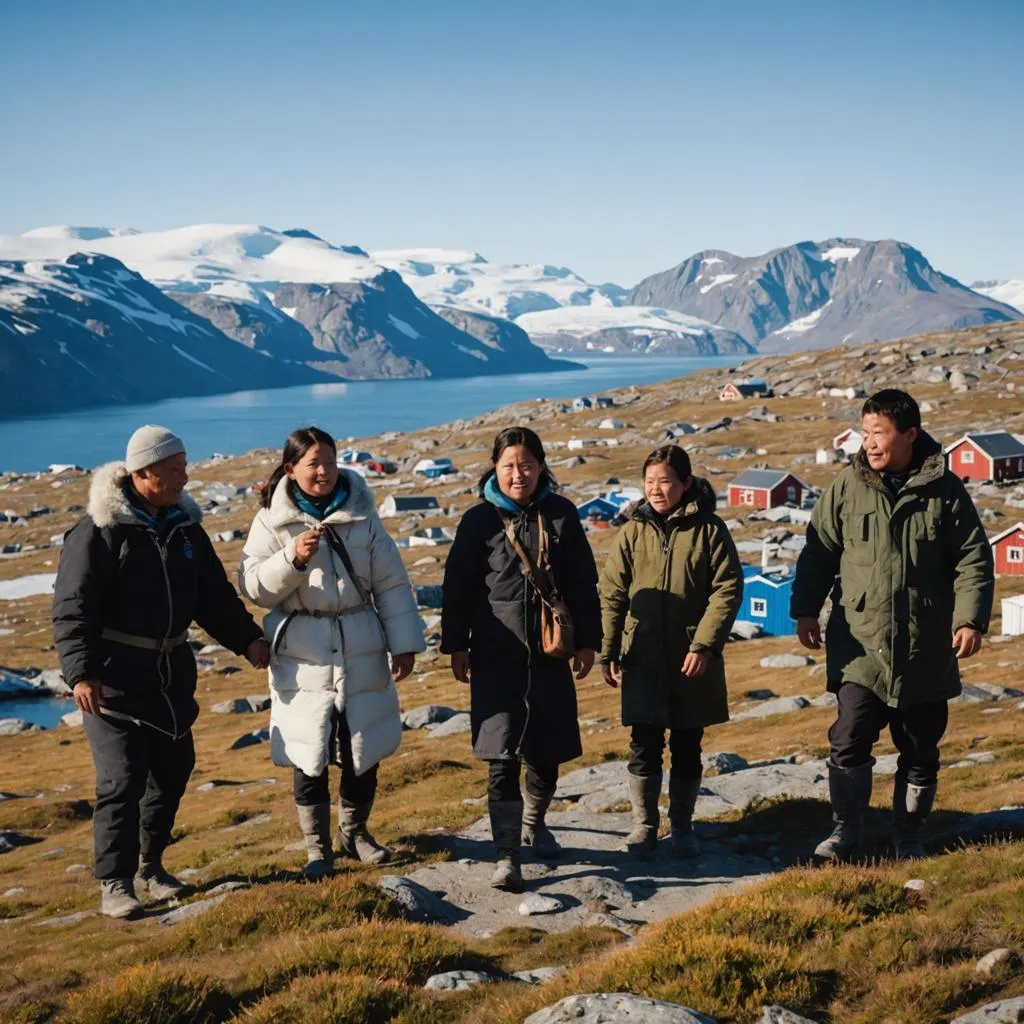
The Inuit are the indigenous inhabitants of large parts of the Arctic regions of Greenland, Canada, United States (Alaska) and, culturally related, also some arctic areas of Siberia. The name Inuit simply means "people" in their language. Today it is used as a self-designation and has largely replaced older external designations.
Traditional Inuit culture developed in the extreme conditions of the Arctic. Hunting seals, whales, caribou and other animals has been the basis of survival for thousands of years. This resulted in a way of life closely adapted to the rhythms of ice, sea, seasons and animal migration. Nature was not understood as something separate from humans, but as a network of relationships in which humans are integrated.
Symbolically, the Inuit stand for the principle of adaptation to the limiting conditions of life. Their culture shows how people can develop a complex spiritual, social and symbolic world even under extreme environmental conditions. The Arctic does not appear as a hostile space, but as a living order whose laws must be understood and respected.
Parapsychologically and symbolically, the Inuit are particularly interesting because of their rich shamanic traditions. The traditional shamans, often referred to as Angakkuq, were considered mediators between people, animals, ancestors and spirit beings. Trance, dream journeys, healing rituals and spiritual communication played an important role. Animal spirits, transmigration of souls and encounters with beings of the invisible world appear in many stories. These ideas were not understood as “supernatural,” but rather as part of a broader reality.
A central motif of Inuit cosmology is the permeability between life forms. Humans and animals have a mutual relationship of respect and exchange. Animals have souls and consciousness; Hunting is therefore not only about obtaining food, but also a spiritual relationship. Many myths describe transformations between humans and animals or journeys between different levels of reality.
In a deeper symbolic meaning, the Inuit embody the archetype of the people on the borders of the world. The vast ice landscapes represent those areas of consciousness in which orientation arises not through fixed structures, but through attention, experience and inner connection. The Inuit remind us that knowledge comes not only from control, but also from listening to the environment. Their tradition symbolizes the deep insight that survival and spirituality ultimately rest on the same ability: the art of living in relationship with a larger order.