
Lha
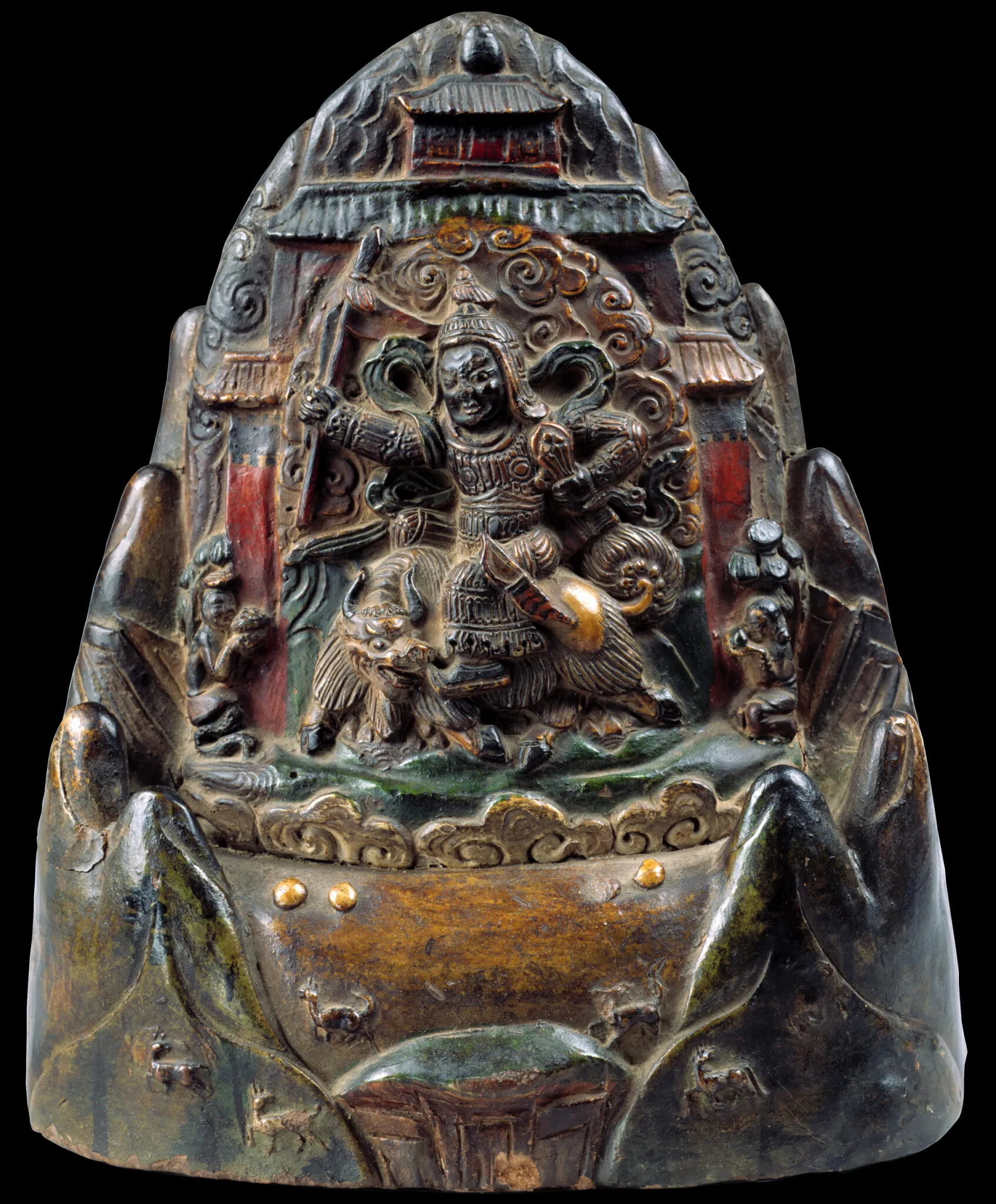
Lha refers, in ancient Tibetan cosmology, to a class of luminous, elevated beings associated with sky, height, and order. Lha are not omnipotent creator gods, but supportive forces embodying stability, clarity, and orientation. They are close to humanity, yet not human.
Symbolically, lha represent the principle of elevation. They mark a level of reality where overview becomes possible: openness instead of entanglement, direction instead of confusion. Lha are not emotional, not personal, not negotiable. Their presence orders rather than comforts. They stand for measure, dignity, and distance.
Esoterically interpreted, lha embody the vertical axis of the world. They are linked to mountains, sky, light, and clear air—not as locations, but as qualities. Where lha are effective, orientation prevails. They do not provide answers, but create the conditions under which answers can arise. Humans encounter them not through supplication, but through alignment.
On a deeper symbolic level, lha stand for what in the human being points beyond itself without abandoning it. They are not inner images, but reference points. Lha remind us that order is not fabricated, but upheld—and that dignity arises from the capacity to bind oneself to something higher without self-erasure.



The Fascinating World of Demonology: A Powerful Insight into the Study of Demons and Their Influence on Humanity!
Read More