


Sahdags
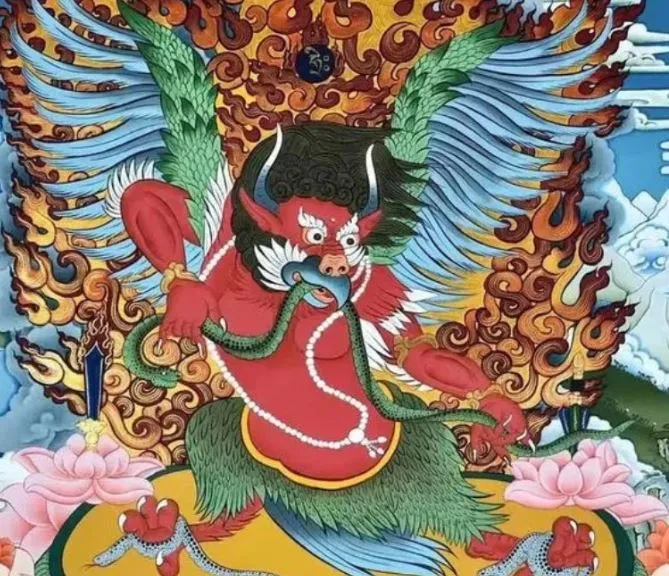
Sahdags (also Sadag, “lords of the ground”) refer, in ancient Tibetan cosmology, to a class of earth- and place-bound guardian beings overseeing land, soil, stone, and inhabited spaces. Sahdags are not universal gods, but territorial powers, whose effectiveness is tied to specific locations.
Symbolically, sahdags represent the principle of rootedness and boundary. They embody the right of place to be respected. Where sahdags are honored, order remains stable; where they are violated, disturbance, illness, or misfortune may arise. Their presence makes clear that space is not neutral, but carries claim and memory.
Esoterically interpreted, sahdags form the supporting layer of world order. They hold what rests upon them: houses, villages, paths, rituals. Humans do not live on the land, but in relationship with it. Ritual practices in ancient Tibet therefore aimed to appease, acknowledge, and integrate sahdags—not to dominate them.
On a deeper symbolic level, sahdags express the insight that every action affects a place. Movement, construction, use, and ownership intervene in existing orders. Sahdags remind us that stability is not abstract, but arises from respected attachment. They embody the measure between use and reverence, appropriation and belonging.