
Sciomancy
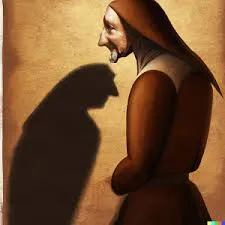
Sciomancy (from Greek skiá meaning shadow and manteía meaning divination) is a divinatory practice that interprets shadows as carriers of insight. Shapes, movements, distortions, or sudden appearances of shadows—often cast by fire, candles, or sunlight—are read symbolically.
Core Concept & Worldview:
Sciomancy assumes that shadows are not merely the absence of light but liminal phenomena containing hidden meaning. They exist between visible and invisible, conscious and unconscious realms, revealing what cannot be perceived directly.
Methods of Sciomancy:
-
Shadow Reading: Interpreting forms and contours of shadows.
-
Candle Sciomancy: Reading shadows cast by a single flame.
-
Object-Based Sciomancy: Using hands, figures, or objects to create shadows.
-
Movement Sciomancy: Observing distortion, expansion, or dissolution of shadows.
-
Ritual Sciomancy: Practiced at liminal times such as dusk or midnight.
Historical & Cultural Context:
Sciomantic elements appear in antiquity, chthonic and necromantic cults, and European folk magic. Shadows were often associated with souls, doubles, or spirits. Many cultures regarded the shadow as part of one’s life force.
Symbolic Meaning:
The shadow symbolizes the hidden, repressed, or unconscious. In divination, it points to inner conflict, unintegrated aspects of the self, or unseen influences. Sciomancy is closely linked to themes of fear, insight, death, and transformation.
Psychological Interpretation:
Psychologically, sciomancy can be understood as the projection of inner imagery onto external forms. Interpreting shadows allows access to archetypal material and repressed emotions, particularly within shadow work.
Modern Esoteric Use:
In contemporary esotericism, sciomancy is rarely practiced as a standalone art but appears in ritual magic, meditative self-inquiry, and psychologically oriented shadow work. Its purpose is revelation rather than prediction.
Distinction:
Sciomancy differs from scrying by focusing on shadows rather than reflective surfaces and from necromancy by its symbolic rather than evocative approach.

Unlocking the Power of Spiritual Healing: A Journey to Wholeness and Well-Being
Read More