Shang Shung
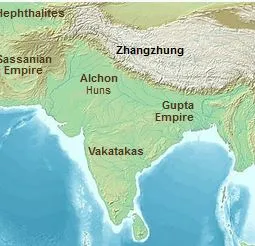
Shang Shung (also spelled Zhang Zhung, Tibetan ཞང་ཞུང་) refers to an ancient kingdom of Western Tibet, regarded in spiritual tradition as the homeland of the Bön religion. Historically, Shang Shung remains only partially documented; esoterically, it appears as an archaic source of pre‑Buddhist wisdom, predating the rise of imperial Tibet and its later schools.
Symbolically, Shang Shung represents a mythic origin beyond linear history. It is less a political state than a spiritual memory, a time and place where cosmology, ritual, healing, and direct realization were still unified. In this sense, Shang Shung is the land before separation—before religion, medicine, and mysticism diverged.
Within Bön tradition, Shang Shung is closely linked to Tönpa Shenrab, the legendary founder of Bön. From this region, teachings on cosmology, mind, ritual practice, and Dzogchen‑like realization are said to have spread. The Zhang Zhung Nyengyü Dzogchen cycle is regarded as a direct continuation of this primordial transmission.
Esoterically, Shang Shung functions as an archetypal north—an inner realm of clarity, openness, and immediacy. Like Uddiyāna in Buddhist Tantra, Shang Shung symbolizes a source‑land of realization, not so much to be discovered geographically as remembered inwardly. It echoes a time when humans lived in direct dialogue with sky, earth, and mind.