


Shen
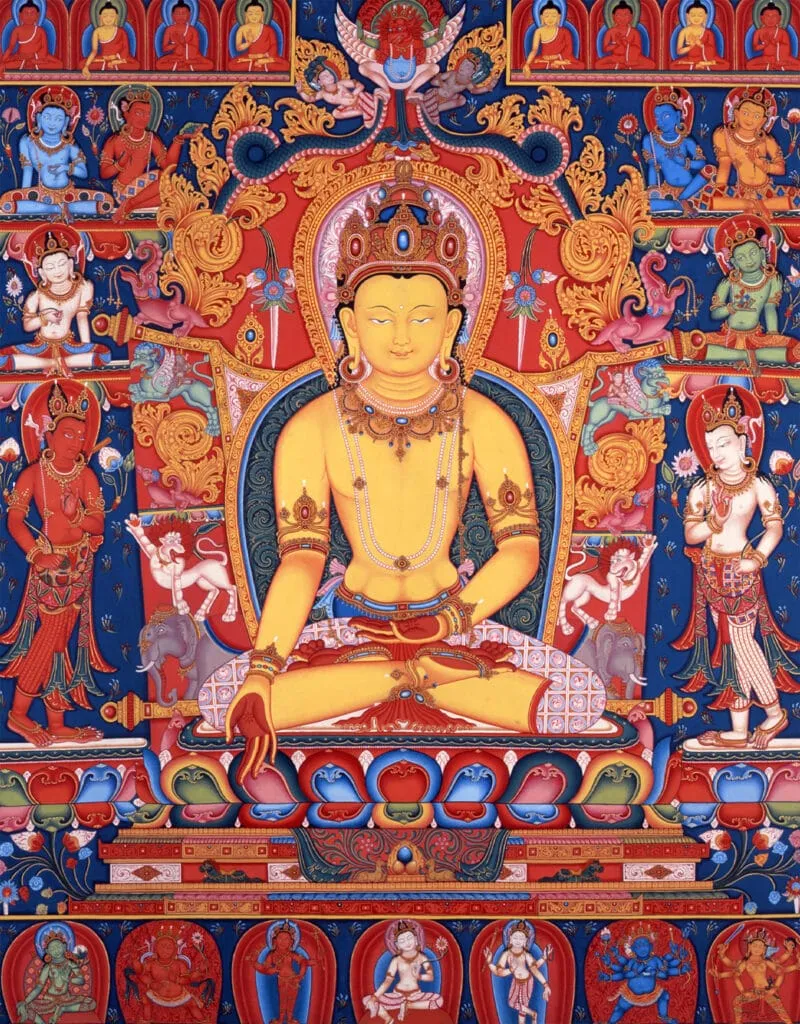
Shen, in ancient Tibetan and especially Bön contexts, refers to a ritual and cosmological function rather than merely a person. A shen is not a priest in the institutional sense, but a bearer of ordering competence—one who knows how forces are addressed, bound, and aligned.
Symbolically, the shen represents the role of mediator between levels. He moves between the visible world and unseen effectiveness without collapsing the distinction. His task is not revelation, but regulation. The shen restores what has fallen out of balance by observing measure, place, and timing.
Esoterically interpreted, the shen embodies the principle of knowledge enacted. His knowledge is not speculative, but functional. Rituals are not acts of belief, but precise interventions in a sensitive system. The shen does not act from personal power, but from transmission and insertion into a greater order.
On a deeper symbolic level, the shen stands for a culture in which spirituality is understood not as inward experience, but as responsibility for relations. He reminds us that knowledge has consequences—and that engagement with unseen forces requires discipline, restraint, and precision. The shen is thus less a teacher than a guardian of measure.