Siddharameshwar Maharaj
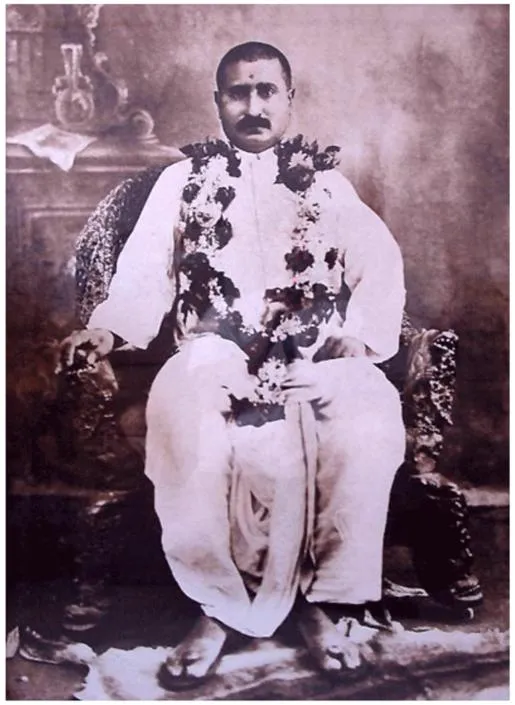
Siddharameshwar was originally trained in a religious tradition that emphasized both devotional practice and philosophical insight. Over the course of his life, however, he developed a particularly direct form of instruction. He taught that man's true nature was already perfect and did not need to be created through lengthy spiritual exercises.
Symbolically, Siddharameshwar stands for the principle of inner conversion. Attention should not be directed outwards to objects, experiences or ideas, but rather to the origin of perception itself. His teaching calls for questioning the identification with body, thoughts and personality and returning to pure consciousness.
Parapsychologically-symbolically, Siddharameshwar is notable because he did not consider spiritual phenomena, visions and extraordinary experiences as an end goal. Like Nisargadatta Maharaj later, he saw such experiences as temporary phenomena. What is important is not what appears in consciousness, but rather the recognition of what underlies all phenomena.
A central element of his teaching was the so-called Bird Method (Vihangam Marg). In contrast to the slow “ant path” of spiritual development, the seeker should come directly to the knowledge of his true nature through immediate insight. This emphasis on immediate knowledge influenced the entire later line of his students.
In a deeper symbolic meaning, Siddharameshwar Maharaj embodies the archetype of the Teacher of Return to the Self. He stands for the insight that truth is not created, but rather recognized. His teaching reminds us that man often searches far away for something that is closer to his own being than any thought. Siddharameshwar symbolizes the radical simplicity of non-duality: the highest knowledge does not consist in the acquisition of knowledge, but in the recognition of what has always been present.