

Sushumna
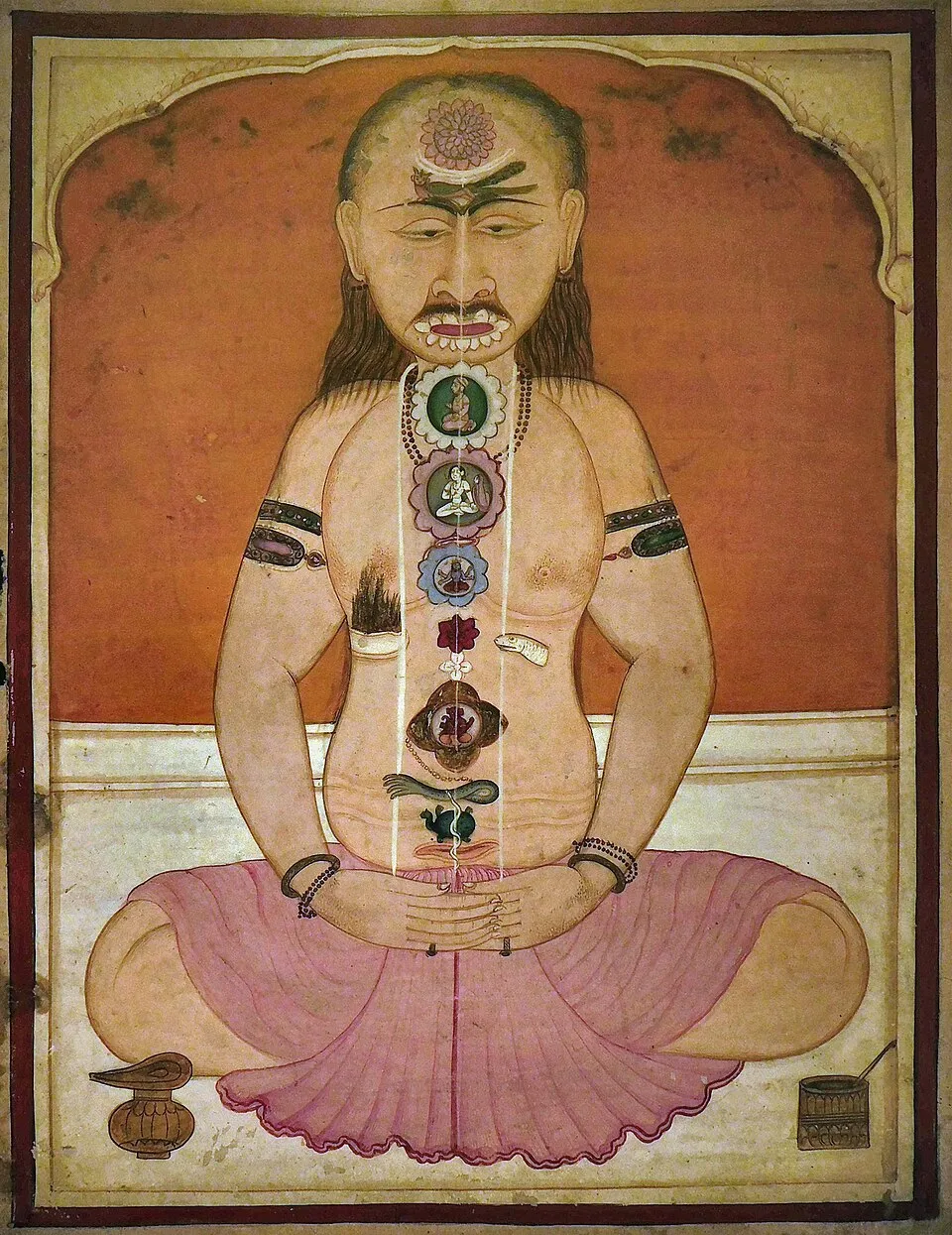
Sushumna (Sanskrit suṣumṇā) refers in yogic and tantric traditions to the central subtle channel running along the spine, forming the primary axis of the subtle body. It corresponds to the Tibetan Uma / Avadhuti and is not an anatomical structure but an architecture of awareness.
Symbolically, Sushumna represents the path of non‑duality. While the side channels Ida and Pingala carry polar forces—moon and sun, stillness and activity, feminine and masculine—the Sushumna is the middle way, where opposites dissolve. As long as energy circulates in the side channels, experience remains dualistic; when it enters the Sushumna, direct realization becomes possible.
Esoterically, the opening of the Sushumna marks a decisive turning point in spiritual practice. It is the channel through which Kundalini energy ascends, activating centers of awareness and leading to states of clarity, silence, and unity. Yet Sushumna is less something to be forced open than a space that reveals itself when grasping relaxes.
In tantric imagery, Sushumna is the axis between heaven and earth, body and transcendence—the inner mountain, the world tree, the pillar of light. It is the invisible center around which perception and identity revolve.
Symbolic Layers:
-
Energetic: central current of vital force
-
Psychic: dissolution of inner polarity
-
Mystical: entry into non‑dual awareness
Key Images: vertical axis of light, hollow channel, rising energy, spine as cosmic axis