
Tukdam
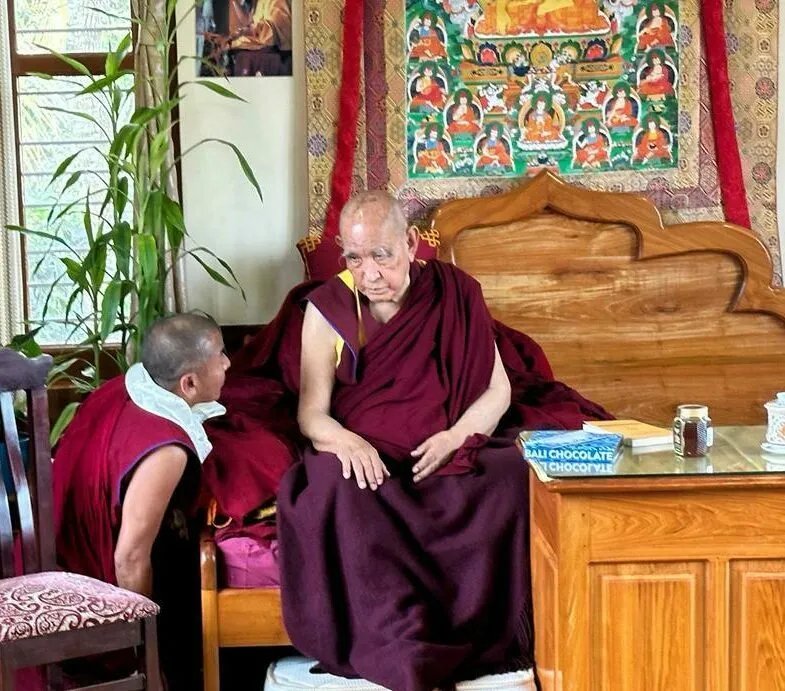
Tukdam in Tibetan Buddhist esotericism refers to an extraordinary meditative state that may continue beyond physical death. The term roughly translates as “binding of the heart-mind”, indicating the unshakable anchoring of consciousness in clear light awareness. Tukdam is not a technique in the conventional sense but the culmination of a lifetime of practice, where mind, breath, and essence are perfectly unified.
Symbolically, Tukdam represents the moment beyond the final breath, in which consciousness does not dissolve but remains still, lucid, and gathered. During this state, the body shows no ordinary signs of decay, becoming a vessel of silent presence. In inner teachings, Tukdam is regarded as evidence that mind is not dependent on the body and can transcend it at death.
On an archetypal level, Tukdam embodies transition without rupture: death is not an end but a refinement of presence. The practitioner abides in the primordial state (Tibetan: rigpa), free from fear, hope, or identity. Thus, Tukdam appears as a threshold state, a sacred still point between worlds.
Symbolic Layers:
-
Ontological: continuity of awareness beyond form
-
Psychic: complete absorption without object
-
Mystical: union with the clear light
Key Images: motionless body, gentle warmth, inner radiance, silence, open space
Archetypal Role: mastery of transition, triumph of presence over impermanence