Vates
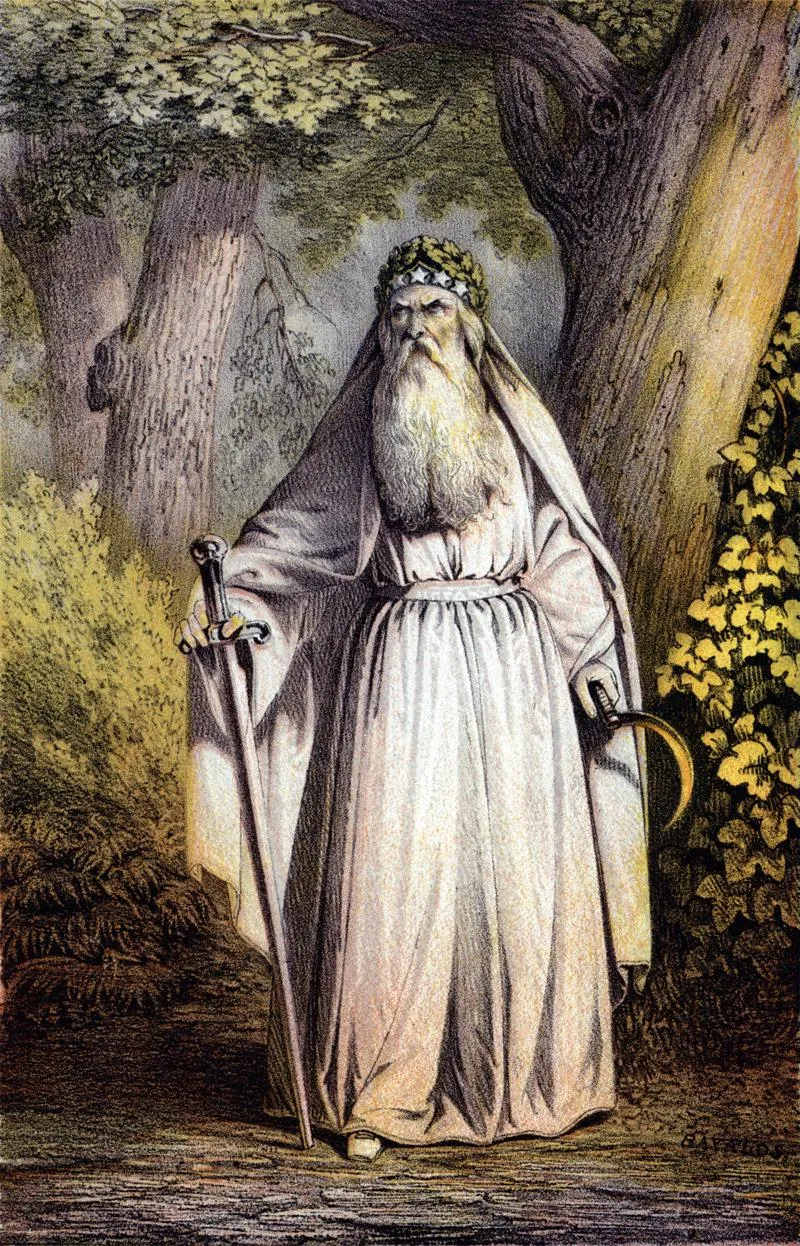
Vates is a Latin term for a seer, prophet or inspired poet. In the ancient world, the word referred to people who were considered recipients of divine inspiration and were said to have access to hidden truths through visions, prophecies or ecstatic inspiration. Particularly among the Celts and Gauls, ancient authors mention the Vates as a separate group of religious specialists alongside druids and bards.
Symbolically, the Vates stands for the principle of inspired seeing. He not only observes the external world, but also listens for signs, symbols and hidden connections. His knowledge does not arise primarily through logical analysis, but rather through inspiration, intuition or vision. The Vates thus embodies the idea that knowledge is sometimes received rather than created.
Parapsychologically and symbolically, the Vates can be understood as an archetype of the visionary consciousness. He moves on the border between perception and revelation. Dreams, premonitions, ecstatic states or symbolic images become carriers of meaning for him. The seer is less a fortune teller in the modern sense than a mediator between the visible and invisible order. Its job is to make hidden patterns visible.
In the Celtic tradition, the Vates are often associated with the interpretation of sacrifices, observation of nature and prophetic vision. While the Druids were seen more as scholars and keepers of religious knowledge, the Vates more strongly embodied immediate inspiration. They were closer to vision, ecstasy and prophecy.
In a deeper symbolic meaning, the Vates stands for the person who opens themselves to the unknown. It does not live solely from what is known, but from the willingness to listen to what does not yet have a fixed form. The Vates reminds us that knowledge does not always arise through calculation. Sometimes it appears as an image, a premonition or a sudden certainty. He embodies the ancient hope that behind the visible events there is a deeper order that can reveal itself to the receptive consciousness.