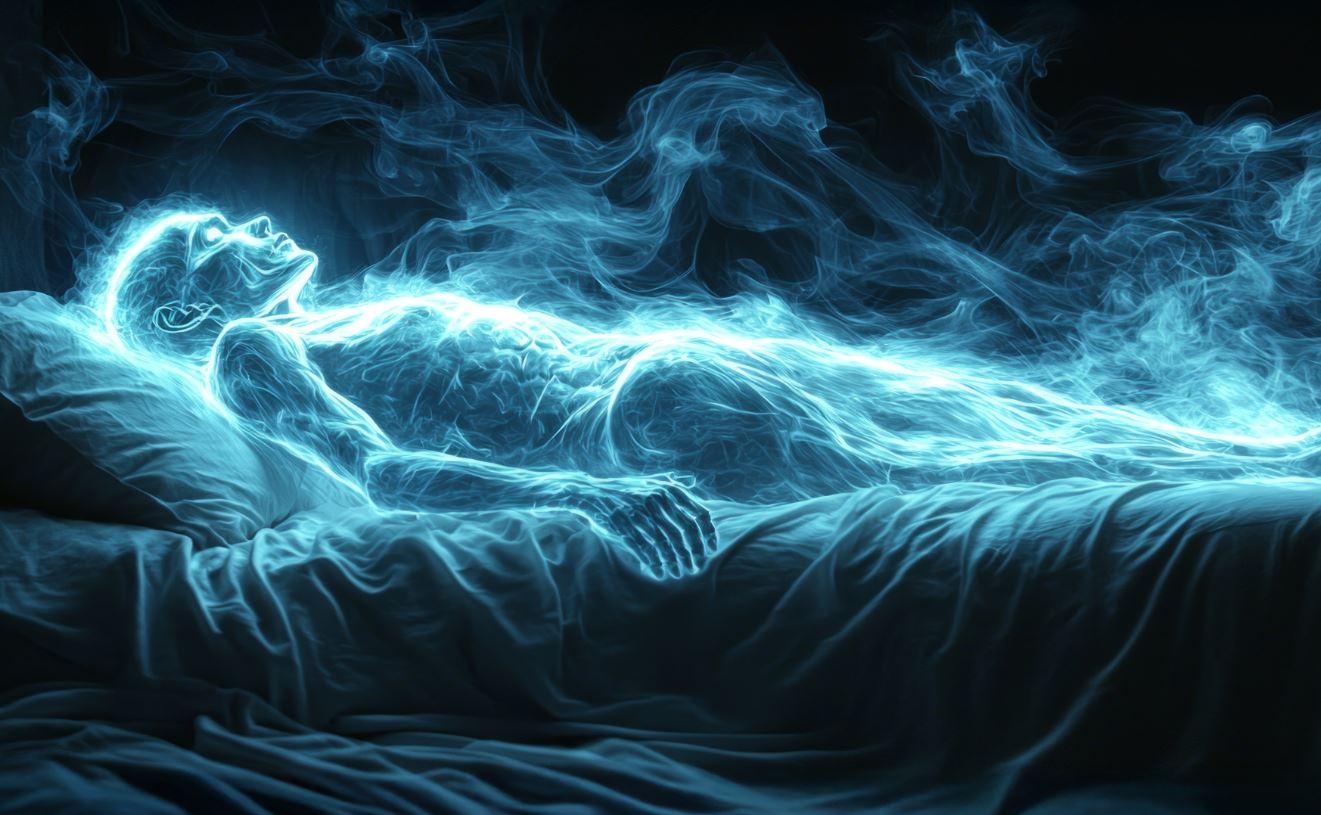
Veridical Hallucination

A veridical hallucination refers in parapsychology and psychological research to a perception that has the form of a hallucination, but subsequently proves to be factually accurate. The affected person sees, hears or experiences something that should not be accessible through the normal senses at the time of perception, but is later confirmed by independent information.
The term comes from the Latin veridicus ("truthful", "truth-speaking"). In contrast to the usual hallucination, the perception here is not understood as a purely subjective misperception, but as an experience with an unexpected connection to real events.
Symbolically, the veridical hallucination stands for the principle of truth-bearing appearance. The image or vision initially appears like a fantasy, dream or illusion. Only later does a correspondence with reality reveal itself. This calls into question the clear separation between imagination and knowledge.
Parapsychologically and symbolically, the veridical hallucination is one of the classic borderline phenomena. It was discussed particularly frequently in connection with crisis phenomena, deaths, telepathy and premonitions. Typical are reports in which people suddenly see the figure of a relative and later find out that they had an accident or died at the same time. Such cases played a central role in early psychological research.
From a psychological perspective, the phenomenon can be interpreted as a special form of intuitive processing, unconscious pattern recognition or subsequent meaning formation. Parapsychological interpretations, on the other hand, see this as possible evidence of extrasensory information absorption. There is still no generally accepted explanation.
In a deeper symbolic meaning, the veridical hallucination stands for the question of whether consciousness can occasionally absorb information that lies outside its usual range of perception. She embodies the uncertainty about where the boundary lies between imagination and knowledge. The phenomenon is a reminder that not every vision has to be false and that truth sometimes appears in a form that initially looks like deception. The veridical hallucination thus symbolizes the possibility of a hidden correspondence between inner image and external event.


Embark on an astral adventure: Experience how to bring body and mind into harmony
Read More