Transfiguration
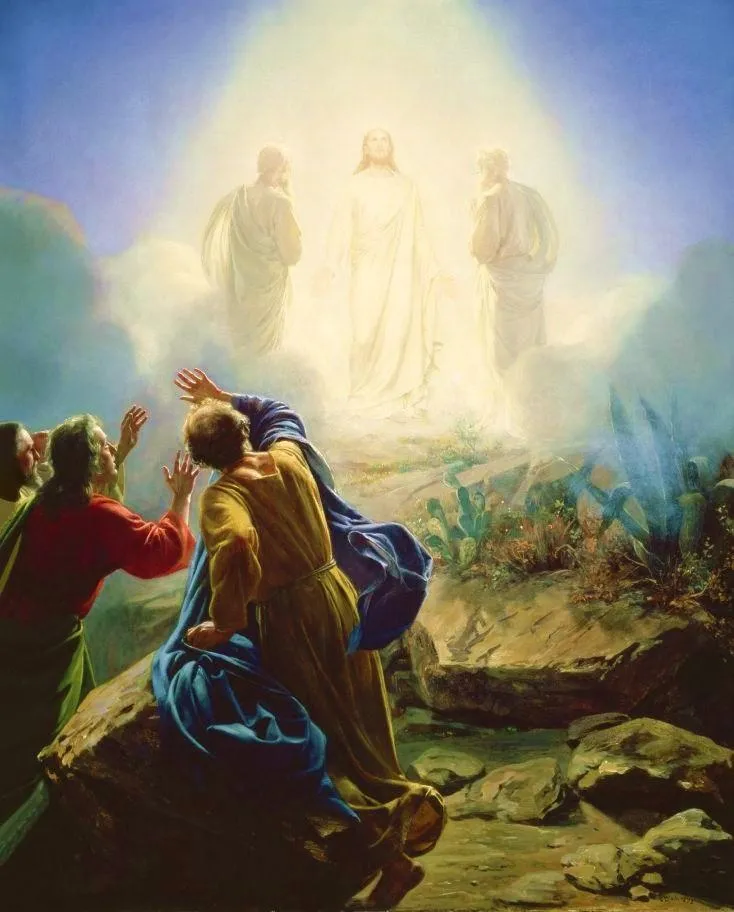
Transfiguration in religious and theological usage refers to the revelation of a higher, divine reality through a transformed appearance. The term is particularly associated with the Transfiguration of Jesus, in which, according to the Gospels, Jesus appeared on a mountain in front of his disciples in a supernatural light. His form did not become something else, but rather revealed a deeper dimension of her being.
Symbolically, the transfiguration stands for the principle of transcendence that has become visible. What is hidden emerges without the external form completely disappearing. Transfiguration does not change essence through exchange, but through revelation. It shows what was already there but was not previously recognized.
In theological understanding, transfiguration is not mere embellishment or idealization. It means the penetration of the finite by the divine. The person, the world or a figure appear in the light of their actual origin and their deeper purpose. That is why transfiguration is often associated with light symbolism: light makes visible without becoming an object itself.
Parapsychologically and symbolically, transfiguration can be understood as an experience of a heightened state of meaning. Ordinary perception is imbued with a sense of extraordinary presence, wholeness, or sacredness. In mystical experiences, people occasionally report that people, landscapes or objects suddenly appear in a new light and reveal a deep inner reality. Religious tradition interprets such experiences as an approach to the sacred.
In a deeper symbolic meaning, the transfiguration stands for the insight that the higher does not necessarily lie outside the world. The divine does not appear through escape from reality, but through its transparency. Transfiguration means recognizing the ordinary appearance as the bearer of a deeper truth. It symbolizes the possibility that there is a hidden dimension behind the visible, which only becomes perceptible under special conditions.
Transfiguration is therefore the antithesis of disenchantment. While disenchantment reduces the world to its external components, transfiguration reveals its inner meaning. It reminds us that the sacred does not always have to be recreated - sometimes it is enough for the veil to lift.