Volometer
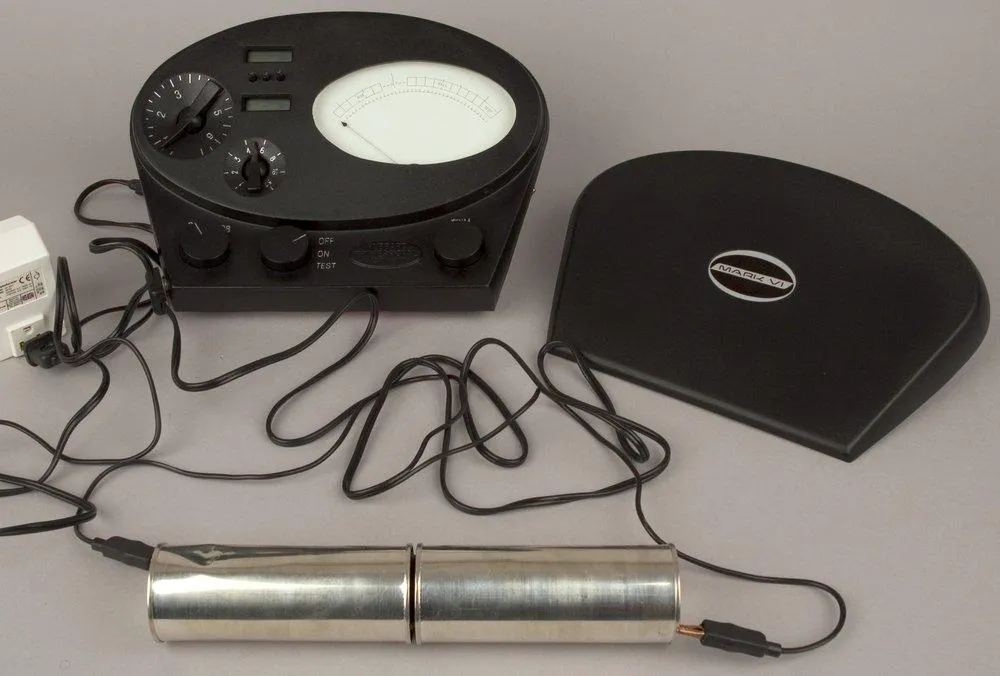
The Volometer was a parapsychological measuring instrument developed by the Swedish researcher Sydney Alrutz was developed. Its purpose was to make the so-called willpower as a dynamic effect experimentally detectable. The device was one of the early attempts to not only describe psychological influences, but also to measure them technically.
Symbolically, the volometer stands for the dream of a physics of the mind. It embodies the hope that thoughts, intentions or acts of will are not just subjective experiences, but rather leave a measurable impact on the outside world. This means that the Volometer belongs to the era in which science and parapsychology were not yet viewed as completely separate areas.
Parapsychologically-symbolically, the volometer represents the attempt to understand the will as a force field. The will appears here not just as a psychological decision, but as something that could exert pressure, create movement, or influence material systems. The instrument should examine precisely this hypothetical border zone between thought and effect.
In a deeper symbolic meaning, the Volometer represents the human longing to make the invisible visible. It brings to mind the recurring idea that consciousness could be more than an internal process. Even if the underlying assumptions have not been scientifically confirmed, the Volometer remains a fascinating symbol of the attempt to build a bridge between intention and matter, between mind and world.
The volometer embodies not only a historical device, but a fundamental question of parapsychology: Can will be an independent effective force - or does it remain limited to the inner world?