Yantra-Yoga
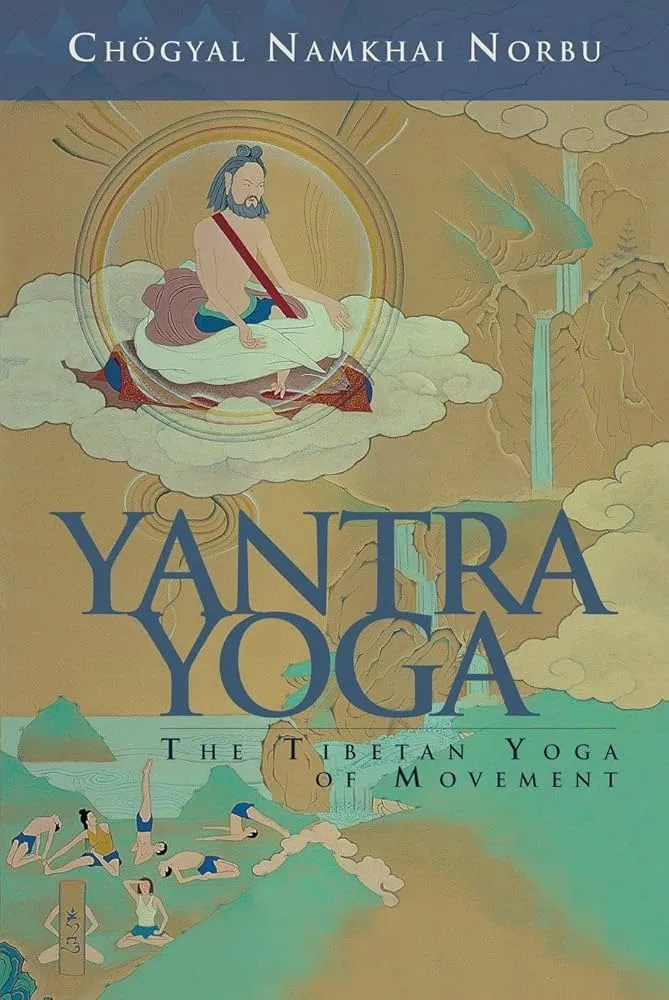
Yantra Yoga (Tib. Trul Khor) refers to a Tibetan yogic system in which movement, breath, gaze, and inner visualization are combined into precisely coordinated sequences. Unlike many other yoga traditions, the emphasis lies not on static posture, but on the dynamic organization of processes. The body is not trained, but tuned.
Symbolically, Yantra Yoga represents the principle of embodied geometry. Each movement follows an inner diagram—a yantra—that is not drawn, but enacted. Space, direction, and rhythm structure consciousness from the outside inward. Insight arises not through stillness, but through precise movement in correct measure.
From a parapsychological-symbolic perspective, Yantra Yoga can be read as a method of conscious threshold regulation. Breath retentions, smooth transitions, and coordinated shifts of tension alter the mental level without collapsing or overwhelming it. Awareness remains alert while habitual cognitive patterns loosen their grip. Visions or anomalous perceptions may occur, but they are byproducts, not aims.
On a deeper symbolic level, Yantra Yoga expresses a spirituality that integrates rather than transcends. Body, breath, and mind are not overcome separately, but aligned into a single functional system. Truth appears here not as insight, but as coherent execution. Yantra Yoga reminds us that order is not only something to be understood, but performed—and that consciousness itself may be a matter of rhythm.