Unlock the Secrets of the Hexagram
The hexagram is an ancient symbol that has been a cornerstone of various cultures, including Chinese philosophy and Western esoteric traditions. This symbol is rich in meaning and has been used in different contexts, from divination to spiritual growth.

Delving into the world of esoteric symbolism, the hexagram represents a complex interplay of ideas and principles. It is a symbol that embodies balance, harmony, and the unity of opposites.
Understanding the significance of this ancient symbol can provide insights into its continued relevance in modern times.
Key Takeaways
- Explore the historical roots of the hexagram in various cultures.
- Understand the symbolic meaning of the hexagram in esoteric traditions.
- Discover how the hexagram is used in modern contexts.
- Learn about the significance of balance and harmony in the hexagram's symbolism.
- Uncover the connections between the hexagram and other ancient symbols.
The Ancient Origins of the Hexagram
The hexagram's history is a tapestry woven from the threads of various ancient cultures and traditions. This symbol, composed of six interlocking triangles, has captivated human imagination for centuries, appearing in various forms and contexts across the globe.
Historical Emergence in Different Cultures
The hexagram has its roots in ancient Chinese philosophy, where it was used in divination practices and symbolized the harmony of opposites. Similarly, in ancient Mesopotamia, the hexagram was associated with the goddess Ishtar, representing the union of celestial and terrestrial forces.
- In China, the hexagram was a crucial element of the I Ching, an ancient text used for guidance and wisdom.
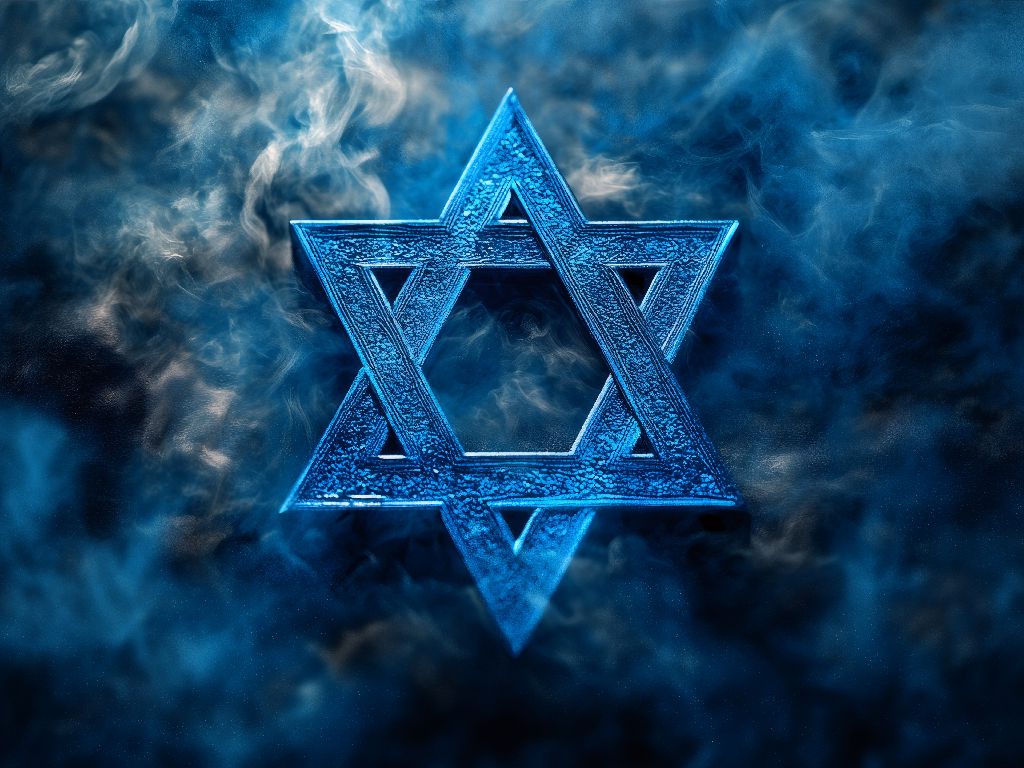
- In Judaism, the hexagram, known as the Star of David, became a symbol of faith and protection.
- In other cultures, variations of the hexagram appeared, often signifying balance and the interconnection of different elements.
Evolution Through the Ages
As civilizations evolved, so did the symbolism and use of the hexagram. It adapted to the spiritual and philosophical beliefs of various eras, becoming a versatile symbol that transcended its original cultural context.
Throughout history, the hexagram has been a symbol of unity and balance, representing the convergence of different principles. Its evolution reflects the dynamic nature of human beliefs and the quest for meaning.
Understanding the Structure of a Hexagram
Delving into the structure of a hexagram reveals a sophisticated system of symbolism that has been used for centuries in divination and philosophical inquiry. A hexagram is composed of six stacked lines, known as trigrams, which are the building blocks of this ancient symbol.
The Six Lines and Their Meanings
Each line in a hexagram can be either broken or unbroken. The broken lines are often associated with the concept of yin, representing receptivity and coldness, while the unbroken lines symbolize yang, embodying creativity and warmth. The combination and arrangement of these lines convey different messages and meanings, as interpreted in the I Ching.
The six lines together form a complex representation of various states of being and situations. For instance, a hexagram with all unbroken lines is considered to represent a state of maximum yang energy, while a hexagram with all broken lines signifies a state of maximum yin energy.
Yin and Yang Symbolism
The interplay between yin and yang is fundamental to understanding the symbolism of hexagrams. As the ancient Chinese philosophy states, "The Tao produces One; One produces Two; Two produces Three; Three produces All things." This quote highlights the significance of the dynamic between yin and yang in generating the complexity of the universe.
"The Tao produces One; One produces Two; Two produces Three; Three produces All things."
The balance and harmony between yin and yang are reflected in the structure of the hexagram, where the arrangement of broken and unbroken lines represents different aspects of reality and guides the interpretation of the symbol.
The Hexagram in Chinese Philosophy
In the realm of Chinese philosophy, the hexagram serves as a powerful tool for exploring the intricacies of the universe. It is deeply intertwined with the fundamental principles of Taoism and Confucianism, two of the most influential philosophical and religious traditions in China.
The hexagram's structure, composed of six lines that can be either yin (broken) or yang (unbroken), represents the dynamic balance between these two primal forces. This balance is central to understanding the Tao, or the Way, which is the ultimate reality and natural order in Taoist thought.
Connection to Taoist Principles
Taoist principles emphasize living in harmony with the natural world. The hexagram, through its representation of yin and yang, illustrates the cyclical and interconnected nature of reality. It symbolizes the constant flux and transformation that characterizes the universe, reminding practitioners of the importance of adaptability and balance.
The hexagram is used in Taoist practices to gain insight into the natural order and to align oneself with the Tao. By understanding the hexagram's symbolism, individuals can better navigate the complexities of life and achieve a state of harmony with the natural world.
Role in Confucian Thought
In Confucian thought, the hexagram is utilized as a tool for moral guidance and self-cultivation. Confucius and his followers saw the hexagram as a means to understand the moral and ethical dimensions of human behavior. The I Ching, or Book of Changes, which is based on the hexagrams, was used to provide wisdom on how to lead a virtuous life and make decisions that align with moral principles.
| Philosophical Tradition | Role of Hexagram | Key Principles |
|---|---|---|
| Taoism | Understanding natural order and balance | Harmony, adaptability, cyclical change |
| Confucianism | Moral guidance and self-cultivation | Virtuous living, ethical decision-making |
The hexagram's significance in both Taoist and Confucian traditions underscores its importance in Chinese philosophy. By examining the hexagram through these lenses, we gain a deeper understanding of its role in promoting balance, morality, and harmony in human life.
The I Ching and Its 64 Hexagrams
The I Ching, an ancient Chinese divination text, has been a cornerstone of wisdom for centuries, offering insights through its 64 hexagrams. This venerable text, also known as the Book of Changes, has guided countless individuals on their paths to understanding and self-discovery. At its core, the I Ching is a complex system that uses hexagrams to provide guidance on various aspects of life.
Overview of the Book of Changes
The I Ching is comprised of 64 unique hexagrams, each representing different states of being or situations. These hexagrams are formed by combining eight basic trigrams in various permutations, resulting in a rich tapestry of symbolism and meaning. The text associated with each hexagram offers wisdom on how to navigate the circumstances represented by the hexagram. As oracle guidance, the I Ching provides a nuanced and multifaceted approach to understanding life's challenges and opportunities.

Significance of Each Hexagram Group
The 64 hexagrams of the I Ching can be grouped into various categories based on their characteristics and the themes they represent. For instance, some hexagrams symbolize periods of growth and expansion, while others represent times of retreat or consolidation. Understanding these groupings can help users of the I Ching to better interpret the hexagrams and apply their wisdom to real-life situations. By categorizing the hexagrams, users can identify patterns and themes that are relevant to their specific circumstances.
The Most Influential Hexagrams
Among the 64 hexagrams, some are particularly noteworthy for their significance and the depth of insight they offer. For example, Hexagram 1, "The Creative," represents the power of creativity and initiative, while Hexagram 2, "The Receptive," embodies the qualities of receptivity and nurturing. Other influential hexagrams include Hexagram 11, "Peace," and Hexagram 12, "Stagnation," which represent states of harmony and discord, respectively. As divination tools, these hexagrams provide a rich source of guidance for those seeking wisdom.
As we explore the I Ching and its 64 hexagrams, it becomes clear that this ancient text remains a powerful tool for guidance and self-reflection. Its complex system of symbolism and meaning continues to inspire and inform individuals around the world.
Divination Practices Using Hexagrams
For centuries, the hexagram has been a cornerstone of various divination practices, offering insights into the future and guidance for decision-making. The use of hexagrams in divination is deeply rooted in ancient traditions, particularly in the I Ching, or the Book of Changes.
Traditional Methods of Casting
Traditional divination practices involving hexagrams typically employ methods such as coin tossing or the use of yarrow sticks to generate the hexagram. The most common method involves tossing three coins six times to create the six lines of the hexagram. Each coin toss is assigned a value, with heads usually representing a broken line (yin) and tails representing an unbroken line (yang), or vice versa, depending on the tradition.
The process is often accompanied by a ritualistic or meditative state to focus the mind and seek guidance. The generated hexagram is then consulted in the I Ching to gain insight into the question or situation at hand.
Interpreting Hexagram Readings
Interpreting a hexagram reading involves understanding the meaning of the hexagram as a whole, as well as the significance of any changing lines. Each hexagram has a specific interpretation related to various aspects of life, such as relationships, career, or personal growth. Changing lines provide additional nuance, indicating the direction or nature of change in the situation being queried.
The interpretation requires a deep understanding of the symbolism and the context of the question being asked. Practitioners often combine their knowledge of the hexagram with intuition and contextual understanding to provide a comprehensive reading.
Modern Adaptations of Hexagram Divination
In modern times, the practice of hexagram divination has evolved to incorporate new tools and interpretations. Digital apps and online platforms now offer ways to generate and interpret hexagrams, making the practice more accessible to a wider audience. Some modern practitioners also integrate contemporary issues and perspectives into their interpretations, ensuring the practice remains relevant.
Despite these modern adaptations, the core principle of seeking guidance and wisdom through the hexagrams remains unchanged. The practice continues to serve as a powerful tool for those seeking insight and reflection.
Trigrams: The Building Blocks of Hexagrams
Understanding trigrams is essential to grasping the full meaning of hexagrams. Trigrams are three-line symbols that represent various natural phenomena and principles. They are the foundational elements that, when combined, form the 64 hexagrams used in the I Ching and other divination practices.
The significance of trigrams lies in their simplicity and depth. Each trigram consists of three lines, either broken or unbroken, representing yin and yang energies. The combination of these lines creates eight basic trigrams, each associated with a particular element or natural phenomenon.
The Eight Basic Trigrams and Their Elements
The eight trigrams are the building blocks of the I Ching's hexagram system. They are:
| Trigram | Element | Symbolism |
|---|---|---|
| Qian | Heaven | Creative power |
| Kun | Earth | Receptive nourishment |
| Li | Fire | Clarity and energy |
| Kan | Water | Flow and adaptability |
| Zhen | Thunder | Shock and movement |
| Xun | Wind | Gentle penetration |
| Kan | Mountain | Stillness and contemplation |
| Dui | Lake | Joy and reflection |
How Trigrams Combine to Form Hexagrams
When two trigrams are combined, they form a hexagram. The upper trigram represents the external or outer situation, while the lower trigram represents the internal or inner condition. This combination provides a comprehensive view of a situation, allowing for deeper understanding and insight.
For example, combining the trigrams Qian (Heaven) and Kun (Earth) creates the hexagram Tai, representing peace and harmony. The interpretation of hexagrams involves understanding the interaction between the two trigrams and their respective elements and symbolism.
"The hexagram is a symbol that represents a particular state of affairs, and the changing lines indicate the movement from one state to another." - I Ching
By understanding trigrams and how they combine to form hexagrams, one can gain a deeper appreciation for the complexity and richness of the I Ching and its applications in divination and personal guidance.
The Hexagram as a Universal Symbol
Across various cultures and belief systems, the hexagram stands out as a powerful symbol, embodying the principles of sacred geometry. This six-pointed star has been a part of human cultural and spiritual heritage for centuries, appearing in various forms and contexts.
The hexagram's universal appeal lies in its representation of balance, harmony, and the interconnection of opposites. It is a symbol that bridges the divine and the mundane, the spiritual and the material.
The Star of David and Religious Significance
The Star of David, a specific form of the hexagram, holds significant religious and cultural importance in Judaism. It represents the connection between God and humanity, embodying divine protection and guidance. The Star of David has become a universal emblem of Jewish identity and faith.
Beyond its religious significance, the Star of David has been adopted in various cultural contexts, symbolizing protection, strength, and spiritual growth.
Sacred Geometry and Mathematical Properties
The hexagram is a prime example of sacred geometry, where mathematical principles are used to describe the harmony and order found in nature and the universe. The symbol's geometric properties, such as its symmetry and the golden ratio, contribute to its aesthetic and spiritual appeal.
The mathematical structure of the hexagram has inspired various interpretations, from representing the union of opposites to symbolizing the perfection of the divine.
Practical Applications of Hexagram Wisdom Today
The hexagram, an ancient symbol rich in history and meaning, continues to offer valuable insights into our modern lives. Its relevance extends beyond historical and cultural contexts, providing practical guidance for contemporary challenges.
Decision-Making with Hexagram Guidance
One of the most significant practical applications of hexagram wisdom is in decision-making. By consulting the I Ching and interpreting the hexagrams, individuals can gain a deeper understanding of their situations and make more informed choices. This ancient practice encourages a more reflective and thoughtful approach to decision-making.
- Gain clarity on complex issues
- Explore different perspectives
- Make more informed decisions
Hexagrams in Meditation and Personal Growth
Hexagrams also play a crucial role in meditation and personal growth. By focusing on the symbolism and structure of the hexagrams, individuals can enhance their meditation practices and foster personal development. This can lead to a greater sense of balance and harmony in life.

Incorporating Hexagram Wisdom into Daily Life
Incorporating hexagram wisdom into daily life can be achieved through various practices. These include regular consultation of the I Ching, reflection on the hexagram's symbolism, and applying its principles to everyday situations. By doing so, individuals can cultivate a more mindful and intentional approach to living.
Key practices include:
- Regular I Ching consultations
- Reflection on hexagram symbolism
- Application of hexagram principles
Conclusion: The Enduring Legacy of the Hexagram
The hexagram, an ancient symbol rich in esoteric symbolism, has traversed centuries and cultures, leaving an indelible mark on human history. Its presence in various forms and interpretations underscores its universal significance and the depth of its symbolism.
From its origins in ancient cultures to its role in Chinese philosophy and the I Ching, the hexagram has been a constant source of guidance and insight. Its structure, comprising six lines that embody the harmony of yin and yang, offers a profound understanding of the universe and our place within it.
The hexagram's influence extends beyond its historical and philosophical contexts, finding relevance in modern times. It serves as a tool for divination, a symbol in sacred geometry, and a motif in art and culture. The Star of David, a hexagram variant, is a prominent emblem in religious symbolism, illustrating the symbol's adaptability and enduring appeal.
As we continue to navigate the complexities of the modern world, the hexagram's wisdom remains pertinent. Its study and application can offer valuable insights into decision-making, personal growth, and our understanding of the world around us. The hexagram stands as a testament to the power of ancient symbols and their continued relevance in contemporary life.
FAQ
What is a hexagram and how is it used in divination?
A hexagram is an ancient symbol composed of six lines, used in divination practices such as the I Ching to gain insight and guidance. It is formed by combining trigrams, which are groups of three lines, to create one of 64 possible hexagrams, each with its own unique meaning and interpretation.
How do I interpret a hexagram reading?
Interpreting a hexagram reading involves understanding the meaning of the hexagram, considering the context of the question or situation, and reflecting on the symbolism and themes associated with the hexagram. This can involve looking at the hexagram's structure, including the lines and trigrams, as well as its relationship to other hexagrams.
What is the significance of yin and yang in hexagram symbolism?
Yin and yang are fundamental principles in Chinese philosophy, representing the harmonious interplay of opposites. In hexagram symbolism, yin and yang lines are used to create the six-line structure, with yin lines typically representing receptivity and yang lines representing creativity. The balance and interaction of yin and yang lines are crucial to understanding the hexagram's meaning.
How are trigrams used to form hexagrams?
Trigrams are groups of three lines, either yin or yang, that are combined in pairs to form hexagrams. There are eight basic trigrams, each associated with a particular element or theme, and when paired, they create one of 64 possible hexagrams. Understanding the trigrams and their combinations is essential to interpreting hexagrams.
Can hexagrams be used for personal growth and decision-making?
Yes, hexagrams can be a valuable tool for personal growth and decision-making. By using hexagrams in meditation, reflection, or divination, individuals can gain insights into their situation, identify patterns and themes, and make more informed decisions. The symbolism and themes associated with the hexagrams can also inspire personal growth and self-reflection.
What is the connection between the I Ching and hexagrams?
The I Ching, or Book of Changes, is an ancient Chinese divination text that uses hexagrams to provide guidance and insight. The I Ching contains 64 hexagrams, each with its own unique meaning and interpretation, and is used to help individuals understand their situation and make informed decisions.
How has the hexagram been used in different cultures and traditions?
The hexagram has appeared in various cultures and traditions, often with significant symbolic meaning. For example, the Star of David is a hexagram symbol that holds deep meaning in Jewish tradition. The hexagram has also been used in sacred geometry and mathematical contexts, highlighting its universal significance and appeal.