Exploring the Legendary Hyperboreans
The Hyperboreans, a mythical ancient people, have long fascinated historians and enthusiasts alike. Shrouded in mystery, their legend has been passed down through the ages, captivating imaginations with tales of a utopian society beyond the northern winds.

Delving into the hyperborean legends, we uncover a rich tapestry of mythology and symbolism. These stories not only provide insights into the culture and beliefs of ancient civilizations but also offer a glimpse into a world that was perceived as being at the edge of the known world.
As we embark on this journey to explore the Hyperboreans, we will uncover the significance of their legend in history and culture, and why their story continues to resonate with us today.
Key Takeaways
- The Hyperboreans are a mythical ancient people known for their idyllic society.
- Their legend has been a subject of interest for historians and enthusiasts.
- Hyperborean legends are rich in mythology and symbolism.
- These stories offer insights into ancient cultures and their beliefs.
- The Hyperboreans represent a fascinating aspect of historical and cultural heritage.
The Mythical Land Beyond the North Wind
The Hyperboreans, a mystical civilization, have long fascinated historians and enthusiasts alike. Their land, beyond the north wind, is described in ancient texts with a mix of geography and mythology.
Geographic Placement in Ancient Texts
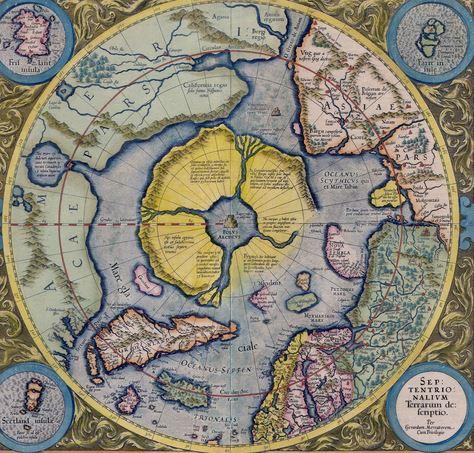
Ancient Greek writers placed the Hyperboreans beyond the Boreas, the north wind, in a land characterized by eternal sunshine and happiness. The geographic details vary, but the Arctic regions were often associated with this mythical land.
Arctic Regions in Classical Geography
In classical geography, the Arctic was a mysterious and often misunderstood region. Writers like Herodotus and Strabo speculated about its inhabitants and characteristics, sometimes describing the Hyperboreans as living in a paradise-like environment.
The Etymology of "Hyperborean"
The term "Hyperborean" is derived from the Greek words "hyper" meaning beyond and "Boreas," the north wind. This etymology highlights the ancient Greeks' perception of the Hyperboreans as living beyond the known world, in a realm both literal and metaphorical.
Origins of the Hyperborean Legends
Delving into the origins of the Hyperborean legends reveals a complex tapestry of myth and history that spans millennia. The Hyperboreans, a mystical people said to inhabit a utopian land beyond the north wind, have captivated the imagination of scholars and enthusiasts alike.
First Mentions in Ancient Literature
The first recorded mentions of the Hyperboreans can be found in ancient Greek literature, notably in the works of Hesiod and Pindar. These texts describe the Hyperboreans as living in a paradise beyond the reach of death and disease, where they enjoy a life of happiness and feasting.
Evolution of the Hyperborean Concept Through History
Over time, the concept of the Hyperboreans evolved, influenced by various cultural and mythological traditions. The Greeks associated the Hyperboreans with Apollo, their god of the sun, music, and prophecy, further enriching the mythology surrounding this enigmatic people.
Pre-Greek References
Some scholars suggest that the legend of the Hyperboreans may have pre-Greek origins, potentially influenced by earlier Near Eastern or Indo-European mythologies. Exploring these potential pre-Greek references can provide deeper insights into the origins and evolution of the Hyperborean myth.
Who Were the Hyperboreans?
In the realm of myth and legend, few peoples are as intriguing as the Hyperboreans. Described in ancient texts as a blessed people living beyond the north wind, their existence is shrouded in mystery and marvel.
Physical Descriptions in Ancient Accounts
Ancient accounts often describe the Hyperboreans as being of extraordinary physical appearance. They were said to be tall and handsome, with a robust constitution that allowed them to live in a land of plenty, free from disease and suffering.
Their physical descriptions vary, but they are often associated with blonde hair and blue eyes, characteristics that were highly valued in some ancient cultures. These physical attributes, combined with their extraordinary longevity, contributed to their legendary status.
Supernatural Abilities and Extraordinary Longevity
The Hyperboreans were not only known for their physical prowess but also for their supernatural abilities. According to legend, they possessed gifts that allowed them to live in harmony with the divine, enjoying a special connection with the gods.
The Myth of Immortality
One of the most fascinating aspects of Hyperborean lore is the myth of their immortality. It was believed that they lived for a thousand years or more, with some accounts suggesting they were immune to death unless they chose to end their lives voluntarily.
This myth of immortality, coupled with their extraordinary longevity and supernatural abilities, has captivated the imagination of many, making the Hyperboreans a subject of enduring fascination.
The Hyperboreans in Greek Mythology
In the realm of Greek mythology, the Hyperboreans were a mystical people revered for their extraordinary connection to the divine. Their legend is intricately woven into the fabric of Greek mythological narratives, particularly in their association with the god Apollo.
Connection to Apollo and His Oracle
The Hyperboreans were closely linked to Apollo, one of the most significant deities in the Greek pantheon. According to myth, Apollo spent his winters in Hyperborea, a land beyond the north wind, where he was believed to have been born. The Hyperboreans were said to have been favored by Apollo, and their land was considered a sacred place.
"The Hyperboreans, a blessed people, lived in a land of plenty, where the sun always shone, and the air was filled with the sweet scent of flowers." This quote from ancient texts highlights the idyllic nature of Hyperborea and its people.
Relationships with Other Greek Deities
Apart from their connection to Apollo, the Hyperboreans were also associated with other Greek deities. Their mythological significance extended to their role as emissaries and messengers between the mortal world and the divine realm.
Mythological Messengers and Emissaries
The Hyperboreans were often depicted as messengers or emissaries, carrying offerings to the gods, particularly to Apollo at Delphi. This role underscored their sacred status and their unique position within Greek mythology.
| Deity | Association with Hyperboreans |
|---|---|
| Apollo | Favored the Hyperboreans; spent winters in Hyperborea |
| Other Deities | Associated through their role as messengers and emissaries |
The significance of the Hyperboreans in Greek mythology is multifaceted, reflecting their cultural and religious importance. Their connection to Apollo and their role as mythological messengers underscore their unique status in the mythological landscape.
Hyperborean Civilization and Its Structure
Hyperborean society, as depicted in ancient mythology, showcases a sophisticated level of organization and technological advancement. The Hyperboreans are often described as living in a utopian society, characterized by peace and prosperity.
Social Organization and Governance
The social structure of the Hyperboreans is typically portrayed as being highly organized, with a strong emphasis on community and cooperation. According to legend, they were governed by a council of wise elders, ensuring justice and harmony within their society.
"Their governance model was based on wisdom and fairness, reflecting their deep connection with the divine." This quote highlights the reverence with which the Hyperboreans were regarded in ancient mythology.
Technological Advancements in Myth
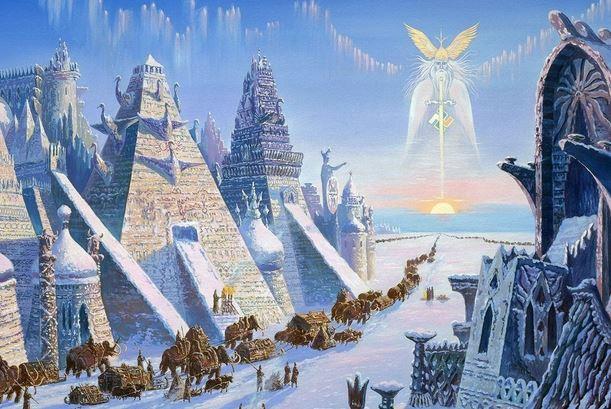
The Hyperboreans are also associated with significant technological advancements. "They were said to possess knowledge and skills that allowed them to build magnificent cities and temples, far surpassing those of other ancient civilizations."
In summary, the Hyperborean civilization is depicted as a highly advanced and harmonious society, with a strong social structure and impressive technological achievements. Their legacy continues to captivate the imagination of people around the world.
Hyperborean Culture and Daily Life
In the realm of Hyperborea, culture and daily life were deeply intertwined with myth and magic. The Hyperboreans were known for their idyllic existence, far removed from the troubles of the mundane world.
Arts, Music, and Festivals
The Hyperboreans were renowned for their artistic expressions, which were deeply rooted in their spiritual beliefs. Music played a significant role in their culture, with the Hyperborean Lyre being an instrument of great importance.
The Hyperborean Lyre and Sacred Music
The Hyperborean Lyre was not just a musical instrument but a sacred tool used in rituals and ceremonies. It was believed to have the power to connect the physical world with the divine realm. Sacred music was an integral part of Hyperborean festivals, which were held to honor their deities and celebrate the cycles of nature.

Described Lifestyle and Philosophies
The lifestyle of the Hyperboreans was characterized by simplicity, harmony with nature, and a deep philosophical outlook on life. They were known for their wisdom and longevity, living in a state of spiritual enlightenment.
| Aspect | Description |
|---|---|
| Social Structure | Harmonious and egalitarian |
| Philosophy | Focused on spiritual growth and harmony with nature |
| Artistic Expression | Rich in music, dance, and sacred rituals |
The Hyperboreans' daily life was a reflection of their profound connection to the natural world and their commitment to living in balance with the environment. Their culture was a testament to the possibility of a society that values peace, wisdom, and the pursuit of spiritual enlightenment.
Religious Practices of the Hyperborean Society
At the heart of Hyperborean culture lay a complex system of religious beliefs and practices that resonated with their connection to the divine. The Hyperboreans, deeply rooted in Greek mythology, were known for their extraordinary spiritual rituals.
Worship Rituals and Sacred Ceremonies
The Hyperboreans were known for their elaborate worship rituals, which were often performed in honor of Apollo, their patron deity. These ceremonies were characterized by music, dance, and offerings to the gods.
- Sacred hymns were sung in praise of Apollo.
- Ritual dances were performed to ensure the fertility of the land.
- Offerings of fruits and grains were made to the gods.
Temples and Holy Sites
The Hyperboreans built magnificent temples, with a particular emphasis on circular structures dedicated to Apollo. These temples served as the epicenter of their religious life.
The Circular Temples of Apollo
The circular temples were architectural marvels, symbolizing the unity and perfection of the divine.
These temples were not only places of worship but also centers of spiritual learning and communal gatherings. The Hyperboreans believed that these sites held sacred energies, connecting them directly to the divine.
Theories About Hyperborean Origins
Unraveling the enigma of the Hyperboreans requires an examination of both historical records and contemporary archaeological findings. The Hyperborean legends, rich in myth and mystery, have captivated scholars and enthusiasts for centuries, prompting a diverse array of theories about their origins.
Historical Interpretations
Historical interpretations of the Hyperborean origins have varied significantly over time. Ancient historians provided various accounts, often blending myth with historical fact.
Ancient Historians' Perspectives
Herodotus and other ancient historians offered insights into the Hyperboreans, describing them as a people living beyond the north wind. Their accounts, while sometimes mythical, provide valuable clues about the perceived origins and characteristics of the Hyperboreans.
Modern Archaeological Theories
In recent years, archaeological research has shed new light on the possible origins of the Hyperborean legends. Some theories suggest connections to ancient cultures in Northern Europe.
Potential Northern European Connections
Modern scholars have explored potential links between the Hyperboreans and ancient Northern European cultures, including the Nordic and Celtic civilizations. These theories are based on similarities in mythological narratives and cultural practices.
| Theory | Description | Key Evidence |
|---|---|---|
| Ancient Nordic Connection | Suggests a link between Hyperboreans and ancient Nordic cultures. | Similarities in mythological themes and cultural practices. |
| Celtic Influence | Proposes that Hyperborean legends were influenced by Celtic mythology. | Shared motifs in folklore and ritual practices. |
| Arctic Dwelling Theory | Posits that Hyperboreans were an ancient arctic-dwelling people. | Archaeological findings in northern regions. |
The exploration of Hyperborean origins is a multifaceted endeavor, drawing on historical texts, archaeological evidence, and comparative mythology. As new discoveries are made, our understanding of this enigmatic civilization continues to evolve.
The Hyperborean Connection to Other Mythologies
The mystique of the Hyperboreans is not isolated; it shares commonalities with Celtic, Nordic, and Eastern mystical traditions. This connection enriches our understanding of the Hyperboreans within a broader mythological context.
Celtic and Nordic Parallels
The Hyperboreans' association with the far north and their idealized existence parallels the Celtic concept of the Otherworld, a mystical land of eternal youth and beauty. Similarly, in Nordic mythology, the idea of a blessed land in the north shares characteristics with the Hyperborean myth. These parallels suggest a common Indo-European root for these mythological themes.

Similarities to Eastern Mystical Traditions
The Hyperboreans' supposed spiritual enlightenment and longevity echo elements found in Eastern mystical traditions, such as the Tibetan concept of Shambhala, a hidden kingdom of enlightened beings. The table below summarizes some of these cross-cultural similarities:
| Mythological Feature | Hyperborean Tradition | Eastern Mystical Traditions |
|---|---|---|
| Spiritual Enlightenment | Associated with Apollo and spiritual purity | Found in Tibetan and Hindu mythologies |
| Longevity/Eternal Youth | Hyperboreans live long, blessed lives | Similar themes in Shangri-La and Shambhala myths |
These comparisons highlight the Hyperboreans' place within a global tapestry of mythological narratives, underscoring the shared human experiences and aspirations that transcend cultural boundaries.
Hyperboreans in Esoteric and Occult Traditions
Delving into esoteric and occult traditions reveals the profound impact of Hyperborean legends. The Hyperboreans have been a subject of interest in various mystical and secret societies.
Theosophy and Secret Societies
The Theosophical Society, founded by Helena Blavatsky, played a significant role in popularizing the concept of the Hyperboreans in esoteric circles. Theosophy drew upon ancient mythologies, including Greek legends, to formulate its doctrines. The Hyperboreans were seen as an ancient root race with mystical powers.
Secret societies, such as the Thule Society, also embraced the Hyperborean myth, often linking it to Aryan mysticism and the origins of superior races. These interpretations were frequently tied to esoteric beliefs about the lost civilizations and their advanced knowledge.
Spiritual Significance in Modern Mysticism
In modern mysticism, the Hyperboreans are often associated with spiritual enlightenment and the attainment of higher states of consciousness. Their legendary longevity and supernatural abilities are seen as symbols of spiritual evolution.
The Concept of the Hyperborean Root Race
The concept of the Hyperborean root race is a central theme in Theosophical literature. It is believed that this ancient civilization possessed advanced spiritual knowledge and technologies that could be tapped into through mystical practices.
| Aspect | Theosophical Interpretation | Modern Mystical Interpretation |
|---|---|---|
| Origin | Ancient root race from the Hyperborean region | Symbolic representation of spiritual origins |
| Significance | Possessed advanced mystical knowledge | Represents higher states of consciousness |
| Legacy | Influenced subsequent root races | Inspires modern spiritual practices |
The Hyperborean legends continue to inspire and intrigue those interested in esoteric and occult traditions, offering a rich tapestry of mystical and symbolic interpretations.
Modern Cultural References to the Arctic Dwelling Race
The Hyperboreans, an ancient mythological people, have left an indelible mark on contemporary culture, influencing art, literature, and entertainment. Their legend has been a source of inspiration for many creators across various mediums.
Literature and Fine Arts
In literature, the Hyperboreans have been featured in numerous works, often symbolizing a paradise or utopia. Authors like Robert E. Howard and H.P. Lovecraft have referenced the Hyperboreans in their stories, weaving them into narratives that explore themes of mysticism and otherworldliness. In fine arts, depictions of Hyperboreans often reflect their association with the mystical and the sublime.
Film, Games, and Popular Media
The Hyperboreans have also made their way into film, games, and other popular media, captivating modern audiences with their mystique. They are often portrayed as a mysterious, advanced civilization with supernatural abilities.
Hyperboreans in Contemporary Fantasy
In contemporary fantasy, the Hyperboreans continue to inspire creators, appearing in various forms of media. Their representation often blends traditional mythological elements with modern interpretations, resulting in a rich and diverse cultural landscape.
| Medium | Examples | Characteristics |
|---|---|---|
| Literature | Robert E. Howard's Conan stories, H.P. Lovecraft's Cthulhu Mythos | Mystical, utopian, supernatural themes |
| Film and Games | Games like "Age of Mythology," films like "Immortals" | Mysterious, advanced civilization, supernatural abilities |
Conclusion: The Enduring Mystery of the Hyperboreans
The legend of the Hyperboreans has captivated imaginations for centuries, weaving a narrative of a mystical people living beyond the North Wind. Through our exploration of their mythology, culture, and significance, we have uncovered the depth and richness of the Hyperborean legends.
The Hyperboreans, as depicted in ancient texts and mythologies, represent a civilization that embodies extraordinary qualities, from supernatural abilities to a profound connection with deities like Apollo. Their described lifestyle and philosophies continue to inspire esoteric and occult traditions.
The enduring mystery of the Hyperboreans lies in their symbolic representation of a utopian society, sparking curiosity and fascination across various cultures and historical periods. As we reflect on the Hyperborean civilization, we find that their legend continues to influence modern cultural references, from literature to film and popular media.
The Hyperborean legends serve as a testament to the power of mythology in shaping our understanding of the world and our place within it. As we continue to explore and reinterpret these ancient stories, we uncover new insights into the human experience and the timeless appeal of the Hyperborean mystery.
FAQ
Who were the Hyperboreans?
The Hyperboreans were a mythical ancient people described in Greek mythology as living beyond the north wind, in a land of perfect happiness and bliss.
What is the origin of the term "Hyperborean"?
The term "Hyperborean" comes from the Greek words "hyper" meaning "beyond" and "Boreas," the name of the north wind.
Where were the Hyperboreans said to live?
According to ancient texts, the Hyperboreans lived in the Arctic regions, beyond the reach of the north wind.
What were the Hyperboreans known for in Greek mythology?
In Greek mythology, the Hyperboreans were known for their connection to Apollo, their extraordinary longevity, and their supernatural abilities.
Are there any historical interpretations of the Hyperboreans?
Yes, there are various historical interpretations of the Hyperboreans, including attempts to link them to real ancient cultures and civilizations.
How have the Hyperboreans been represented in modern culture?
The Hyperboreans have been represented in modern culture through literature, fine arts, film, games, and popular media, often as a symbol of a lost or hidden civilization.
What is the significance of the Hyperboreans in esoteric traditions?
In esoteric traditions, the Hyperboreans are often associated with spiritual significance, representing a root race or a source of ancient wisdom.
Are there any connections between the Hyperboreans and other mythologies?
Yes, there are parallels between the Hyperboreans and other mythologies, including Celtic, Nordic, and Eastern mystical traditions.
What is the Hyperborean civilization like according to mythological accounts?
According to mythological accounts, the Hyperborean civilization was characterized by a high level of social organization, technological advancements, and a deep connection to the divine.
What can we learn from the mythology of the Hyperboreans?
The mythology of the Hyperboreans offers insights into the cultural and symbolic significance of the Arctic regions in ancient cultures, as well as the human imagination's capacity to create idealized societies.