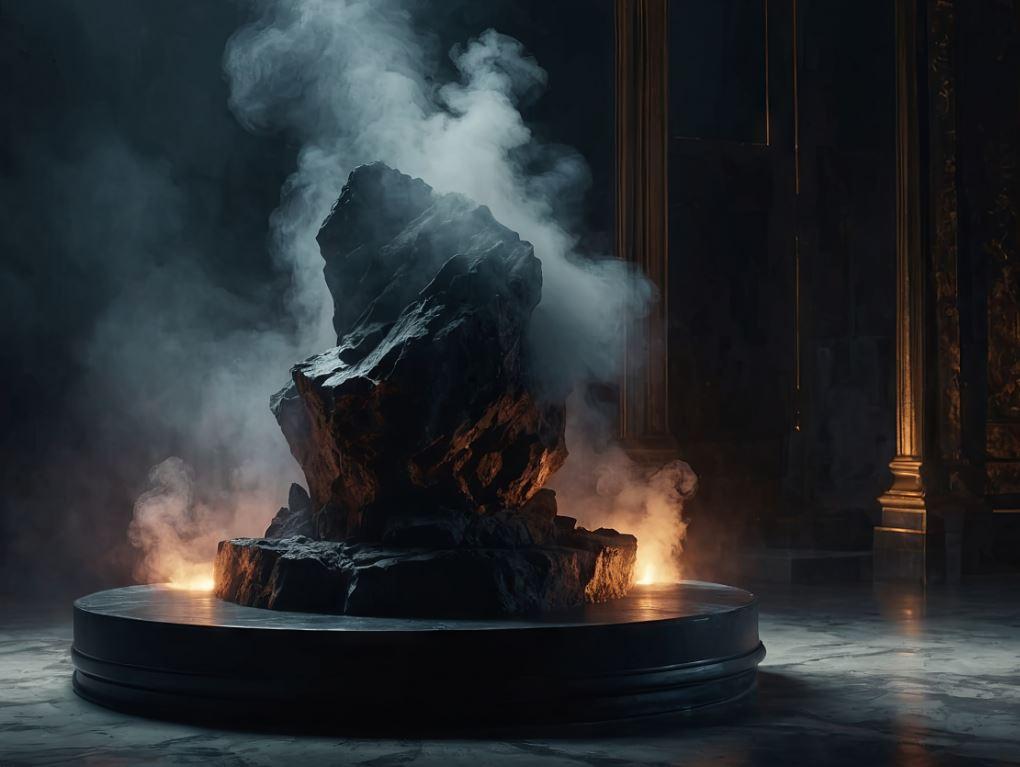
Explore the Legendary Philosopher's Stone
The Philosopher's Stone has been a subject of fascination for centuries, captivating the imagination of many with its promise of transforming base metals into gold and granting eternal life. This mystical object is deeply rooted in alchemy, a practice that combines elements of chemistry, philosophy, and spirituality.

At the heart of alchemical practices, the Stone represents a symbol of perfection and enlightenment. Its legend has endured through the ages, inspiring countless seekers of knowledge and treasure. The mystique surrounding the Philosopher's Stone continues to intrigue and inspire, making it a timeless and captivating topic.
Key Takeaways
- The Philosopher's Stone is a legendary object associated with alchemy.
- It symbolizes perfection and enlightenment.
- The Stone is said to have the power to transform base metals into gold.
- Its legend has endured for centuries, captivating many.
- The mystique of the Philosopher's Stone continues to inspire seekers of knowledge.
The Ancient Quest for Mystical Transformation
The pursuit of the Philosopher's Stone is a central theme in the history of alchemy, reflecting a broader quest for transformation and enlightenment. This ancient practice, which predates modern chemistry, has its roots in a mix of mysticism, philosophy, and early scientific inquiry.
The Birth of Alchemical Pursuits
Alchemical pursuits began in ancient civilizations, with evidence of alchemical practices found in Egypt, China, and Greece. These early alchemists were driven by the desire to understand and manipulate the fundamental nature of matter. As the Greek alchemist Mary the Jewess once said, "One becomes two, two becomes three, and out of the third comes the one as the fourth." This quote encapsulates the alchemical principle of transformation.
Early Mentions in Historical Texts
The Philosopher's Stone is mentioned in various historical texts, often shrouded in mythology and symbolism. One of the earliest recorded mentions is found in the works of Heraclitus, who noted the alchemical process of solving and coagulating materials. The Stone is often associated with the concept of prima materia, or the original substance from which all matter is derived. As
"The alchemists are the continuators of the ancient magi,"
highlighting the spiritual and mystical dimensions of their work.
The concept of the Philosopher's Stone continued to evolve through the ages, influencing various cultures and belief systems. Its significance extends beyond the realm of alchemy, touching on themes of transformation and spiritual growth.
Understanding the Philosopher's Stone
At the heart of alchemical traditions lies the Philosopher's Stone, a substance of legendary properties. The concept of the Philosopher's Stone is deeply rooted in alchemical symbolism, representing the ultimate goal of alchemical pursuits: the transformation of base metals into gold and the attainment of spiritual enlightenment.
Definition and Physical Descriptions
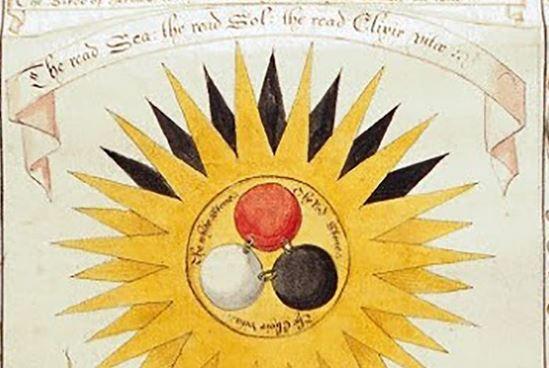
The Philosopher's Stone is often described as a stone or a powder with extraordinary properties. Some accounts suggest it appears as a red or white substance, symbolizing its association with the sun and moon. Alchemists believed that this stone could be obtained through a series of complex processes involving various chemicals and minerals.
Alleged Composition and Properties
The alleged composition of the Philosopher's Stone varies across alchemical texts, with some suggesting it is made from a combination of metals and minerals. Its properties are said to include the ability to transmute base metals into gold and to grant eternal life through the Elixir of Life. The stone is also believed to possess healing properties, capable of curing any ailment.
The Stone's Place in Alchemical Hierarchy
In the alchemical hierarchy, the Philosopher's Stone represents the pinnacle of achievement. It is considered the ultimate goal, symbolizing the alchemist's mastery over material transformation. The process of creating the stone involves several stages, including:
- Calcination
- Dissolution
- Separation
- Conjunction
These stages are part of the Great Work of alchemy, a journey that not only transforms materials but also the alchemist themselves.
The Alchemical Process of Creating the Stone
The creation of the Philosopher's Stone is a complex process rooted in ancient alchemical practices. This legendary substance is said to have the power to transform base metals into gold and grant eternal life, making its creation a highly sought-after goal.
The Stages of the Great Work
The alchemical process is divided into several stages, known as the Great Work. These stages are crucial for the successful creation of the Philosopher's Stone.
Nigredo, Albedo, Citrinitas, and Rubedo
The Great Work is characterized by four main stages: Nigredo (blackness), Albedo (whiteness), Citrinitas (yellowness), and Rubedo (redness). Each stage represents a significant transformation in the alchemical process, from the initial breakdown of materials to the final creation of the Stone.
Required Materials and Equipment
Alchemists required various materials and equipment to undertake the Great Work, including minerals, metals, and specialized laboratory equipment. The choice of materials and equipment was often shrouded in secrecy, adding to the mystique of alchemy.
Secret Formulas and Coded Instructions
Alchemists often used secret formulas and coded instructions to describe their processes, making it difficult for outsiders to understand or replicate their work. These codes and formulas were used to protect their discoveries from those who might misuse them.
Failed Attempts and Cautionary Tales
Many alchemists failed in their attempts to create the Philosopher's Stone, often due to a lack of understanding of the chemical processes involved or the use of inappropriate materials. These failed attempts served as cautionary tales, highlighting the challenges and risks associated with alchemical pursuits.
Nicholas Flamel and Other Famous Alchemists
Nicholas Flamel, a name synonymous with alchemy, has left an indelible mark on the history of the Philosopher's Stone. His life and work have become the stuff of legend, inspiring countless tales and references in popular culture, including the famous series Harry Potter.

Flamel's Life and Legendary Success
Nicholas Flamel was a French manuscript seller and alchemist who lived in the 14th century. According to legend, Flamel achieved the ultimate goal of alchemy: creating the Philosopher's Stone. His supposed success in turning base metals into gold and achieving immortality has made him a figure of fascination for centuries.
Paracelsus and His Contributions
Paracelsus, a Swiss alchemist and physician, made significant contributions to the field of alchemy. He is known for his pioneering work in the medical applications of alchemy, laying the groundwork for modern pharmacology. Paracelsus's holistic approach to medicine and his emphasis on experimentation over theoretical knowledge marked a significant shift in alchemical practices.
Isaac Newton's Secret Alchemical Studies
Isaac Newton, the renowned physicist and mathematician, had a lesser-known passion for alchemy. Newton's alchemical studies were extensive, and he wrote extensively on the subject, though much of his work in this area remained private. Newton's pursuit of alchemy reflects the complex interplay between science and mysticism during the Renaissance period.
The Dual Powers of the Philosopher's Stone
At the heart of alchemical pursuits lies the Philosopher's Stone, a substance believed to possess transformative capabilities. This legendary stone is often associated with two primary powers that have fascinated alchemists and scholars alike for centuries.
Transmutation of Base Metals into Gold
One of the most renowned attributes of the Philosopher's Stone is its supposed ability to transmute base metals into gold. This process, a cornerstone of alchemical practice, was seen as a means to achieve wealth and material prosperity. Alchemists believed that by successfully creating the Stone, they could transform lead or other base metals into gold, thus achieving a long-sought goal.
The Elixir of Life and Immortality
The Philosopher's Stone is also linked to the creation of the Elixir of Life, a substance believed to grant immortality or, at the very least, significantly extend one's lifespan. This elixir was thought to have the power to heal all manner of ailments, rejuvenate the body, and protect against disease. The pursuit of immortality through the Elixir of Life has been a driving force behind many alchemical endeavors.
Lesser-Known Attributed Powers
Beyond its role in transmutation and the Elixir of Life, the Philosopher's Stone is sometimes attributed with other, lesser-known powers. These include the ability to enhance spiritual enlightenment and grant profound insights into the mysteries of nature and the universe. Some accounts also suggest that the Stone could be used to create powerful talismans or magical instruments.
The multifaceted nature of the Philosopher's Stone has captivated imaginations for centuries, inspiring both alchemical experimentation and philosophical contemplation. Its legacy continues to influence contemporary culture, symbolizing the human quest for transformation and the pursuit of knowledge.
Scientific Perspective on Alchemy's Greatest Secret
Modern chemistry offers a fascinating perspective on the alchemical quest for the Philosopher's Stone. By examining the principles of alchemy through the lens of contemporary science, we can gain a deeper understanding of the historical context and the scientific validity of the alchemists' pursuits.
Modern Chemistry's View of Transmutation
The concept of transmutation, central to the alchemical quest, involves changing the fundamental nature of a substance. From a modern chemical perspective, transmutation is possible through nuclear reactions, where elements are transformed into other elements by altering their atomic nuclei. However, this process is vastly different from the alchemical notion of simply mixing substances or applying heat.
Could the Stone Have Been Possible?
While the literal creation of the Philosopher's Stone as described in alchemical texts is not feasible according to modern chemistry, the symbolic and metaphorical interpretations of the Stone remain relevant. The idea of transforming base metals into gold can be seen as a metaphor for personal transformation and spiritual growth.
The pursuit of the Philosopher's Stone, though rooted in a different understanding of the natural world, reflects a deep human desire to transcend limitations and achieve perfection. In this sense, the concept of the Stone continues to captivate and inspire, even if its literal existence is not supported by scientific evidence.
The Philosopher's Stone in World Mythology and Religion
As a symbol of ultimate transformation, the Philosopher's Stone appears in diverse religious and mythological traditions. This legendary object has captivated human imagination, echoing across cultures and civilizations.
Eastern Parallels: The Cintamani Stone
In Buddhist and Hindu mythologies, the Cintamani Stone is often depicted as a wish-fulfilling gem, symbolizing spiritual enlightenment and perfection. Similar to the Philosopher's Stone, it represents the pinnacle of attainment and the fulfillment of desires. The Cintamani is said to grant its possessor supernatural powers and is often associated with the gods.
The parallels between the Cintamani and the Philosopher's Stone highlight a common thread in human mythology: the quest for a powerful, transformative object that can transcend ordinary limitations.
Biblical Connections and Religious Symbolism
The Philosopher's Stone has been linked to various biblical narratives and religious symbols. Some alchemists saw the Stone as a manifestation of the divine, connecting it to the biblical story of the Temple in Jerusalem and the alchemical significance of its construction materials.
The symbolism of the Philosopher's Stone also resonates with Christian themes of transmutation and spiritual rebirth. This connection underscores the Stone's role as a symbol of personal transformation and spiritual awakening.
Cross-Cultural Quest for Immortality
The quest for immortality is a recurring theme across cultures, with the Philosopher's Stone being a prime example in Western alchemy. Similarly, in Chinese mythology, the concept of the Elixir of Life represents a parallel pursuit of eternal youth and vitality.
| Culture | Symbol/Object | Significance |
|---|---|---|
| Western Alchemy | Philosopher's Stone | Transmutation, Immortality |
| Buddhist/Hindu | Cintamani Stone | Spiritual Enlightenment, Wish Fulfillment |
| Chinese Mythology | Elixir of Life | Eternal Youth, Vitality |
This table illustrates the diverse yet convergent themes across cultures, all centered on the idea of achieving transcendence or ultimate power through symbolic objects.
From Ancient Legend to Modern Pop Culture
The Philosopher's Stone, a symbol of alchemical perfection, has transcended its ancient roots to become a staple in modern pop culture. Its influence can be seen in various forms of media, from literature to video games.
Harry Potter and the Sorcerer's Stone
J.K. Rowling's Harry Potter series brought the Philosopher's Stone to a new generation, renaming it the "Sorcerer's Stone" for the American audience. The story revolves around the Stone's power and the quest to protect it from falling into the wrong hands. The Stone's symbolism in the series represents the ultimate goal of alchemy: transformation and enlightenment.

The Stone in Literature and Art
Beyond Harry Potter, the Philosopher's Stone has appeared in various literary works, often symbolizing spiritual transformation or enlightenment. In art, it has been depicted in numerous paintings and illustrations, representing the alchemical process. The Stone's symbolism in literature and art underscores its significance as a cultural icon.
"The Philosopher's Stone is a symbol of the alchemical process, representing the transformation of base metals into gold and the attainment of spiritual enlightenment."
Video Games, Comics, and Other Media
The Philosopher's Stone has also made its way into video games and comics, often as a powerful artifact or a central plot device. These modern interpretations continue to fuel the public's fascination with the Stone, adapting its symbolism to fit contemporary narratives. The Stone's presence in these media highlights its versatility and enduring appeal.
In conclusion, the Philosopher's Stone's journey from ancient legend to modern pop culture icon is a testament to its timeless appeal and the power of its symbolism.
Symbolic Meaning Beyond Physical Alchemy
Beyond its literal interpretation, the Philosopher's Stone holds a wealth of symbolic significance that transcends its physical alchemical context. This symbolic richness is a testament to the Stone's enduring appeal across various disciplines and cultures.
Psychological and Spiritual Interpretations
The Philosopher's Stone is often seen as a symbol of spiritual transformation and psychological integration. It represents the alchemist's journey towards self-discovery and enlightenment. In this context, the Stone symbolizes the ultimate goal of achieving a unified and complete self.
The Stone as a Metaphor for Personal Transformation
In a broader sense, the Philosopher's Stone serves as a powerful metaphor for personal transformation. It embodies the idea of taking something raw and turning it into something refined and perfected. This process mirrors the human quest for self-improvement and the pursuit of one's highest potential.
Modern Metaphysical Perspectives
From a modern metaphysical perspective, the Philosopher's Stone is associated with mystical experiences and the attainment of higher states of consciousness. It is seen as a symbol of the potential for human beings to achieve spiritual enlightenment and connect with a deeper, universal reality.
Conclusion: The Enduring Legacy of the Philosopher's Stone
The Philosopher's Stone has captivated human imagination for centuries, symbolizing the ultimate goal of alchemy. Its legacy extends beyond the realm of medieval pseudoscience, influencing various aspects of modern culture. From literature to pop culture, the Stone's presence is evident in works such as Harry Potter and other media, showcasing its timeless appeal.
The concept of the Philosopher's Stone represents a quest for transformation, whether it be the transmutation of base metals into gold or the pursuit of immortality. This symbolism has been interpreted in various ways, from psychological and spiritual perspectives to metaphysical understandings, demonstrating the Stone's versatility and depth.
As a cultural icon, the Philosopher's Stone continues to inspire and intrigue, leaving a lasting impact on our collective imagination. Its legacy serves as a reminder of humanity's enduring fascination with the mysteries of alchemy and the pursuit of transformation, ensuring its place in history and popular culture for generations to come.
FAQ
What is the Philosopher's Stone?
The Philosopher's Stone is a legendary substance believed to have the power to transform base metals into gold and confer immortality. It is a central concept in alchemy, a philosophical and spiritual practice that aims to achieve spiritual transformation and enlightenment.
Is the Philosopher's Stone mentioned in the Harry Potter series?
Yes, the Philosopher's Stone is featured prominently in the first book of the Harry Potter series by J.K. Rowling, titled "Harry Potter and the Philosopher's Stone" (published as "Harry Potter and the Sorcerer's Stone" in the United States).
What is the significance of Nicholas Flamel in the context of the Philosopher's Stone?
Nicholas Flamel was a French alchemist who lived in the 14th century and is believed to have successfully created the Philosopher's Stone. He and his wife, Perenelle, are said to have achieved immortality through the Stone's power, and their legend has endured for centuries.
Can the Philosopher's Stone really grant immortality?
While the Philosopher's Stone is often associated with immortality, its actual ability to confer eternal life is a matter of interpretation and debate. Some see it as a symbolic representation of spiritual enlightenment, while others believe it has literal powers.
What is the connection between alchemy and the Philosopher's Stone?
Alchemy is a philosophical and spiritual practice that aims to achieve spiritual transformation and enlightenment. The Philosopher's Stone is a central concept in alchemy, representing the ultimate goal of the alchemical process: to transform base metals into gold and achieve spiritual perfection.
Are there any real-life attempts to create the Philosopher's Stone?
Throughout history, many alchemists have attempted to create the Philosopher's Stone, often using secret formulas and coded instructions. While some claim to have succeeded, there is no conclusive evidence to support these claims.
What is the symbolism of the Philosopher's Stone in modern times?
The Philosopher's Stone continues to be a powerful symbol in modern times, representing personal transformation, spiritual growth, and the quest for immortality. It has appeared in various forms of media, including literature, art, and film.
How does the Philosopher's Stone relate to mythology and religion?
The Philosopher's Stone has parallels in various mythological and religious traditions, including the Cintamani Stone in Eastern mythology and the concept of the Elixir of Life in ancient Greek mythology. It represents a cross-cultural quest for immortality and spiritual enlightenment.
Links: