Advaita
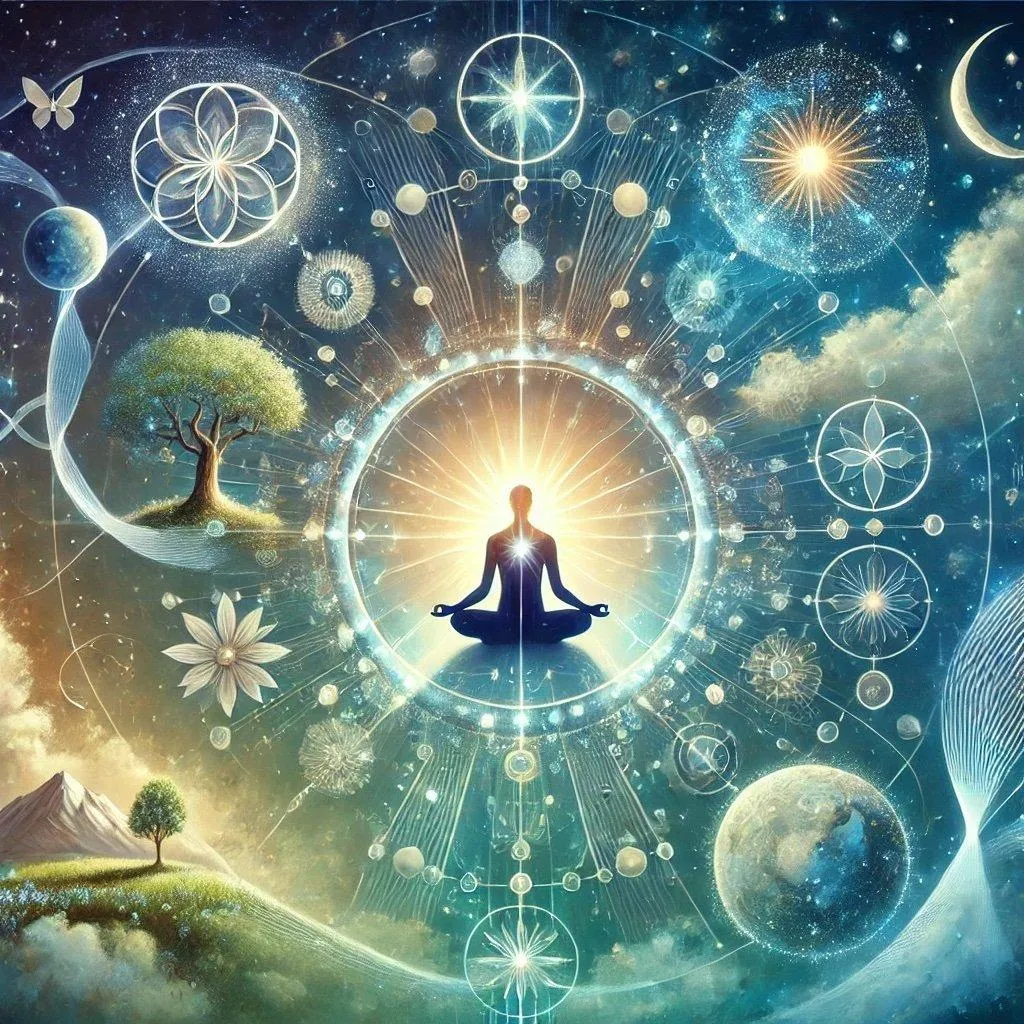
Advaita
The doctrine of non-duality • Unity beyond all separation • The Self as the Absolute
Advaita (Sanskrit: अद्वैत) literally means:
"Not-two" or "Non-duality"
It is one of the most profound philosophical and spiritual teachings in India and forms the core of the Advaita Vedanta, whose best-known representative Adi Shankara was.
Advaita teaches that the apparent separation between:
- Man and God
- Subject and object
- Self and world
- Inside and outside
ultimately is an illusion.
Basic idea
According to Advaita, there is only one absolute reality:
Brahman
Brahman is:
- limitless
- timeless
- informal
- indivisible
- pure consciousness
The individual self (Ātman) is not different from Brahman in its deepest essence.
The famous formula of the Upanishads is:
"Tat Tvam Asi"
"This is you."
The illusion of separation
Advaita explains that man usually lives in Māyā:
- the world of appearances
- identification with body and mind
- the idea of a separate self
This separation is viewed as apparent, not ultimately real.
Esoteric meaning
Advaita is not a doctrine of faith, but a way of knowledge:
Who am I really?
Through self-exploration the seeker recognizes:
- I am not the body.
- I am not the thoughts.
- I am not the changing feelings.
Behind all experiences is this:
pure awareness
which remains unchanged.
Spiritual practice
Classic paths of Advaita include:
- Self-inquiry (Atma Vichara)
- Meditation
- Contemplation
- Study of the Upanishads
- direct knowledge of one's own nature
The question of the wise man Ramana Maharshi:
became particularly well known"Who am I?"
Symbolism
Element: Aether
Symbols:
- Mirror
- Ocean and wave
- Room
- Sun
Ocean and wave
The wave appears as an independent being.
In reality she is:
Water.
Human beings appear separate, but in their essence they are one consciousness.
Spiritual Essence
"You seek the truth as if it were far away.
But the seeker himself is what is sought."
Advaita teaches that enlightenment is not the achievement of something new, but the recognition of what has always been present.
Keywords
Advaita • Advaita Vedanta • Non-Duality • Brahman • Ātman • Māyā • Self-enquiry • Ramana Maharshi • Tat Tvam Asi • Pure Consciousness



Spiritual Narcissism: Recognizing It Without Shame - Learn How to Cultivate Empathy and Personal Growth
Read More