Bethesda
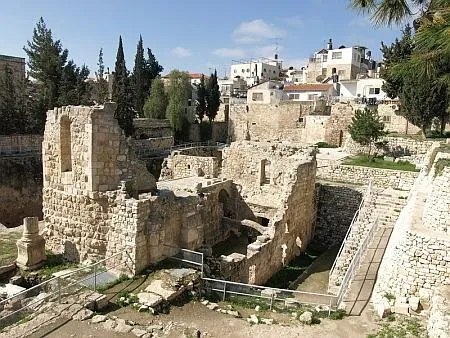
Betesha or Bethesda (Hebrew: "House of Mercy" or "House of Grace") is a pond in Jerusalem mentioned in the Bible. According to the Gospel of John, it was located near the Sheep Gate and was surrounded by five porticoes. The sick, blind, lame and other suffering people gathered there in the hope of healing.
The place is best known for the story in which Jesus of Nazareth heals a man who has been... was paralyzed for thirty-eight years. The sick man waited at the pond for the water to move, as it was believed that this would bring healing powers into effect. However, Jesus heals him without the pool and without any ritual, solely through his word.
Symbolically, Betescha stands for the principle of healing hope. The pond becomes a gathering point for human longing for redemption, recovery and a new beginning. People come to this place with their suffering, their despair and their hope for change.
Parapsychologically and symbolically, Betescha can be understood as a place of power of expectation. Many spiritual traditions know places that are said to have healing or transformative effects. Whether the effect is attributed to the water itself, people's beliefs, or a deeper spiritual reality remains a question of individual worldview. The pond symbolizes the ancient belief that certain places can serve as a bridge between human need and divine help.
The double meaning of the name is particularly noteworthy. Bethesda can mean both “house of mercy” and in some interpretations “place of misery” or “house of shame”. This is precisely where its deeper symbolism lies: the place of greatest suffering also becomes the place of possible healing.
In a deeper symbolic meaning, Betescha embodies the archetype of the healing transition space. Here illness and hope, despair and grace, human limitations and the possibility of transformation meet. The pond is a reminder that healing often begins where people recognize their helplessness. Betesha thus becomes a symbol of those inner places where change becomes possible - not through external force alone, but through the encounter with a deeper reality.


Spiritual Narcissism: Recognizing It Without Shame - Learn How to Cultivate Empathy and Personal Growth
Read More