Ganesha
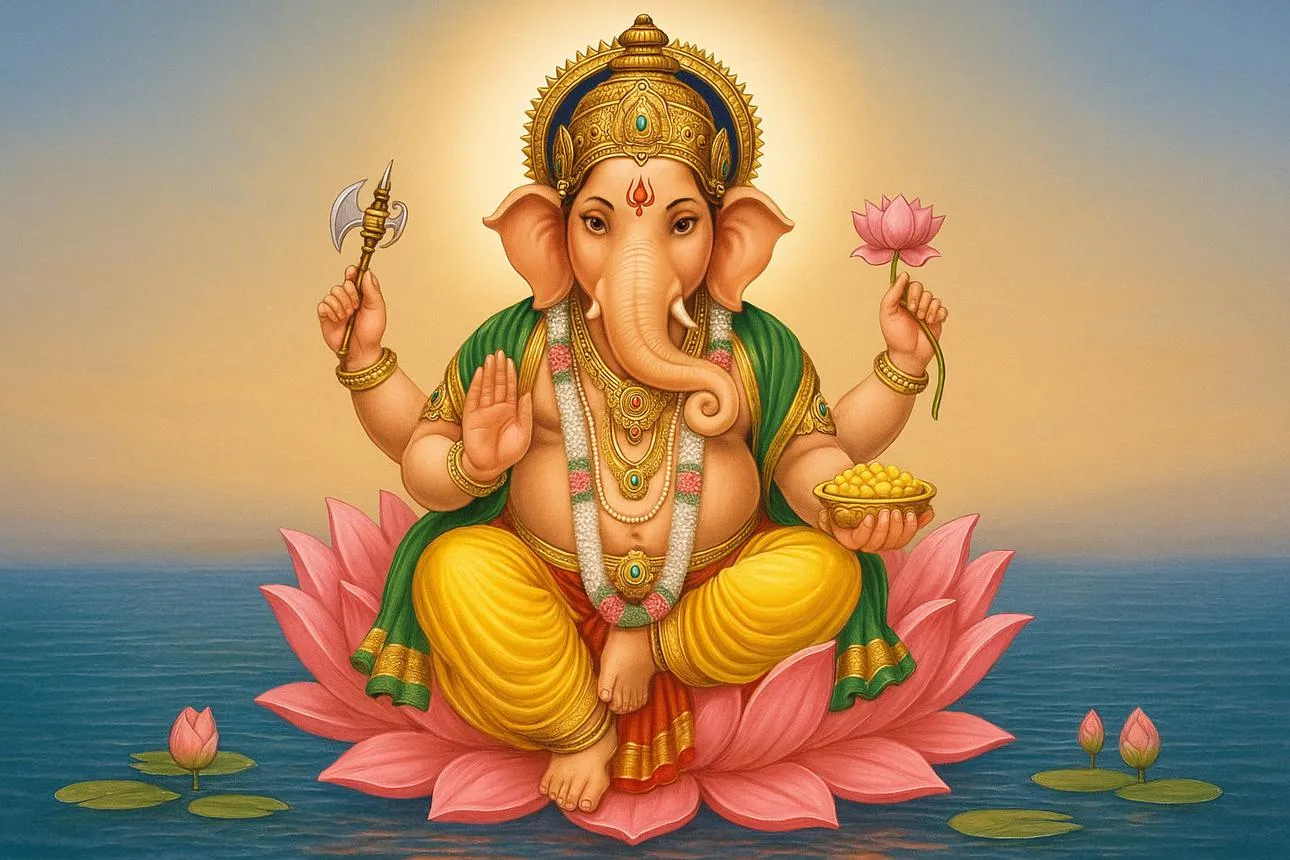
Ganesha is one of the most popular and widely revered gods of Hinduism. He is the son of Shiva and Parvati and is easily recognized by his elephant head and human body. His most important nicknames are Ganapati ("Lord of Hosts") and Vighneshvara ("Lord of Obstacles").
According to a famous legend, Parvati created Ganesha from her own being to guard the entrance to her chamber. When Shiva did not recognize him and was prevented from entering, he cut off his head in anger. To make up for the mistake, an elephant's head was placed on the body and Ganesha was elevated to one of the highest gods.
Symbolically, Ganesha stands for the principle of overcoming obstacles. That is why he is traditionally invoked at the beginning of new ventures, journeys, studies or rituals. He is considered the one who opens paths, removes blockages and enables favorable developments.
His figure is rich in symbolism:
- The elephant head stands for wisdom, memory and spiritual strength.
- The big ears symbolize the ability to listen.
- The small mouth reminds you to speak less than to listen.
- The big belly stands for the ability to absorb and integrate life's experiences.
- The broken tusk tip symbolizes sacrifice and the superiority of wisdom over perfection.
- His mount, the mouse, symbolizes the small, restless desires of the mind that can be controlled by consciousness.
Parapsychologically-symbolically, Ganesha embodies the archetype of the gatekeeper. He stands at transitions and thresholds. Before a new phase of life begins, the seeker must recognize and overcome obstacles. Ganesha symbolizes that inner intelligence that brings order to apparent chaos and recognizes the right time for development.
In a deeper symbolic meaning, Ganesha embodies the archetype of the wise trailblazer. His elephant head combines strength with gentleness, size with intelligence. He reminds us that obstacles are not always enemies. They often indicate learning tasks or necessary maturation processes. Ganesha does not eliminate every difficulty, but rather helps to find the right way to deal with it.This makes it a symbol of the wisdom that allows growth to emerge from resistance and creates new possibilities from limitations.
Related terms
- Shiva
- Parvati
- Kartikeya
- Mantra: “Om Gam Ganapataye Namah”
- Muladhara Chakra (associated with Ganesha in some tantric traditions)