
Hieromancy
Definition & Origin:
Hieromancy (from Greek hierós meaning sacred and manteía meaning divination) is a form of divination in which sacred rituals, offerings, or consecrated acts themselves serve as the medium of revelation. It is closely linked to religious practice.
Core Concept & Worldview:
Hieromancy assumes that the divine is present within ritual action. The way an offering burns, how a ceremony unfolds, or what signs appear during sacred rites are interpreted as direct expressions of divine will or approval.
Forms of Hieromancy:
-
Sacrificial Interpretation: Observing smoke, flame, or animal behavior.
-
Ritual Sign Reading: Interpreting unusual occurrences during ceremonies.
-
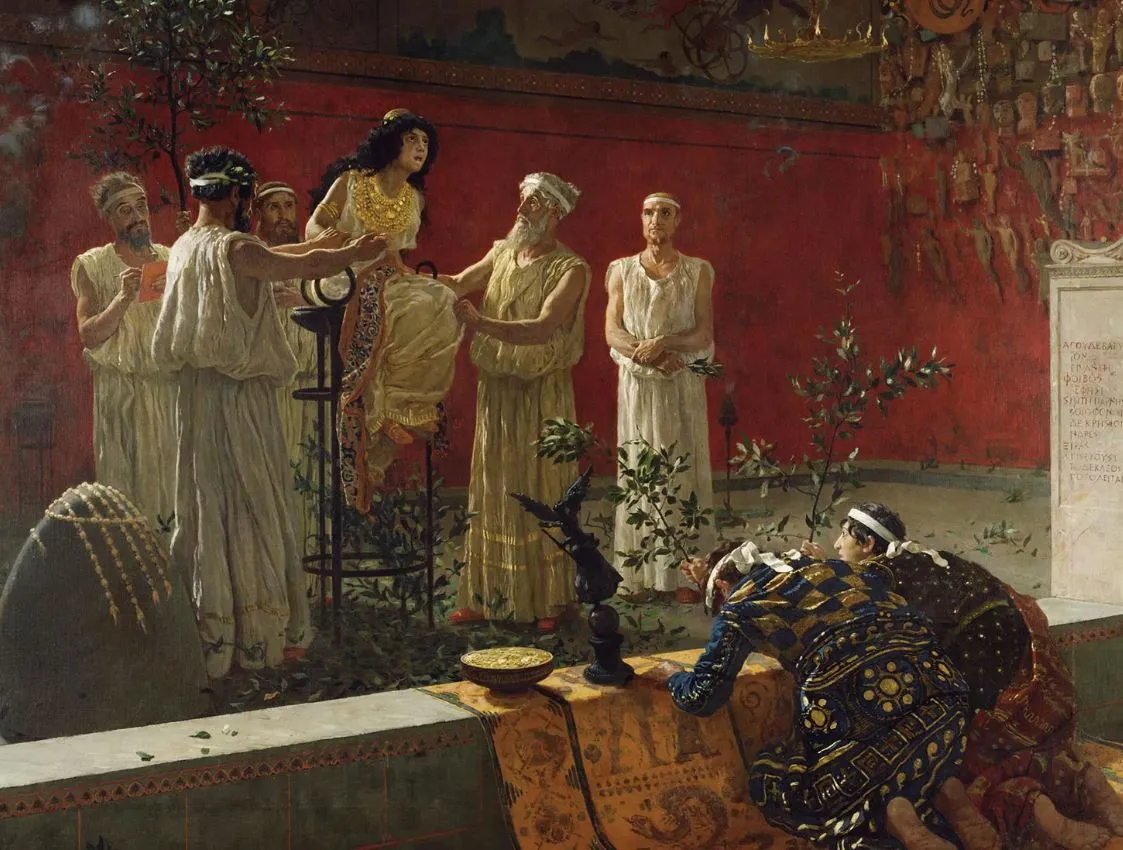
Temple Oracles: Divination within consecrated spaces.
-
Cultic Lot Casting: Drawing lots as part of sacred ritual.
-
Consecration Signs: Interpreting blessings or banishing rites.
Historical & Cultural Context:
Hieromancy was widespread in ancient civilizations such as Greece, Rome, and the Near East. Priests interpreted ritual phenomena as manifestations of divine intent. Many religious traditions regarded ritual performance itself as revelatory.
Symbolic Meaning:
Hieromancy symbolizes the unity of ritual and revelation. The sacred does not merely send signs—it manifests through the ritual process.
Psychological Interpretation:
Psychologically, hieromancy intensifies meaning-making within sacred settings. Ritual context heightens perception and interpretive focus.
Modern Esoteric Use:
Today, hieromancy appears in symbolic ritual magic and spiritual ceremonies, emphasizing personal orientation rather than public decision-making.
Distinction:
Hieromancy differs from theomancy by emphasizing ritual mediation and from pyromancy by embedding signs within a broader sacred framework.