


Sutra
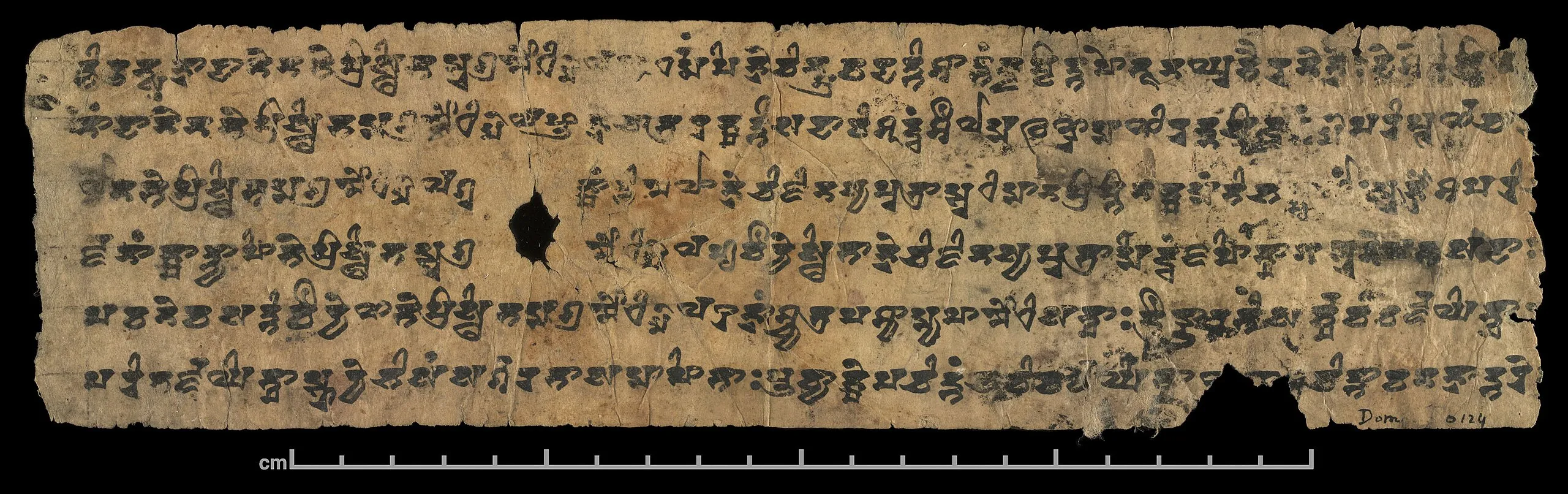
Sutra (from Sanskrit सूत्र, Tibetan མདོ་ mdo, literally “thread”) refers in Buddhism and Indian philosophy to a teaching text conveying the words or distilled essence of an awakened teacher. A sutra is not an argumentative treatise but a supporting thread upon which meaning, practice, and remembrance are strung.
Symbolically, the sutra represents the sound of order that structures experience without solidifying it. Like a thread, it connects diverse beads—parables, dialogues, instructions—into a continuous transmission. Its efficacy lies not only in content but in rhythm, repetition, and form, which is why recitation is central.
Esoterically, a sutra is less a text than an event that arises in the act of hearing. The classical opening, “Thus have I heard,” emphasizes that truth is received and remembered, not invented. The sutra functions as a bridge between direct experience and linguistic expression.
In contrast to Tantra, which employs symbol, ritual, and transformation, the sutra emphasizes the path of clarity and discernment. It lays out the way without promising shortcuts. Yet emptiness remains central: the teaching ultimately points back to itself and dissolves in the recognition of its non-fixity.
Symbolic Layers:
-
Linguistic: thread of transmission




Crystallomancy: Unleashing the Power of Crystal Ball Fortune-Telling!
Read More