
Tantrayana
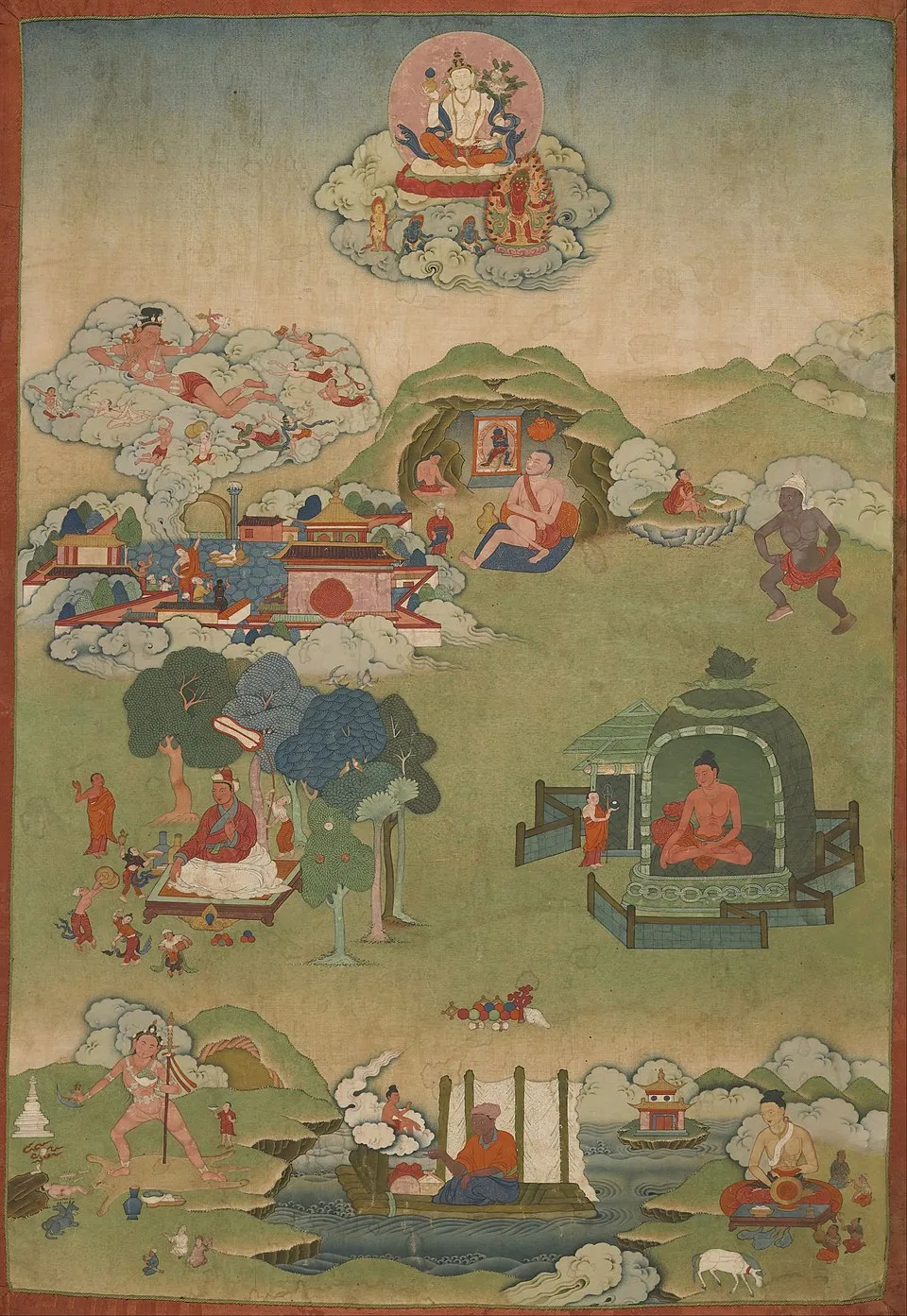
Tantrayana (from Sanskrit Tantrayāna, Tibetan Gyü‑thegpa, “Vehicle of Tantra”) refers to the esoteric path of Buddhism that deliberately uses experience, energy, and symbolism as means of awakening. The word tantra originally means “weaving” or “continuum,” pointing to the insight that awakening is realized within the fabric of experience itself, not apart from it.
Symbolically, Tantrayana represents a reversal of the usual spiritual impulse. Rather than rejecting passion, embodiment, and sensory life, tantra transforms them. Desire, anger, fear, and bliss are treated as raw energies which, when recognized in their true nature, reveal wisdom. Tantra is therefore alchemy rather than renunciation.
In tantric vision, the human being is a microcosm of the universe. Mandalas, deities (yidams), mantras, and rituals are not external gods but precise symbolic expressions of awakened qualities. Through deity yoga, the practitioner dissolves ordinary identity and assumes the form of awakening itself, undermining dualistic perception.
Esoterically, Tantrayana forms the foundation of Vajrayana, while also extending beyond it conceptually. It is the path that integrates form, sound, gesture, sexuality, death, and ecstasy into realization. Tantra teaches that nothing must be excluded—everything can become a gateway to insight.
Symbolic Layers:
-
Ontological: unity of samsara and nirvana
-
Energetic: transmutation of raw forces into wisdom
-
Mystical: sanctification of experience itself
Key Images: mandala, tantric deity, vajra and bell, ritual mudras, union of polarities