Uromancy
Definition & Origin:
Uromancy (from Greek ouron meaning urine and manteía meaning divination) refers to a historical practice of divination and diagnosis in which urine was used as a medium to gain insight into physical, emotional, or destinial conditions. It lies at the intersection of early medicine, symbolic interpretation, and esoteric worldview.
Core Concept & Worldview:
In uromantic thought, urine was considered a carrier of internal information, reflecting the body’s balance or imbalance. Beyond its physical aspects, it was also interpreted as an expression of life force, inner transformation, and hidden processes.
Methods of Uromancy:
-
Color Interpretation: Reading color, clarity, or cloudiness as meaningful signs.
-
Consistency & Sediment: Residues or layers were symbolically interpreted.
-
Smell & Temperature: Seen as indicators of energetic or constitutional states.
-
Temporal Observation: Changes over time suggested ongoing developments.
-
Ritual Uromancy: In rare cases, urine was used in magical or protective rituals.
Historical & Cultural Context:
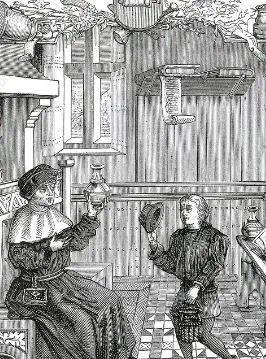
Uromancy was widespread in antiquity and the Middle Ages. In European monastic medicine, Arabic medical traditions, and ancient humoral theory, urine examination (uroscopy) played a central role. The boundary between medical diagnosis and divination was often indistinct.
Symbolic Meaning:
Symbolically, urine represents purification, release, and transformation. In esoteric interpretation, it points to the letting go of spent energies, the processing of inner conflicts, and transitions between states of being.
Modern Esoteric Perspective:
In contemporary esotericism, uromancy is regarded mainly as a historical or marginal practice rather than an active method. It serves as an example of premodern systems in which body, soul, and fate were seen as deeply interconnected.


Kundalini Awakening: Unleashing Your Inner Energy for a Transformative Journey!
Read More